
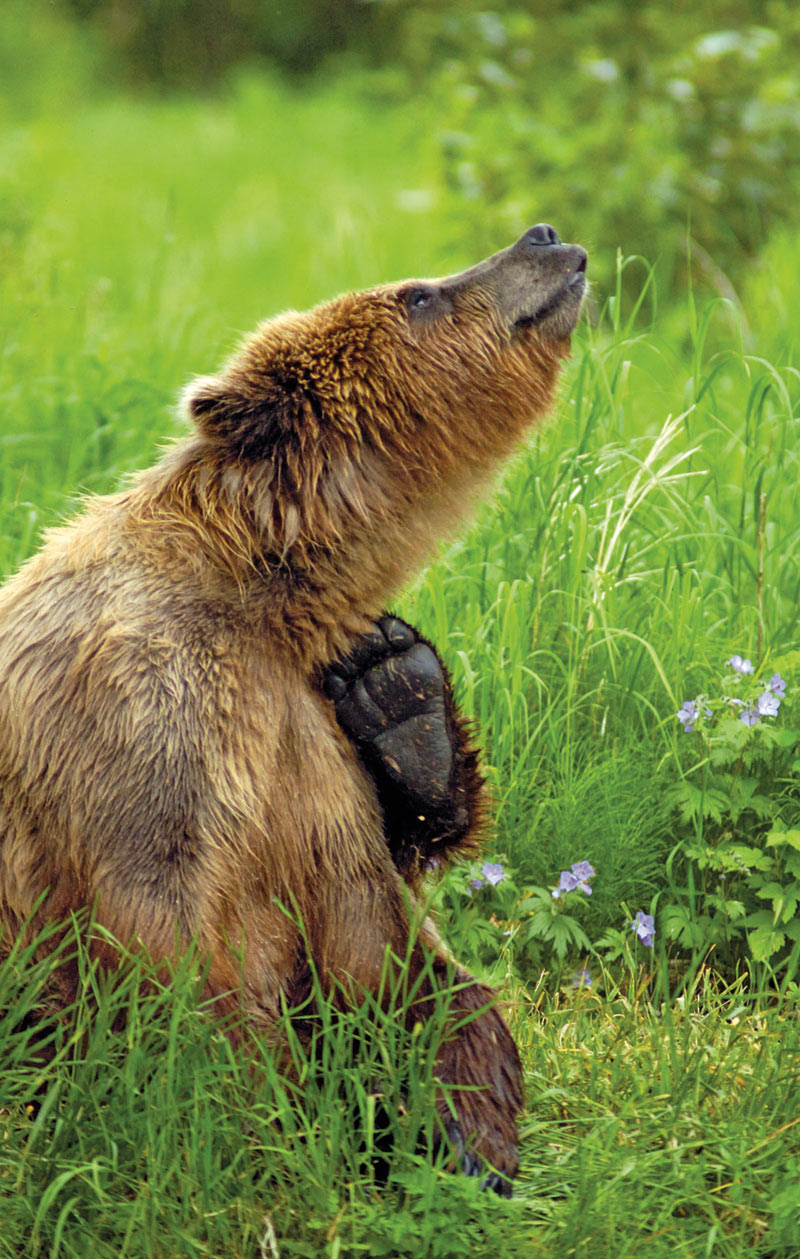
In Alaska, bears — black and brown — can be anywhere, and residents and tourists alike should keep this in mind when taking to the outdoors. Whether walking on a trail near a busy road, or hiking in the wilderness, being prepared could mean the difference between life and death.
“The most important thing is to be aware of your surroundings,” said Jeff Selinger, area wildlife biologist with the Alaska Department of Fish and Game in Soldotna.
Selinger said outdoor enthusiasts should look for potential signs of bears, such as paw prints, scat or congregations of scavenger birds, such as ravens, magpies and jays, which could be feeding on the same carcass as a bear.
Hikers also should look for posted signs about recent bear activity at trail heads and take time to ask others if they’ve seen a bear and warn people if they’ve seen any bear activity.
Hiking in groups is safer than hiking alone, but if going alone is the only option, make plenty of noise when traveling and when on a trail with tight switchbacks, approach corners from the outside of the trail for a better view.
It also never hurts to carry a can of bear spray, know how to use it and have it readily accessible.
“Things can happen in a hurry, and bear spray is useless if it’s in a backpack and out of reach. Pepper spray should be on a belt loop or in a holster,” Selinger said.
Another way to reduce the risk of having a negative interaction with bears is to make sure bears don’t connect any links between humans and food.
Bears that learn this can not only get persistent in their demands, but also may become extremely dangerous when those demands aren’t met.
One way to not invite trouble is to minimize food and food odors while hiking or fishing. Rather than backpacks, daypacks and lunch sacks full of food, take food items that are easy to carry, wrapped or sealed to minimize odor, and quick to eat. Some examples include zip-locked sandwiches or packaged granola bars that can be carried in a pants pocket or fishing vest compartment.
“If cooking food is necessary, keep a clean camp,” Selinger said.
Don’t leave food or garbage out after the meal is done, and try to cook at least 100 yards away from where tents are set up.
On multiple-day trips food should be stored in bear-resistant containers at night or hung from trees when possible.
Anglers also should do their part by being responsible with their catches.
Keep your fish close on a stringer in the water, not out of the water or lying on the bank. Selinger said if approached by a bear, stop fishing — even if it means cutting the line — gather up belongings and fish quickly, get in a group and give the bears plenty of space to move through. And, never surrender food or fish to a bear. Instead, if a bear approaches — drawn to the fish already caught — be prepared to throw them into the river so the current will carry them downstream and away from the bear.
