Never have you felt such pain.
You were only walking through your kitchen, when you stubbed the Piggy That Had Roast Beef. Yowza, that made you dance. Brought tears to your eyes, too.
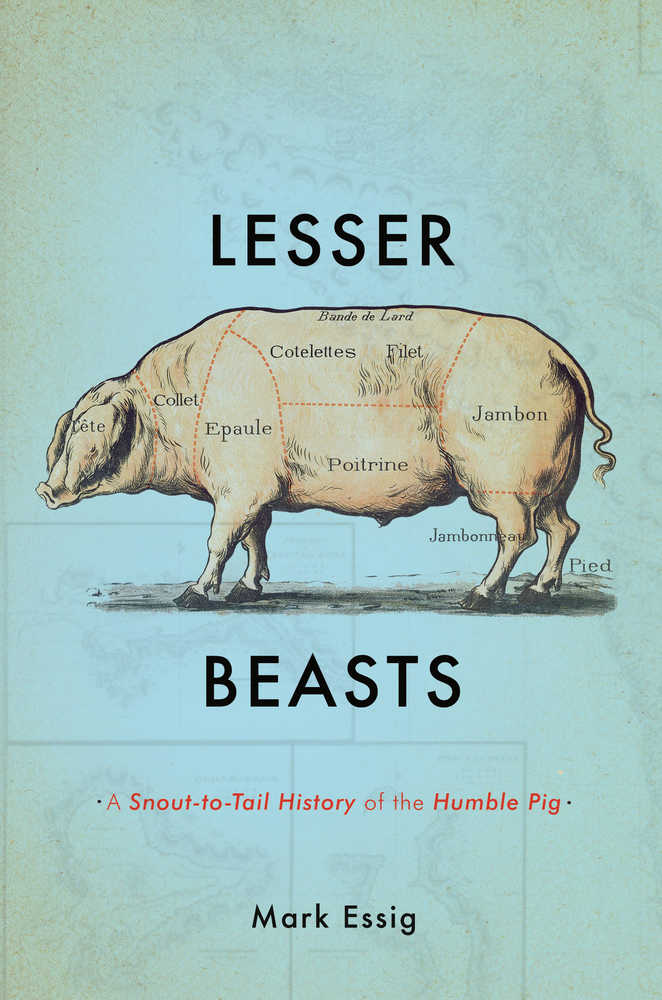
Pigs at the end of your feet. Huh. Ridiculous, but there isn’t a baby within a mile who won’t fall for that game and neither will you, once you read “Lesser Beasts” by Mark Essig.
Many millions of years ago, about 10 million years after dinos died, hooved mammals appeared on Earth. Among them were horses, cattle … and porcine-like creatures that walked on two digits, possessed a sensitive snout, and resembled humans in gut and heart. That creature ultimately became the pig we know.
While dogs were the first animals to be domesticated, pigs “domesticated themselves” about 11,000 years ago. By that, Essig means that pigs hung around humans long enough to know that food was plentiful, so they moved in with us on their own. Humans quickly realized that pigs were easy to keep; says Essig, “if it was biologically possible to raise pigs, people raised pigs.”
And that was the case on and off throughout history: pigs were handy and cheap, which was good for the poor but bad for a pig’s reputation. Politically, pigs sometimes “didn’t fit” and were ignored as food; other times, they were viewed as a stash of emergency vittles on the hoof. Pigs notoriously eat things that are taboo for us to eat, so they’ve been called unclean and disgusting. On the other hand, they’ve saved a lot of people’s bacon, in more ways than one.
Furthermore, calling a pig dirty, as Essig points out, is hogwash. Pigs are intelligent and resourceful. They’ll seize almost any chance to adapt to their surroundings and can help clear land quickly (sometimes to the chagrin of landowners). They are more fecund than both cows and sheep. And, thanks to our willingness to ask where dinner once slept, little piggies that go to market may enjoy better lives before they join us at the table.
Forget cats online: what make you say “awwwwww” are videos of those impossibly cute piglets with their long eyelashes. Agree? Then “Lesser Beasts” is going to put you in hog heaven.
Starting with a herd of porkers and ending with pleas for compassion, author Mark Essig takes readers on a world tour that starts even before pigs became pigs. That science may be an odd way to start a history book, but it fits – especially since we then head styward to see how hogs have fell into and out of favor with humans. Along the way, Essig fattens up his narrative with little bits of asides; for instance, the first Arnold Ziffel on TV’s Green Acres?
You don’t want to know…
I thoroughly enjoyed this book. It’s got just enough lightheartedness in it to be fun, but it’s very informative, too. If you love pigs or you’ve joined the “cult” of bacon, “Lesser Beasts” is a book you’ll want to take all the way home.
* * *
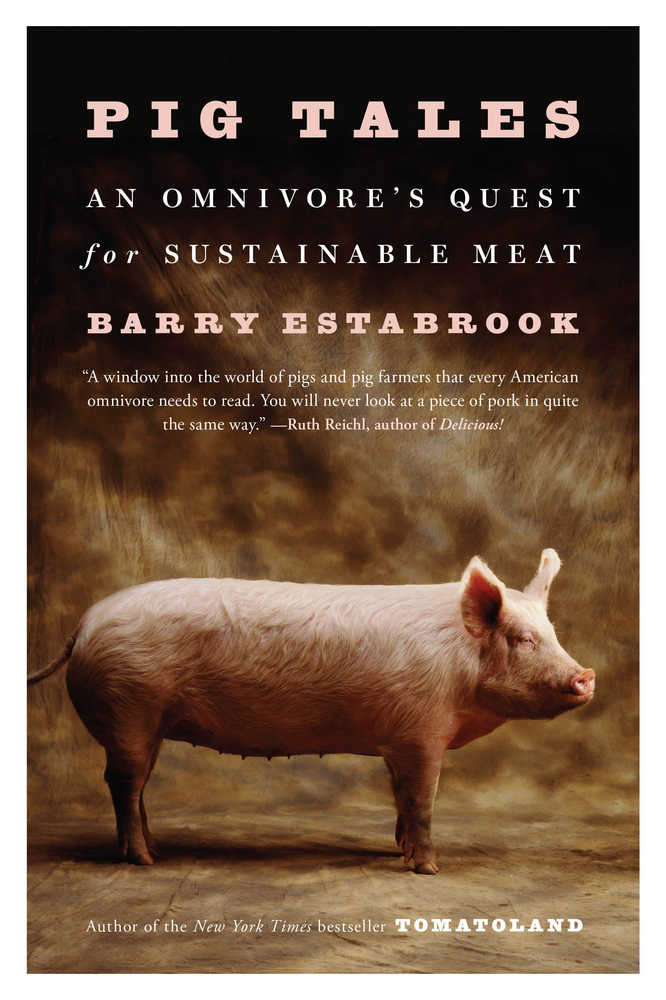
And about that Piggy That Went to Market? If you’re concerned about where he’s spent most of his life, look for “Pig Tales: An Omnivore’s Quest for Sustainable Meat” by Barry Estabrook. It’s a look at corporate farming, pig husbandry, environmental issues, and what’s on your plate.
The Bookworm is Terri Schlichenmeyer. Email her at bookwormsez@gmail.com.