Relocation of the Darien-Lindgren Cabin
Published 3:49 am Friday, October 20, 2017
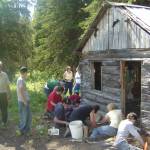
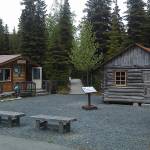
In 2012, I received a grant from the Kenai Mountains-Turnagain Arm National Heritage Area to develop an interpretive program for the Kenaitze Indian Tribe. My team and I interviewed relatives of Tribal Elder Herman Lindgren, who had helped his uncle, Eli Darien, build a trapping cabin in 1937 on the north bank of the Kenai River three miles downstream from Skilak Lake.
My first experience with the cabin was in the mid-1980s as a Boy Scout. Our troop hiked to the cabin for an overnight camping trip. None of us really knew much about the cabin but, at that point, it was still in good shape.
I didn’t revisit the cabin until 2005, not long after I had accepted the role of the Kenaitze Tribe’s Cultural Department Director. One of my responsibilities was to coordinate an archaeology camp with Debbie Corbett, an archaeologist at the time with the U.S. Fish and Wildlife Service. This was the first camp that I had coordinated in that position and, to this day, still ranks as my most memorable.
I had sent my staff and campers off to the Upper Skilak Campground to set up camp while I took care of some last minute details in town. I could see dark clouds and lightning flashes in the direction of camp and, when I finally arrived, everything was soaked from the storm but we made the best out of the situation. Unbeknownst to us the lightning had sparked a wildfire across Skilak Lake in the King County Creek area that would eventually consume 10,131 acres.
The next day, Gary Titus from the Kenai National Wildlife Refuge met up with us as we ferried our campers and gear by boat to the cabin. This was the first time that I had ever used the boat or had ever navigated that part of the river, so it was fortunate that Gary could guide me through the channels as the river was very low and there were numerous gravel bars.
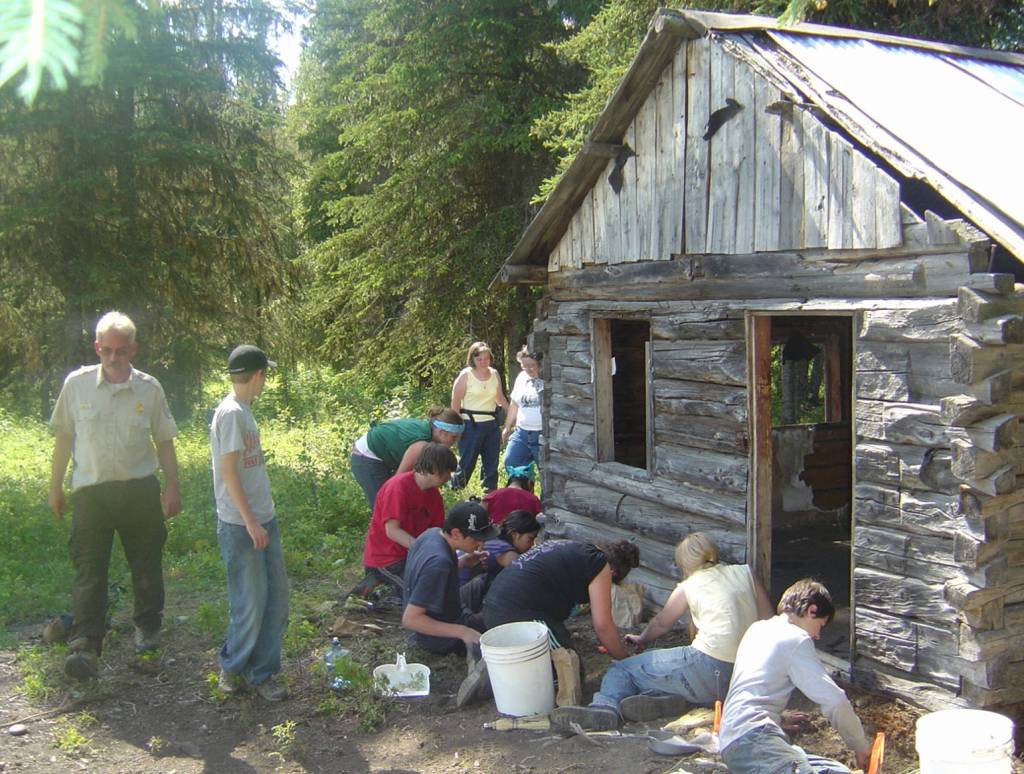
The campers did some test pits and excavations around the cabin in preparation for it to be disassembled and moved by Gary’s crew. It was already lunch time by the time I had everyone at the site. The current was going to make the process longer to get everyone back up the river, so I decided to start ferrying back before it got late. That ordeal took us until dinner — lesson learned. That night the winds caused the fire to gain momentum and it quickly crept toward the cabin.
We developed a new plan that involved me and a coworker hauling all our gear to the cabin by boat while the campers and staff hiked in by trail with Debbie. Unloading the gear from the boat, I noticed three messages on my cell phone from Gary at Refuge Headquarters. His first message went something like this: “Hey Mike, this is Gary. Give me a call when you get this message.” His second message sounded more urgent. “Mike, this is Gary. I need you to call me right away.” The third message, even more urgent than the first two: “Mike, call me. The fire is moving toward the cabin!”
When we finally connected, he suggested that we didn’t spend too much time working around the cabin in case the fire picked up speed. As I hung up the phone I stood on the river bank looking in the direction of the fire and could feel the wind on my face. At that point I decided that we wouldn’t stay. The campers had just arrived but, after a short break for water and a snack, I sent them back down the trail.
After they left, I called Gary to tell him that we were not going to risk it and were leaving. Robin West, Refuge Manager at the time, could be heard in the background talking with Incident Command and the directive was given for us to evacuate because the planes would be there in an hour to drop fire retardant. It wasn’t 15 minutes later and the Canadair CL-415 roared overhead, just barely above the trees.
As the fire raged on, Gary’s crew disassembled the cabin log by log. Over the next 24 hours, trip by trip, they transported the cabin by boat to the Lower Skilak Campground, each trip ferrying groups of firefighters downriver to the fire.
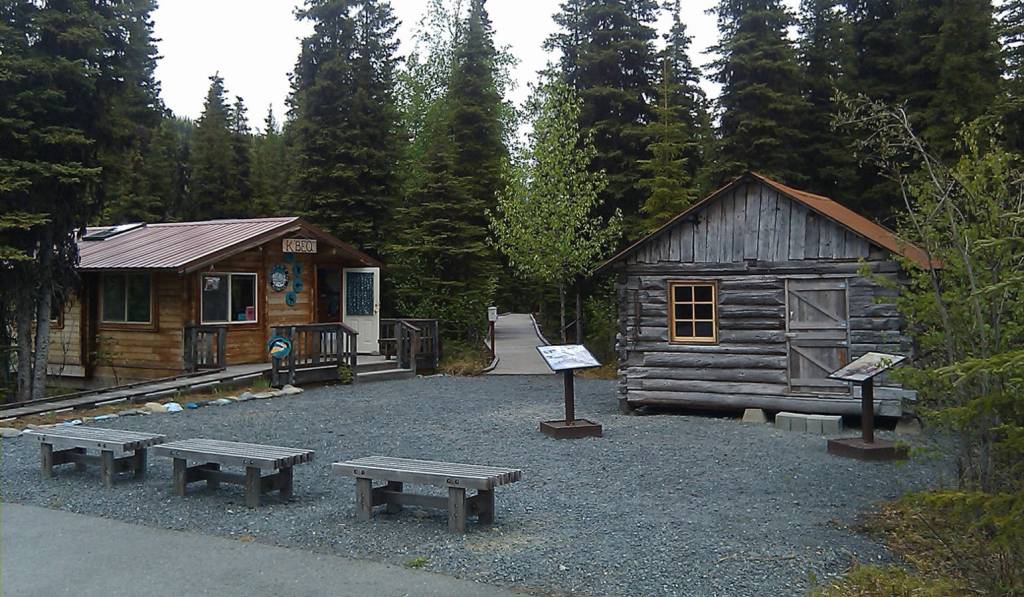
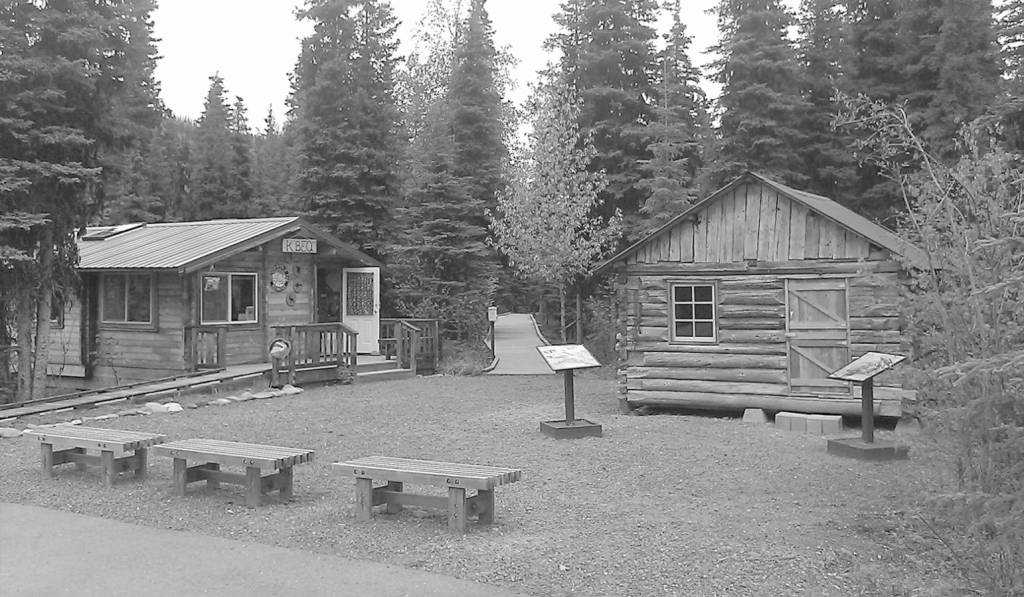
A few days later, campers and Tribal Members met with Gary and his crew to reconstruct the cabin at the K’beq’ Interpretive Site located at mile 52.6 of the Sterling Highway. One of the many reasons this cabin has value is because it invests in the education of our youth about another unwritten part of our Native Culture and history in this area.
The site is now open for public viewing during June through August, from 10 a.m. until 4 p.m. on Thursdays through Sundays. Come visit the cabin at its new location!
Michael Bernard is the Yaghanen Program Administrator for the Kenaitze Indian Tribe. Find more information about the Kenai Refuge at http://www.fws.gov/refuge/kenai/ or http://www.facebook.com/kenainationalwildliferefuge.