Refuge Notebook: Genetic diversity of wildlife on the Kenai Peninsula is a mixed bag
Published 10:14 pm Thursday, February 13, 2014
There are 1,786 plant and animal species known on the Kenai National Wildlife Refuge. That’s extraordinary biodiversity for this latitude with perhaps another 3,000 species, by my estimation, yet to be found. George Shiras III, a famous National Geographic Society photographer, wasn’t kidding when he wrote that “were all of Alaska erased from the map except the Kenai Peninsula and its immediately adjacent waters, there would yet remain in duplicate that which constitutes the more unique and that which typifies the whole of this wonderful country.”
What makes the Kenai Peninsula so species rich is the intersection of the Sitka-spruce rainforest that colonized Prince William Sound with the drier white and black spruce boreal forest that extends from interior Alaska to the Cook Inlet. Combined with elevations ranging from sea level to 6,000 feet in the Harding Icefield, Mother Nature has created lots of ecological niches to be filled by species.
But because we live on a peninsula that is separated from the adjacent mainland by a narrow, 10-mile wide isthmus only recently de-glaciated, it’s logical to assume that plant dispersal and wildlife movement have been minimal with restricted genetic mixing. So although species diversity is relatively high, we would expect low genetic diversity within populations of most species on the Kenai Peninsula.
On the other hand, a paper published in Science in 2003 showed that the diversity of chloroplast DNA in European plant species was highest in areas where populations dispersing from northern and southern refugia collided in the aftermath of the last ice age. Such a place could be the Kenai Peninsula, an area in which at least some species may have been colonized by populations originating from both northern (Beringia) and southern refugia.
In fact, Caribou Hills, nunataks in the Harding Ice Field, and the northern part of the Kenai Mountains around Big Indian Creek were unglaciated during the last ice age, serving as local refugia for some flora and fauna. So genetic diversity might be low because it’s an isolated peninsula or it might be high because of post-Pleistocene colonization patterns.
It only gets more confusing because there are different ways of measuring genetic diversity. Modern genetics considers variation in nuclear DNA versus mitochondrial DNA. Unlike nuclear DNA, which is inherited from both parents and in which genes are rearranged in the process of recombination, there is usually no change in mitochondrial DNA from parent (usually the mother) to offspring. As such, mitochondrial DNA is a powerful tool for tracking ancestry through females.
Consider Kenai brown bears. A study published in the Canadian Journal of Zoology shows they have lower levels of mitochondrial DNA diversity than most other brown bear populations in Alaska, including the Kodiak Archipelago, but relatively high nuclear diversity. The former could result from a few reproductive sows that are highly successfully. Conversely, the latter could be due to high gene flow from males that disperse widely coupled with a tendency of females to stay close to home. As the authors suggested, determining which mechanism is in play is important for effective management of the Kenai brown bear population — there’s a danger of harvesting the wrong sows or too many boars.
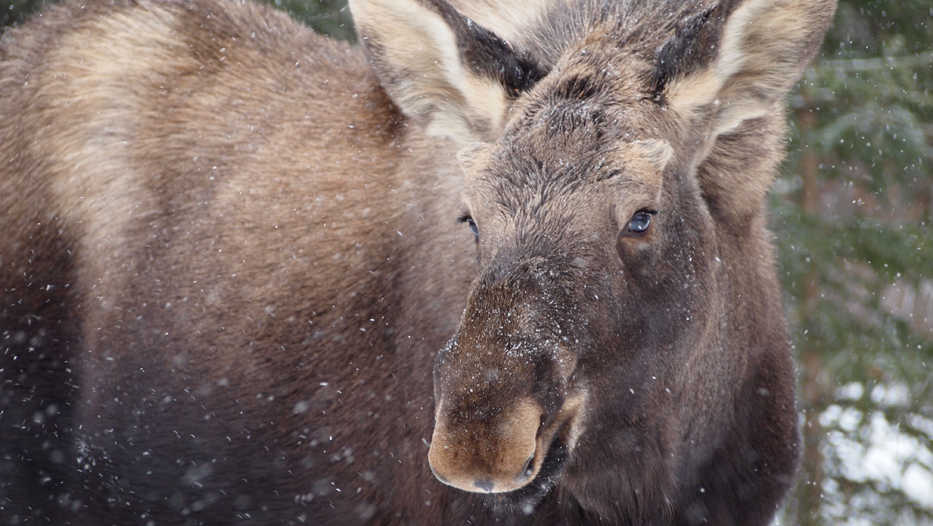
In contrast, Kenai moose were found to have higher genetic diversity than populations elsewhere in North America and Scandinavia. Kris Hundertmark, originally at the Kenai Moose Research Center when this study was published in 1992, and his colleagues found that genetic diversity, as measured by polymorphic loci in liver and muscle samples from moose killed by collisions with vehicles, was unusually high. They suggested that this was so because the Kenai population likely originated from moose that survived the last ice age in nearby climate refugia (Beringia).
Wolverines from the Kenai Peninsula were similarly found to harbor a disproportionate amount of the mitochondrial diversity in North American populations. Furthermore, the Kenai population was considered somewhat distinctive, with a single unique haplotype. While the authors of this study, published in the Journal of Mammology, suggested that the genetic structure of our wolverine is not enough to warrant designation as a subspecies (recognized as Gulo gulo katschemakensis in 1918), they also acknowledged that our local population deserves special conservation attention.
Similarly, Trumpeter swans on the Kenai Peninsula were found to have slightly higher genetic diversity based on nuclear DNA than other populations in the western U.S. However, the authors of this study, from the University of Denver and U.S. Geological Survey, concluded that the diversity was not enough to warrant special management consideration.
At the end of the day, why should we care about genetic diversity? Genetic diversity plays an important role in the survival and adaptability of a species to environmental stressors such as rapid climate change, disease or contaminants, or how successful a native species might be in responding to competition from invasive exotic species. Variation in a population’s gene pool provides variable traits among the individuals of that population. Like making the wise decision to not put all your eggs in one basket, having multiple baskets of varying sizes ensures that someone gets home with at least some of the eggs. More genetic diversity means greater resilience in a population or species to survive environmental change, exactly what is needed to sustain our diverse biota on the Kenai Peninsula.
John Morton is the supervisory biologist at Kenai National Wildlife Refuge. You can find more information about the refuge at http://kenai.fws.gov or http://www.facebook.com/kenainationalwildliferefuge.