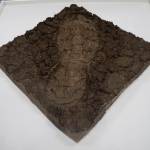
Sheryl Maree Reily’s “Carbon Footprint” is part of her installation for the Homer Drawdown Peatland exhibit showing at the Pratt Museum & Park through Oct. 10, 2021, in Homer, Alaska. (Photo by Michael Armstrong/Homer News)

Sheryl Maree Reily’s “Carbon Footprint” is part of her installation for the Homer Drawdown Peatland exhibit showing at the Pratt Museum & Park through Oct. 10, 2021, in Homer, Alaska. (Photo by Michael Armstrong/Homer News)

Peatlands exhibit at Pratt merges art and conservation

The exhibit caps a yearslong effort to identify a locally sustainable way to reduce or capture carbon emissions

In its exhibits, the Pratt Museum & Park has used artistic expression to explore scientific concepts like plankton, the tides or — in a current show in the main gallery — the microbial world. Last Friday, the museum held a reception for its latest such effort, the Homer Drawdown Peatland exhibit.

The exhibit caps a yearslong effort by the Homer Drawdown project to identify a locally sustainable way to reduce or capture carbon emissions. Homer Drawdown explored various ideas and decided its best efforts should go toward preserving and protecting an ecosystem that’s twice as effective in capturing carbon as planting trees: peatlands.

Working with the Center for Alaskan Coastal Studies and Kachemak Bay Research Reserve, Homer Drawdown has been doing peatland surveys and studies. With the Kachemak Heritage Land Trust, it’s also raising funds to protect valuable peatlands. For the Peatland exhibit, Homer Drawdown worked with the Bunnell Street Arts Center and its sponsorship of Artist in Residence Sheryl Maree Reily. The Peatland exhibit also invited about a dozen artists to show their work with Reily at the Pratt in its downstairs gallery.

Bunnell Artistic Director Asia Freeman acknowledged that collaboration in a talk last Friday for the exhibit.

“It encourages that kind of interplay between organizations, and expands our communities with science, art and culture,” she said of the Pratt.

On its website, Homer Drawdown describes peat as “dead plant matter that has accumulated in standing water over thousands of years.” At last Friday’s presentation, long rods used for chimney brushes illustrated how deep some peat layers could be — up to 30 feet or more. Maps showed notable area peatlands. On the Kenai Peninsula, most peatlands are fenns, areas nourished by groundwater. Bogs are areas nourished by rainfall runoff. Peatlands capture carbon because dead plants don’t decompose in oxygen-poor standing water.

As long as peatlands remain intact, that carbon won’t be released and carbon will continue to be captured as plants grow and die in standing water. In Homer, one of the largest and most visible peatlands is Beluga Slough, Beluga Lake and the surrounding area that includes the Homer Airport and industrial zones along Kachemak Drive. If the peatlands dry up, that can release the carbon, accelerating climate change and warming.

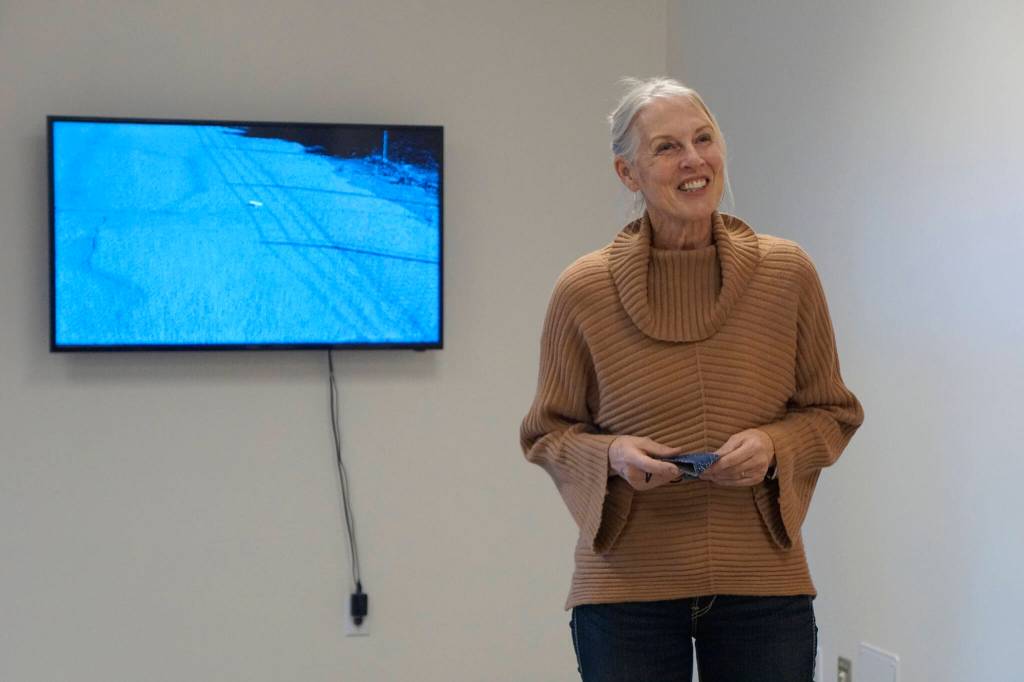
“We’re both on the brink of sitting on a bomb and sitting on a valuable asset, depending on how you treat it,” Reily said at the presentation.

Reily’s artwork and installation makes up most of the Homer Drawdown Peatland exhibit, including a large piece, “Carbon Quilt,” an array of different peatland plants. Her installation also includes a video and sculptures, some of them playful, like “Carbon Footprint,” a cast in peat of a boot sole impression. Freeman said Bunnell invited Reily too because they wanted an artist who could help Homer Drawdown and communicate through the arts the importance of peatlands. For her residency, Reily explored area peatlands and studied the concept.

“On a gut level, I kinda feel like you’re starting something here that’s on the forefront of thought and action, that’s going to very much be a conversation in Alaska, in the future, because of the stores of carbon we have in this state,” she said.

Reily mentioned an article she had read in the Washington Post about plants in Iceland being nurtured because they suck up carbon.

“Here in Homer, you have carbon sucking plants all around you,” she said. “It’s ironic you’re creating this thing if you would just stop destroying this thing.”

Another piece, “Gigabyte,” represents Reily’s attempts to conceptualize a large number like how much carbon there is. She said she can’t imagine a number like 600 blue whales. With dashes and dots, the slab-like sculpture represents binary computer code.

“What I did in the end was this idea of a byte,” she said. “… It’s a little tongue-in-cheek creating this little gigabyte, but it’s also a metaphor for a trilobite.”

That adds another layer of meeting, because the trilobite is an ancient fossil related to a previous mass extinction.

“This gigabyte right now, we’re on the verge of another mass extinction,” Reily said.

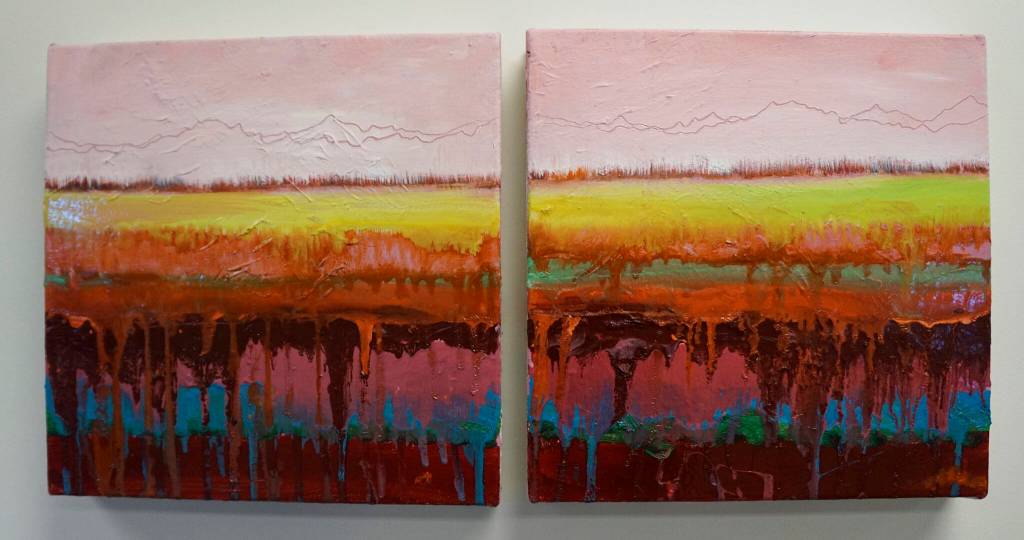
Freeman said other artists, including herself, made works for the exhibit because the subject matter is deeply important to them. Freeman had several paintings and large photographs. She made the photographs by stacking up 35mm film exposures.

“It’s really about the incredible beauty of this place,” she said. “… When you take a photograph like this, you’re mapping the microcosm.”

Of her paintings, Freeman mentioned encaustic paintings in the show by Kathy Smith and how both of them had studied with Freeman’s mother, the artist and teacher Karla Freeman.

“It’s like a family language and a community language,” Freeman said.

Another artist, Kim McNett, comes at her art through her work as a naturalist. McNett noted that she had been involved in the Homer Drawdown.

“I very much foster my relationship with nature through my artistic project by keeping a nature journal,” she said.

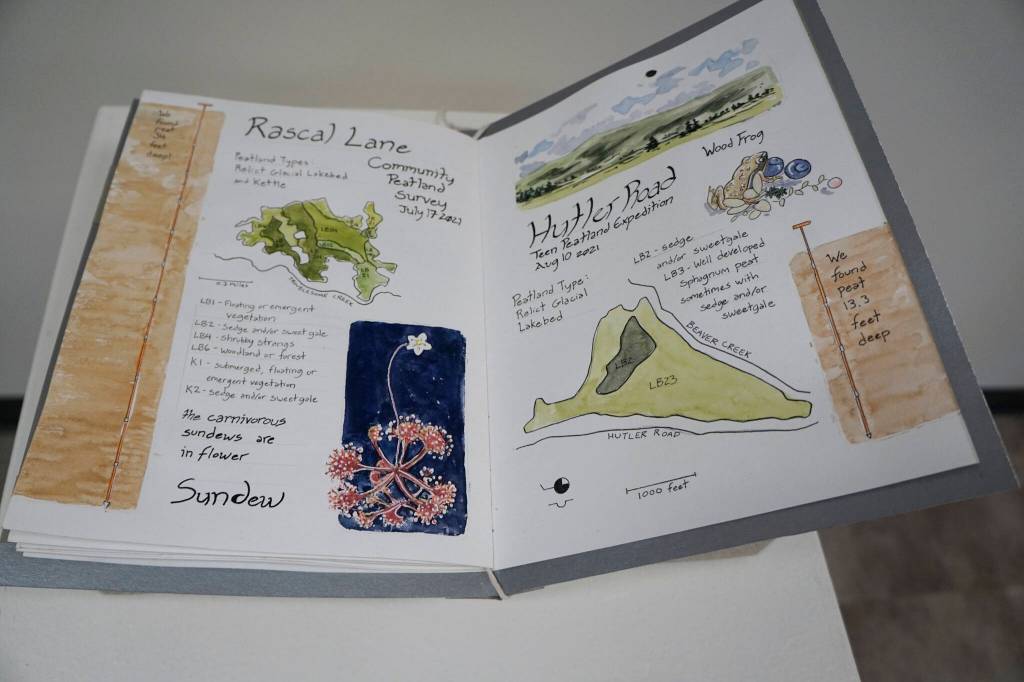
For her piece, McNett assembled a journal using selected pages of her field journal that chronicled how peatlands in her Kachemak Drive neighborhood change over the season. McNett also got some applause at last Friday’s presentation: She has been selected to do a peatland mural that will be installed at the Homer Airport.

Reach Michael Armstrong at marmstrong@homernews.com.
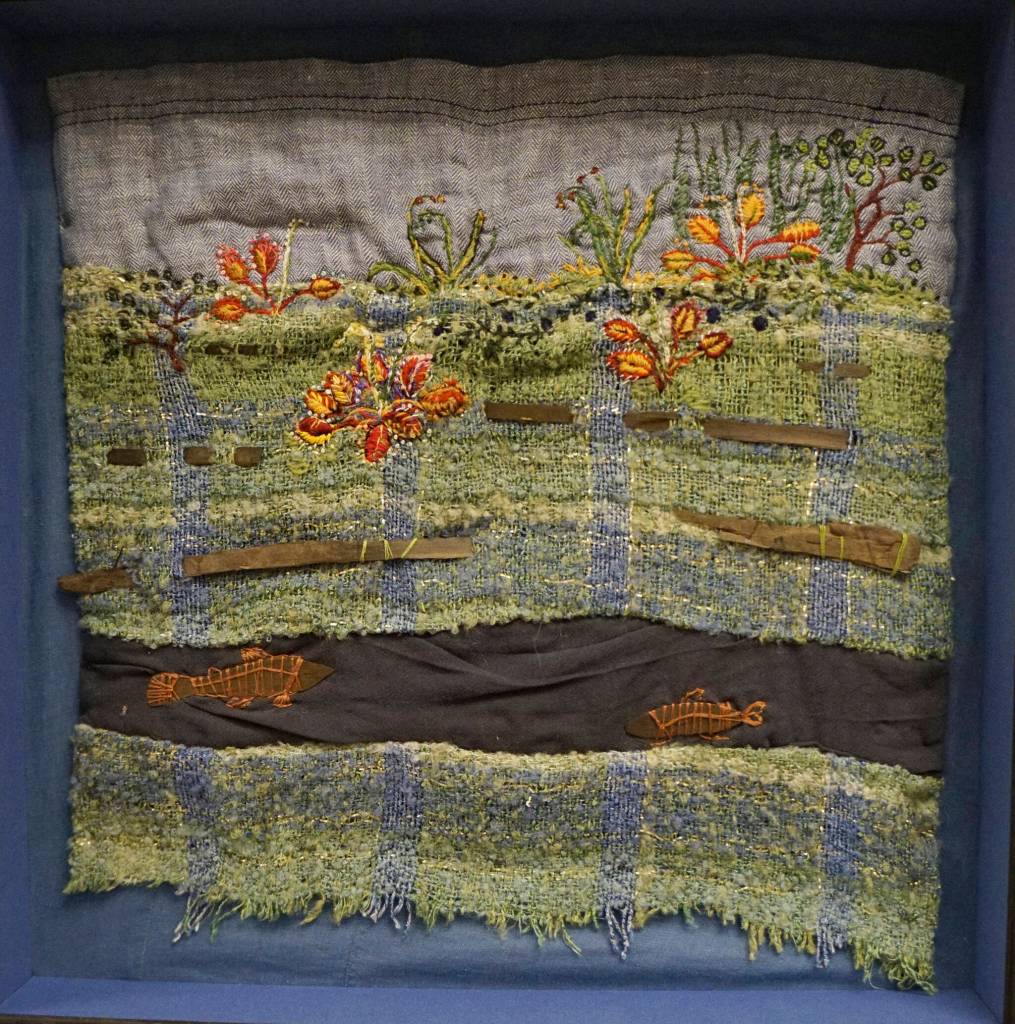
Coowe Walker’s tapestry includes petrified peat. It’s part of the Homer Drawdown Peatland exhibit showing at the Pratt Museum & Park through Oct. 10, 2021, in Homer, Alaska. (Photo by Michael Armstrong/Homer News)

Coowe Walker’s tapestry includes petrified peat. It’s part of the Homer Drawdown Peatland exhibit showing at the Pratt Museum & Park through Oct. 10, 2021, in Homer, Alaska. (Photo by Michael Armstrong/Homer News)

Photos by Michael Armstrong / Homer News 
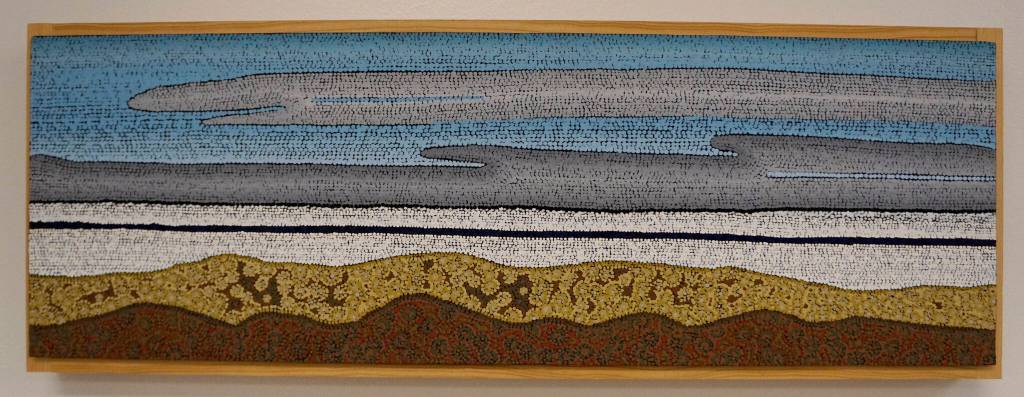
Deland Anderson’s painting, “Labrador Tea, North Beach, Saint Michael Island, Alaska,” is part of the Homer Drawdown Peatland exhibit showing at the Pratt Museum & Park in Homer through Oct. 10.

Photos by Michael Armstrong / Homer News Deland Anderson’s painting, “Labrador Tea, North Beach, Saint Michael Island, Alaska,” is part of the Homer Drawdown Peatland exhibit showing at the Pratt Museum & Park in Homer through Oct. 10.

Kim McNett’s “Peatland Journal” is part of the Homer Drawdown Peatland exhibit showing at the Pratt Museum & Park through Oct. 10, 2021, in Homer, Alaska. (Photo by Michael Armstrong/Homer News)

Kim McNett’s “Peatland Journal” is part of the Homer Drawdown Peatland exhibit showing at the Pratt Museum & Park through Oct. 10, 2021, in Homer, Alaska. (Photo by Michael Armstrong/Homer News)

People visit the Homer Drawdown Peatland exhibit last Friday, Sept. 17, 2021, at a reception and talk at the Pratt Museum & Park in Homer, Alaska. (Photo by Michael Armstrong/Homer News)

People visit the Homer Drawdown Peatland exhibit last Friday, Sept. 17, 2021, at a reception and talk at the Pratt Museum & Park in Homer, Alaska. (Photo by Michael Armstrong/Homer News)

Asia Freeman’s “Peatlands Dyptich” is part of the Homer Drawdown Peatland exhibit showing at the Pratt Museum & Park through Oct. 10, 2021, in Homer, Alaska. (Photo by Michael Armstrong/Homer News)

Asia Freeman’s “Peatlands Dyptich” is part of the Homer Drawdown Peatland exhibit showing at the Pratt Museum & Park through Oct. 10, 2021, in Homer, Alaska. (Photo by Michael Armstrong/Homer News)

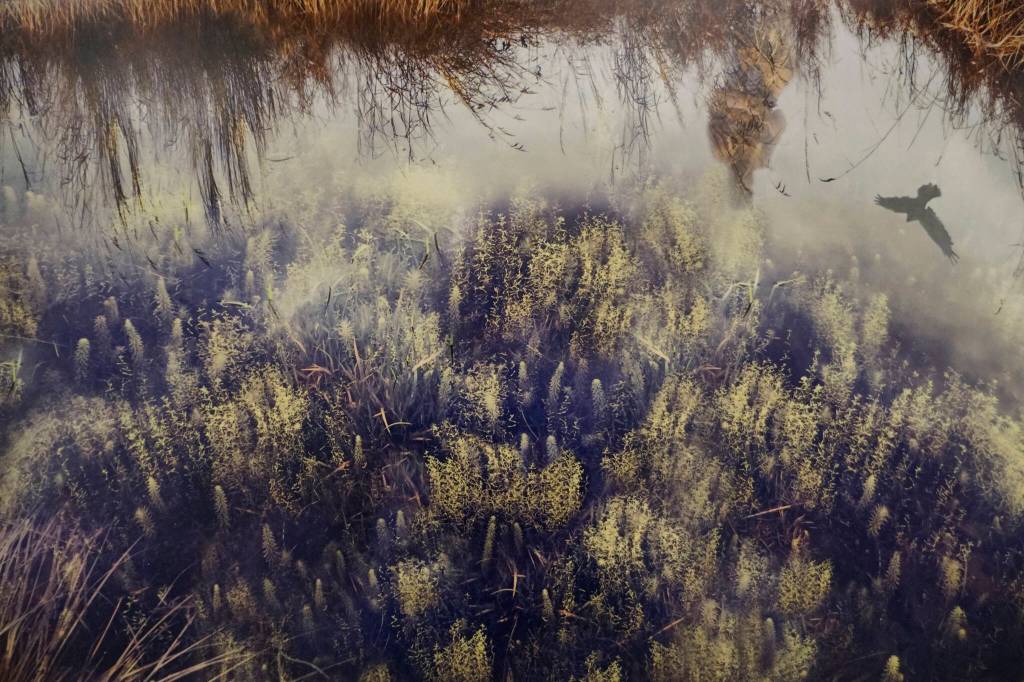
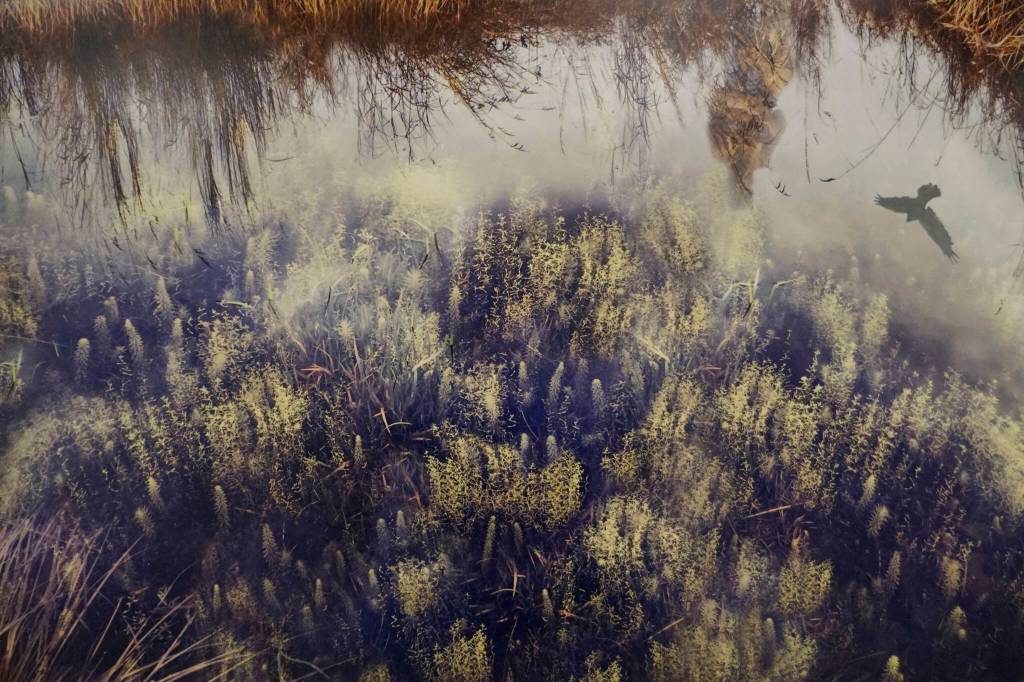
Kim Terpening’s “Wetands Daydream” is part of the Homer Drawdown Peatland exhibit showing at the Pratt Museum & Park through Oct. 10, 2021, in Homer, Alaska. (Photo by Michael Armstrong/Homer News)

Kim Terpening’s “Wetands Daydream” is part of the Homer Drawdown Peatland exhibit showing at the Pratt Museum & Park through Oct. 10, 2021, in Homer, Alaska. (Photo by Michael Armstrong/Homer News)

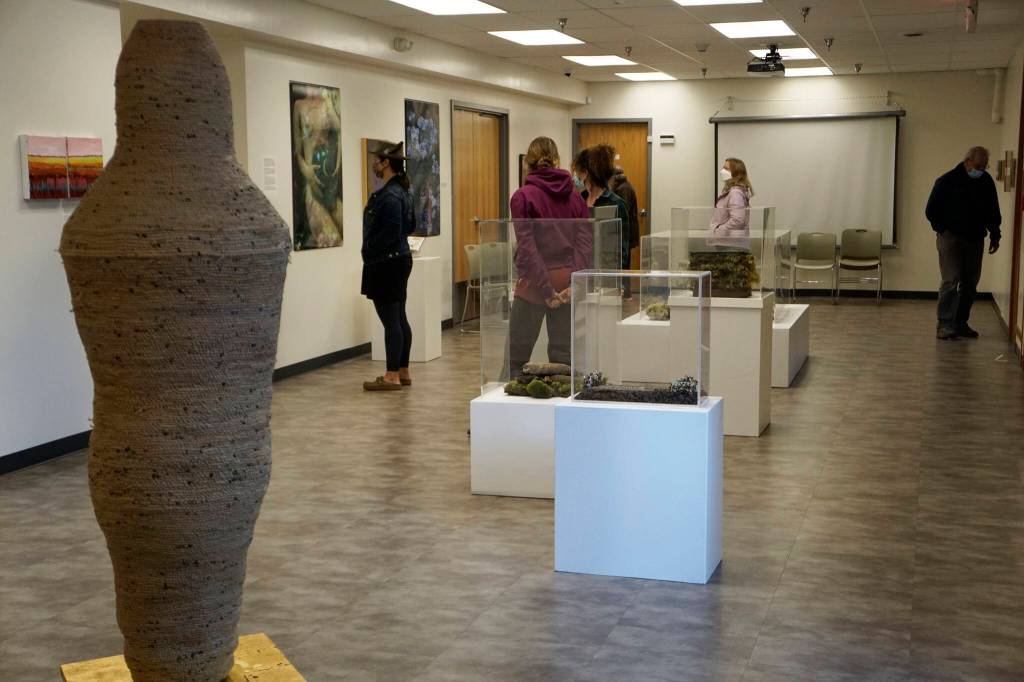
People visit the Homer Drawdown Peatland exhibit last Friday, Sept. 17, 2021, at a reception and talk at the Pratt Museum & Park in Homer, Alaska. At left is Sheryl Maree Reily’s “Sarcophagus.” (Photo by Michael Armstrong/Homer News)

People visit the Homer Drawdown Peatland exhibit last Friday, Sept. 17, 2021, at a reception and talk at the Pratt Museum & Park in Homer, Alaska. At left is Sheryl Maree Reily’s “Sarcophagus.” (Photo by Michael Armstrong/Homer News)

Kim Terpening's "Wetands Daydream" is part of the Homer Drawdown Peatland exhibit showing at the Pratt Museum & Park through Oct. 10, 2021, in Homer, Alaska. (Photo by Michael Armstrong/Homer News)

People visit the Homer Drawdown Peatland exhibit last Friday, Sept. 17, 2021, at a reception and talk at the Pratt Museum & Park in Homer, Alaska. At left is Sheryl Maree Reily’s “Sarcophagus.” (Photo by Michael Armstrong/Homer News)

More in Life

Community members enjoy skating at Kevin Bell Arena during the Christmas Eve community free skate on Wednesday, Dec. 24, 2025, in Homer, Alaska. (Delcenia Cosman/Homer News)
Out of the Office: A metaphor on ice

I went ice skating for the first time in years last week,… Continue reading

File
Minister’s Message: Love born to endure

I spend time with people in the final chapters of their lives.… Continue reading

In his 1903 report to the U.S. Department of Agriculture, Prof. Charles Christian Georgeson included this photograph of efforts to break recently cleared ground at Kenai’s agricultural experiment station. The man behind the bull was either station superintendent Hans P. Nielsen or his assistant Pontus H. Ross.
The experiment: Kenai becomes an agricultural test site — Part 4

AUTHOR’S NOTE: A presidential executive order in January 1899 had set aside… Continue reading

This recipe makes a boatload of soft and delicious cookies, perfect for sharing at Christmastime. Photo by Tressa Dale/Peninsula Clarion
Christmas cookies for a shared tradition

These cookies are so soft and delicious, it’s no wonder they’re part of a family Christmas tradition.

Daniel Craig (right), returning as Benoit Blanc, and Josh O'Connor are seen in this still from "Wake Up Dead Man: A Knives Out Mystery," released on Netflix on Dec. 12, 2025. (Promotional photo courtesy Netflix)
On the Screen: ‘Knives Out 3’ truly a film for our times

I often feel the need to watch a film twice. The first… Continue reading

Orange zest and extract bring this literary-inspired treat to life. Photo by Tressa Dale/Peninsula Clarion
Whimsy and magic

This literary-inspired treat is perfect for Christmastime festivities.

File
Minister’s Message: Traditions should be things that support us

Regardless of how you find yourself this season, know that you’re not alone.

Photo from the Alaska State Library historical collection
In Kenai, circa 1903, this trio was photographed on a well-used trail. Pictured are George S. Mearns, future Kenai postmaster; Kate R. Gompertz, Kenai resident; Hans P. Nielsen, superintendent of Kenai’s agricultural experiment station.
The experiment: Kenai becomes an agricultural test site — Part 3

AUTHOR’S NOTE: Presidential Executive Order #148, in January 1899, had set aside… Continue reading

Snow-covered trees and peaks are pictured from a frozen pond near the Herbert Glacier trail in Juneau<ins>, Alaska,</ins> on Thursday, Dec. 11<ins>, 2025</ins>. (Chloe Anderson/Peninsula Clarion)
Out of the Office: Breaking the winter cycle

There’s a learning curve to every new season and every new sport.

File
Minister’s Message: Good grief

Grief doesn’t take a holiday, but it can offer you something the holidays can’t.

This 1903 photograph of mostly Kenai residents shows (back, far left) Hans Peter Nielsen, first superintendent of Kenai’s agricultural experiment station. Nielsen began work at the station in 1899 and resigned at the end of the 1903 season. (Photo from the Alaska State Library historical collection)
The experiment: Kenai becomes an agricultural test site — Part 2

AUTHOR’S NOTE: Presidential Executive Order #148, in January 1899, had set aside… Continue reading

Served together on a bed of greens, these pickled eggs and beets make a light but cheerful lunch. Photo by Tressa Dale/Peninsula Clarion
A wealth of eggs for good health

Pickled along with roasted beets and dill, these eggs have a cheerful hue and bright aroma.