Homer author Tom Kizzia shares ‘Josie’s Story’
Published 10:30 pm Wednesday, February 26, 2025
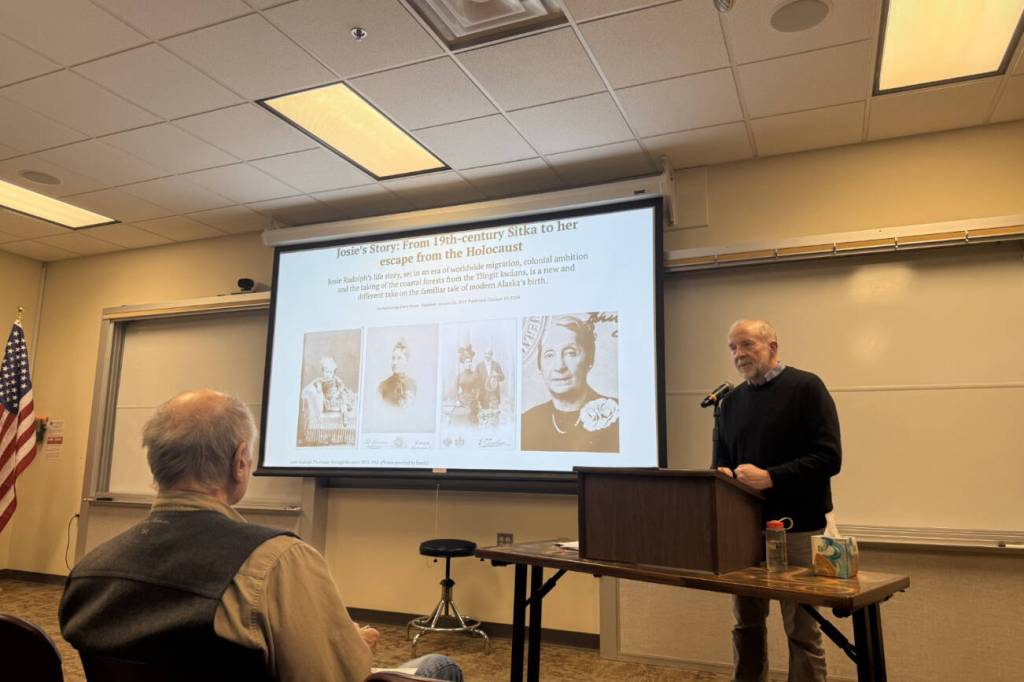
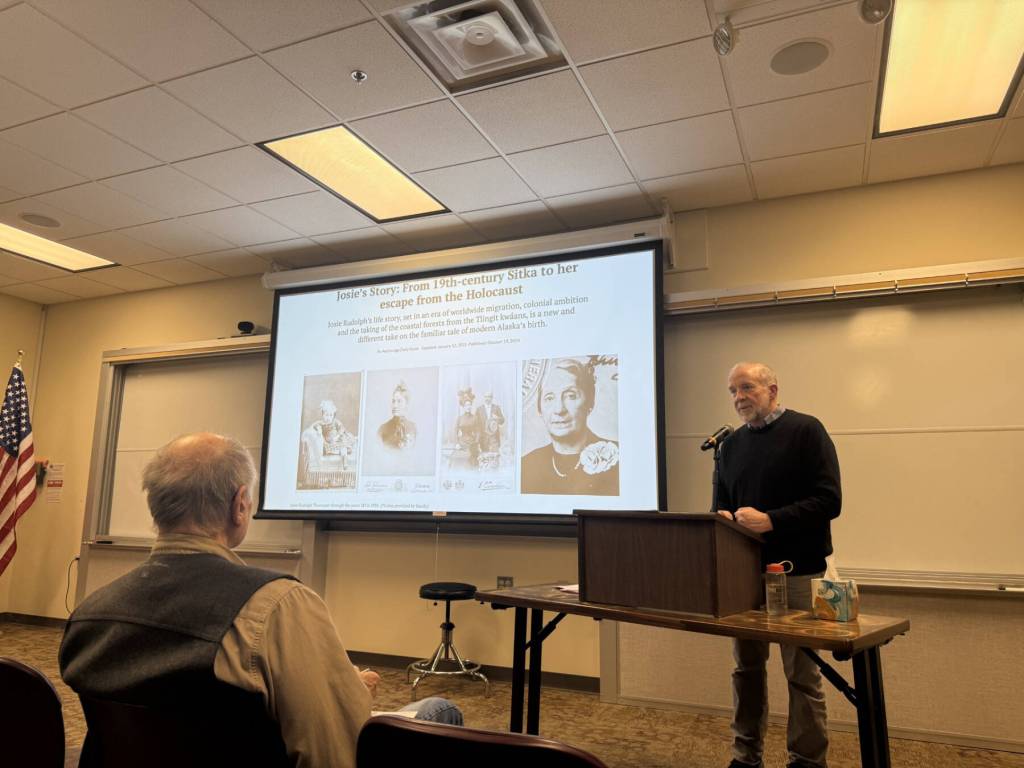
Community members gathered in the upstairs conference room at Kachemak Bay Campus on Thursday, Feb. 20, for a presentation by local writer Tom Kizzia.
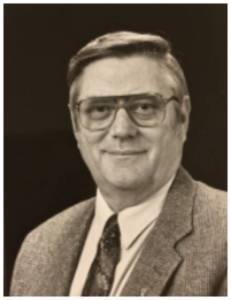
Kizzia is well-known for his 25-year career as a reporter for the Anchorage Daily News, as well as his books: “Pilgrim’s Wilderness”, “Cold Mountain Pass” and “The Wake of Unseen Objects.”
The subject of the presentation was a series Kizzia completed last year for ADN on the story of a young Jewish child — the first American girl to be born in Sitka, after the United States purchased the state from Russia in 1867 — and the way her American birthright citizenship later saved her life as she attempted to escape Nazi Germany.
Kizzia began with some background on his journey to telling Josie Rudolph’s story. Years ago, while writing a series for ADN on a man named Bruno Rosenthal, Kizzia found himself deeply moved.
Rosenthal was a shopkeeper in Neustadt, Germany, who attempted to immigrate to Alaska under the proposed Alaska Resettlement Plan, which failed in 1940 due to antisemitic opposition. Rosenthal, and his family, later became one of many who disappeared during the Holocaust.
Kizzia noted that telling that story left him with an empty feeling, and Josie’s story seemed to provide a kind of counterbalance, a rare, happy ending in the face of near insurmountable loss.
Kizzia discovered Josie in a moment of serendipity — while visiting his hometown on the East Coast and sharing dinner with an old high school friend. His friend’s wife mentioned that her great-grandmother was born in Sitka and was able to escape the Holocaust since she had protection under the 14th Amendment. This piqued Kizzia’s interest, and he never forgot about Josie, searching for traces of her history over the years, until he finally found her.
Josie was born in Sitka in 1869 but returned to Germany with her family in 1875 to take care of her ailing grandparents. According to Kizzia’s research, Josie would have been 6 years old when she left Alaska. She later married and started a family of her own in Germany. While her son and his family were able to escape to America after being briefly incarcerated and having the family factory seized, Kizzia said during the presentation that Josie chose to remain with her elderly husband, who hoped that things would improve, rather than worsen, with time. After his death, she looked for a way out of the country.
“Even with a son in the United States, the line for immigration to the U.S. was too long,” said Kizzia. “But Josie had one advantage over everyone else in that line, the 14th amendment, ratified by the states in 1868, one year before she was born.”
The 14th Amendment provides citizenship to all persons born in the United States, including the children of immigrants. Josie was able to prove her American citizenship by providing an affidavit filled out by her late mother testifying to her birth and early childhood in Alaska. Over a two-year process, Josie attempted to get her passport.
“In October 1938, the Nazis revoked the German passports of all Jews and ordered them to apply for new ones stamped with a ‘J.’ Josie did not bother to reapply. Two days after the Nazi decree, she finally received an American passport from the U.S. Embassy,” said Kizzia during Thursday’s presentation. “As an immigrating Jew, Josie had seen her property and bank accounts confiscated. On November 17, 1938, one week after the violent Kristallnacht swept across Germany, Josie arrived at the Gestapo post on the Dutch border wearing a widow’s full-length black dress. Showing her American passport, she strode, unmolested, through customs with an American flag draped as a shawl over her shoulders and a fortune in jewelry, pinned to her undergarments.”
Kizzia said documents of early Jewish-Alaskan records can be difficult to find, but in the 1868 journal of Emil Teichman — a man sent by the Oppenheim Company of London to track down a lost shipment of furs — we get a rare glimpse into colonial Sitka, at the time Josie’s family lived there.
“Returning one night from a Russian steam bath, Teichman heard a murmur of voices through the sawn plank exterior wall. The next building over, which shared the wall, was a warehouse owned by a Jewish trader,” said Kizzia, going on to quote directly from Teichman’s journal entry.
“‘Looking through a crevice, I saw quite an assembly of 20 men, all of the Jewish persuasion, who were holding their Sabbath service and reading their prayers under the leadership of the oldest man present, who took the place of the Rabbi.’ It was a memorable thing to see this religious gathering in so strange a setting, and it said a great deal for the persistence with which the Jews everywhere, even in the most remote countries, practiced their devotional exercises.”
Kizzia emphasized this passage as remarkable and unexpected, as it challenges the idea later perpetuated by politicians and antisemites that Jewish people were not able to survive or homestead in Alaska.
“The pioneers were not all native-born, white American citizens. Historians have shown how frontier communities in much of the American West had significant populations of Jewish immigrants. They came to America for opportunity and to escape antisemitic restrictions built into their European societies.”
Kizzia noted that the full series on Josie’s story is accessible to readers online, in front of the Anchorage Daily News paywall. More information on Alaska-Jewish history can be found by visiting the Alaska Jewish Museum in Anchorage at 1221 E 35th Ave.
Chloe Pleznac can be reached at chloe.pleznac@homernews.com.