Refuge Notebook: Flotsam ‘treasure’ harbors wealth of wildlife knowledge
Published 10:30 pm Wednesday, October 28, 2020
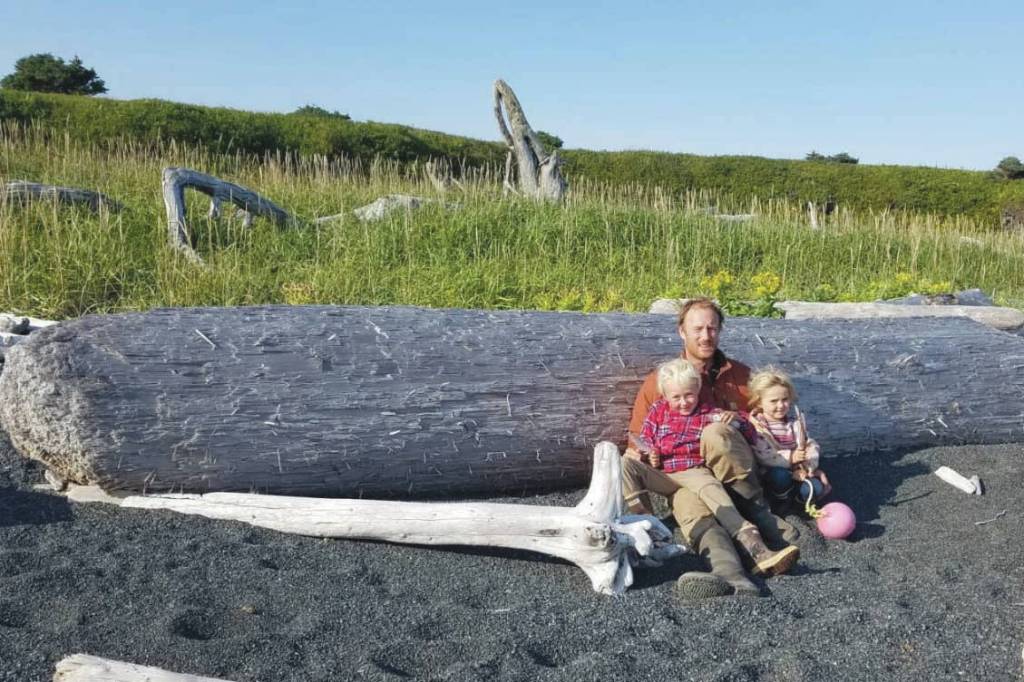
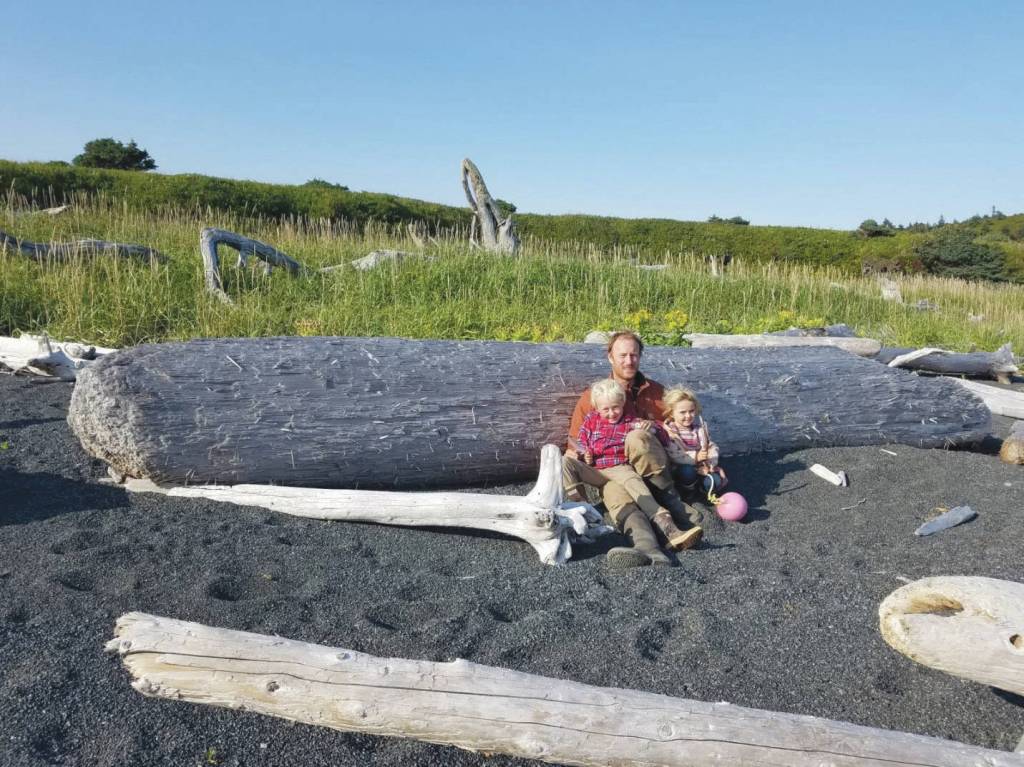


This August, Eivin Kilcher was beachcombing on Ushagat Island when he saw something unusual.
“I was thinking, whoa, that looks like a massive-something-important.”
He and his family had boated out to Ushagat, part of the Barren Island archipelago and the Alaska Maritime National Wildlife Refuge, to escape the doldrums of quarantine. They made the approximately 60-mile, fair weather journey from Homer in their 32-foot landing craft.
The name Ushagat is possibly a derivative of the Alutiiq name for the Barren Islands, Usu’unaat, according to Dehrich Chya, the language and living culture manager of the Alutiiq Museum in Kodiak.
Potential interpretations of Usu’unaat involve the concepts of cold and raw, both fitting given that the island is turned broadside to the Gulf of Alaska and is battered by storms. As a result, the south facing beach has good treasure hunting potential.
Kilcher spotted the comically large vitamin capsule nestled in a tangle of dried kelp and marine debris high up in the storm berm. He picked it up.
It was lightweight but solid. The casing on one end was eroded away and clear epoxy, revealing a green circuit board. A tiny typed message was glued on the board: “$$REWARD!! LHX@OREGONSTATE.EDU”.
“I saw the dollar signs on it and thought I had found treasure.”
The university email address was a clue to its scientific importance and his father-in-law, who studies orcas, suggested it was likely a marine mammal tag.
Kilcher tried the email address but never got a response. It sat in his house as a curious memento of the summer trip.
Scientific tags are valuable pieces of technology that help fish and wildlife researchers gather data on wild animals. Tag studies can reveal migratory patterns, life history, population dynamics or physiology. The tags come in all shapes and sizes because they are uniquely tailored to the animal and the objectives of the study.
Some emit a radio signal or record the animal’s location using satellites. Others are simply used to uniquely identify an individual, like bird bands or the microchips we have in our pets. Tags can be attached outside the body, injected under the skin, or surgically implanted.
Some tags are programmed to detach after a predetermined amount of time and others only become available after the animal dies. People may discover them after harvesting an animal, or while walking in the woods or down the beach. Oftentimes, researchers will offer rewards for a tag’s safe return.
Kilcher’s Ushagat tag belonged to a project that studied the survival and mortality of juvenile Steller sea lions from 2005 to 2014, led by Dr. Markus Horning. He started the project while at Texas A&M University, and continued with Oregon State University’s Marine Mammal Research Institute, the Alaska SeaLife Center in Seward, and now with Wildlife Technology Frontiers, also in Seward.
Steller sea lions use beaches and cliffs in the Alaska Maritime National Wildlife Refuge to reproduce, raise their young, and take breaks from life at sea. In spite of their massive size (males can reach 2,500 pounds), they are nimble on land and can even climb cliffs because their rear flippers rotate forward. Most populations of Stellar sea lions are stable, but those in the western Aleutian Islands are endangered.
The tag that Kilcher recovered is called an LHX, or Life History Transmitter, and was designed by Dr. Horning and Wildlife Computers. It was surgically implanted in the gut cavity of a female juvenile Stellar sea lion in Resurrection Bay in 2014.
While inside the sea lion’s belly, the tag served as a “black box,” quietly gathering data on body temperature and light.
In a healthy animal, the data are pretty boring. Sea lions are similar to us in that they are warmblooded and maintain a constant internal temperature of about 99 degrees Fahrenheit. But once death comes, the temperature record becomes a crime scene.
Soaring or sinking temperatures may indicate disease or starvation. An abrupt shift to match the sea’s surface reveals that the stomach was violently ripped open. This is what Dr. Horning calls a “traumatic mortality event,” also known as predation.
It turns out that predation is a primary source of mortality for young Steller sea lions. Since 2005, 21 of 45 tagged sea lions have died, and all but two were confirmed traumatic mortality events. Most of the temperature records, including the one from Kilcher’s tag, could be consistent with the killing patterns of any of a number of predators, including transient orcas, which specialize on seals and sea lions at the water’s surface.
However, a handful of tags reported data consistent with predation by the Pacific sleeper shark, where temperatures dropped to match the deep sea for about nine days before returning to surface temperatures.
White and salmon sharks were ruled out as suspects because their core temperatures — while not as high as those of orcas — are elevated, rather than matching sea temperatures. This is an unprecedented finding in marine food webs because Sleeper sharks were previously thought to be slow-moving seafloor scavengers.
“For me it’s these unexpected findings and results that make [research] exciting,” says Dr. Horning.
After the animal dies, the tag contacts a satellite, which sends a summary data file to Dr. Horning’s email inbox. Recovering the physical tag is rare but special, because it unlocks the full data record and provides even more “glimpses into the ocean.” So far, the public has returned 13 LHX tags. Kilcher’s discovery is the 14th.
Tagging studies of all kinds are ongoing throughout Alaska’s lands and waters, gathering valuable data to help conserve our natural resources. While out exploring our public lands, keep a keen eye out for unusual “trash” because it might just be a biologist’s “treasure.”
For more information about the Steller sea lion project and LHX tags, visit sealtag.org.
Lauren Flynn is a Wildlife Refuge Specialist for the Alaska Maritime National Wildlife Refuge in Homer, Alaska. Find more Refuge Notebook articles (1999–present) at https://www.fws.gov/refuge/Kenai/community/refuge_notebook.html.
By LAUREN FLYNN
Alaska Maritime National Wildlife Refuge