With federal funding ending, full-priced school lunches could be on the menu for many students next year
Published 2:30 am Friday, April 1, 2022
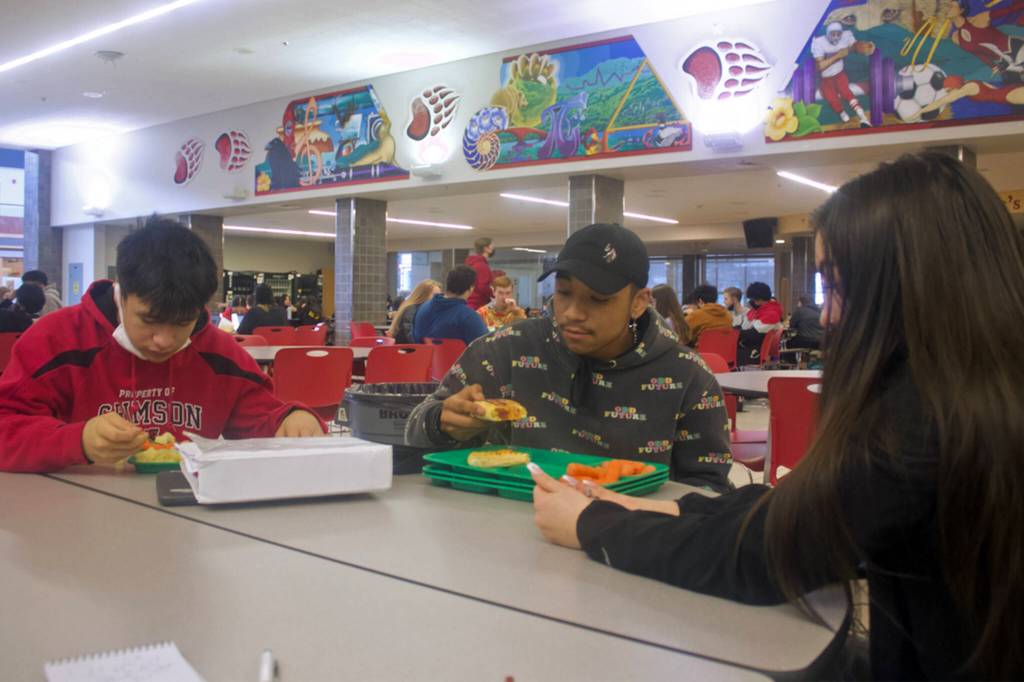
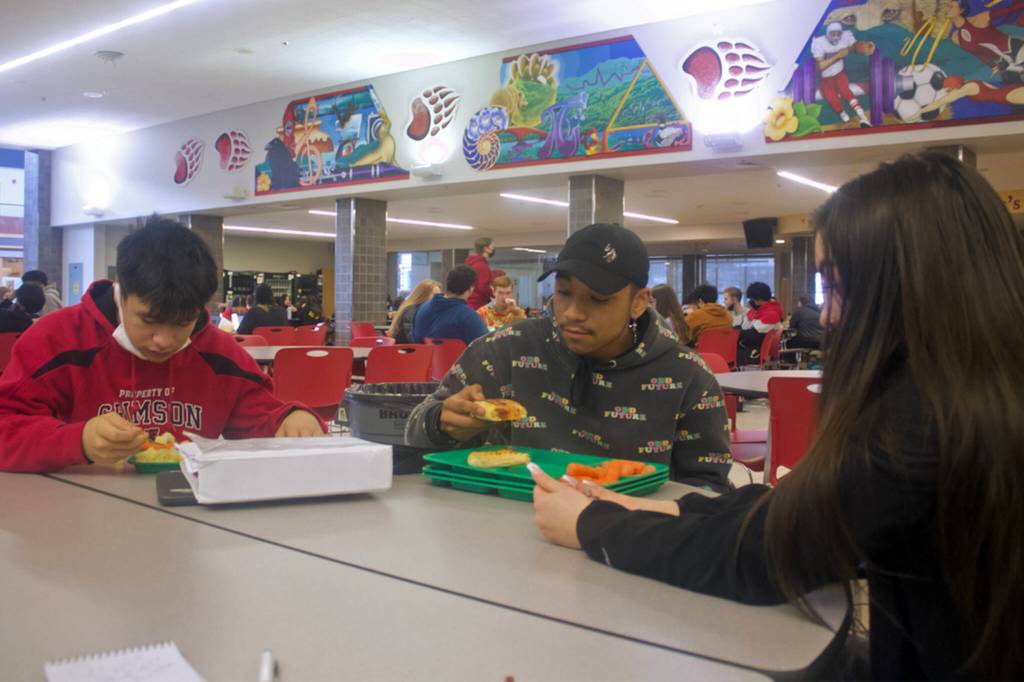


DeAndre Pittman, 16, says he appreciates the free school meals available during the COVID-19 pandemic, but if he has to start paying for lunches again after this school year due to the loss of government funding he won’t be eating the cafeteria’s food.
“I’d rather get a $9 burger from The Breakwater,” he said. “It’s better food.”
Pittman, a sophomore at Juneau-Douglas High School: Yadaa.at Kalé, was among the many students opting for the cafeteria’s pizza and agreeing the nationwide universal school meals program is worth continuing. But the program is scheduled to end June 30 because funding for it was not included in the $1.5 trillion omnibus spending bill passed by the U.S. Senate on March 10.
The Juneau School District is preparing to shift back to the traditional National School Lunch Program starting July 1, meaning 70% or more of local students will likely be required to pay full price for lunches during the coming school year, Adrianne Schwartz, the district’s food service supervisor, stated in an email and subsequent telephone interview Thursday. But she stated she hopes to continue a universal free breakfast program that existed before the pandemic funded with assistance from community organizations and individuals.
“Our hope is to continue offering breakfast free of charge as we have in the past (pre-pandemic) and to keep our lunch meal price reasonably priced,” she wrote.
Free breakfasts and lunches will also be provided to students attending Juneau School District programs this summer, Schwartz noted.
The district is currently serving an average of 650 breakfasts and 1,800 lunches a day, a slight increase from last fall when the average was 600 breakfasts and 1,700 lunches, she said. She said about 30% of the entire student population ate school lunches before the pandemic compared to 44% now, but when the free lunches end “I would anticipate overall participation would go down a bit.”
About 16% of students are opting for free breakfasts, roughly the same as before the pandemic, Schwartz said.
Several of the JDHS students interviewed at lunch Thursday said they are eating more meals in the cafeteria, or know others who are, since they’ve been freely available to all.
“I’ve always just brought my own,” said Ashley Laudert, 17, sitting with three of her friends who were eating mostly home-packed lunches. But since they’ve been free “sometimes I get breakfast.”
Alejandra Gertner, 16, an exchange student from Switzerland at the table, said she generally doesn’t eat the cafeteria meals although she considers them of decent quality and far less expensive than at school back home. But she said she would like the universal free meals to remain available.
“I feel like it’s fine to keep the free meals because they help a lot of people,” she said.
Laudert said if the full free meals program can’t continue perhaps an lower-cost alternative compromise is worth considering.
“Maybe free lunch or breakfast, but not both, so they have the money to buy food,” she said.
Plenty of JDHS students are still willing to pay the price to go off-campus for meals – or have them delivered. Kahiyl Dybdahl, 16, and Sophia Blattner, 16, were eating McDonald’s sandwiches and fries brought by a driver from the Mendenhall Valley.
“I know a lot of students get free meals, but it’s not that great,” Blattner said, specifically mentioning the generally popular pizza that she dislikes after it’s been frozen and reheated.
A return to the traditional program will allow some increased flexibility, Schwartz stated, since the universal program requires five standard meal components be served to students. That has prompted some local school board members and others to express concerns about the amount of food thrown away.
“We intend to transition back to Offer Versus Serve (OVS), giving students the choice to select three of five meal components with fruit and vegetable selections provided on a salad bar,” she wrote. “And, of course, we will do our best to menu both hot and cold food items that are student favorites.”
Education officials favoring a continuation of the nationwide free meals program aren’t given up the fight yet. Among other efforts, the School Nutrition Association Action Network issued a news release Thursday calling for the U.S. Senate to take action on a newly filed school nutrition waiver bill that will extend the program through Sept. 30, 2023, and implement transitional measures in the meantime.
If the free universal meals are discontinued “the Juneau School District plans to set the lunch meal pricing similar to what it was pre-pandemic in an effort to assist our families with easing back into a ’paid’ meal program,” Schwartz wrote.
About 23% of district students are currently eligible for free or reduced-priced meals, although Schwartz stated she expects the percentage will be closer to the 30% that was typical during pre-pandemic years. She noted parents are already being contacted and encouraged to apply to both feed students in need and boost the district’s reimbursement funding from the federal government.
“We are encouraging families to submit applications now,” she wrote. “School meal eligibility not only helps families receive school meal benefits, but the school district and individual schools are sometimes eligible for funding based on overall eligibility percentages.”
Contact Mark Sabbatini at Mark.Sabbatini@juneauempire.com.