Draining state savings? Lawmakers, economists criticize governor’s budget
Published 3:00 am Tuesday, December 17, 2019



State lawmakers and economists are criticizing Gov. Mike Dunleavy’s approach to the budget this year, saying it doesn’t balance the budget or provide much guidance.
The governor is backing off of cuts, but he’s also drawing state savings down to what some are calling dangerously low levels.
“I don’t think it’s fiscally prudent,” said Sen. Natasha Von Imhof, R-Anchorage, co-chair of the Senate Finance Committee. “I’ve been saying all along, we should have a balance with all of our spending.”
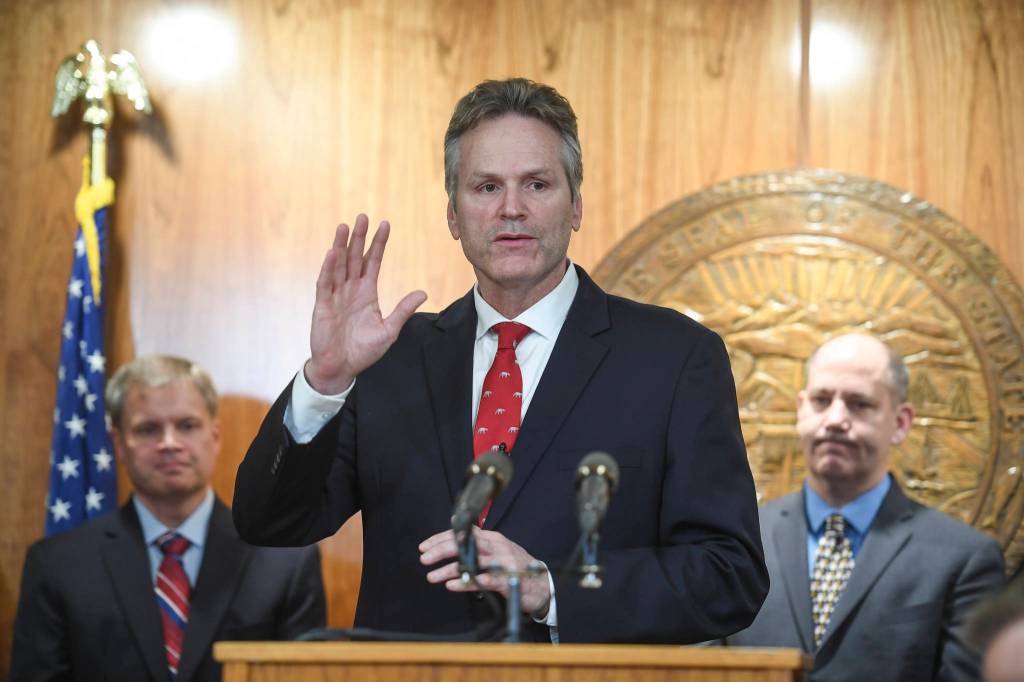
Dunleavy said half of the budget is out of his hands to change, due to formula-driven programs like education spending which can only be changed by the Legislature. The governor said Wednesday when he unveiled the fiscal year 2021 budget that he wanted to have frank discussions with legislators about which formulas need to be changed.
Rep. Jennifer Johnston, R-Anchorage, said she too wanted to have serious discussions about spending, but wasn’t sure it could be done within a single legislative session.
“The last time the education formula was changed, they worked throughout the summer, they had two years and a legislative session,” Johnston said. “I don’t think the Legislature has the bandwidth to do it within 90 days, and it’d probably be irresponsible.”
Johnston is co-chair of the House Finance Committee. She said she’s cautiously optimistic about working with the governor but has some reservations.
“The first thing that came to my mind — it wasn’t a balanced budget,” Johnston said. “It went into savings, it’s taking a huge chunk.”
The governor’s budget relies on a roughly $1.5 billion draw from the Constitutional Budget Reserve, the state’s savings fund. That’s partly because Dunleavy is intent on paying a full-statutory Permanent Fund Dividend of $3,170.
Each year, the state is allowed to use 5.25% of the market value of the Permanent Fund ($64.8 billion as of Oct. 31, according to the Alaska Permanent Fund Corporation), which this year is about $3 billion. Dunleavy is using roughly $2 billion to pay for the dividend, which leaves only a billion left to pay for state services.
That’s where the $1.5 billion from the CBR comes in. But that draw comes with a heavy risk.
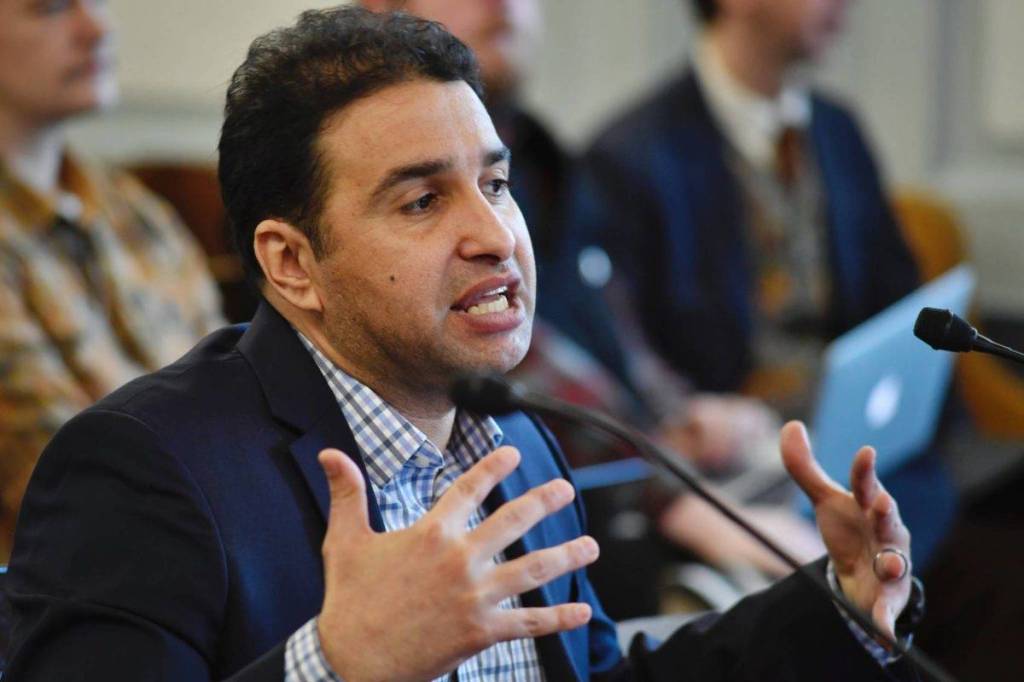
“That basically removes any flexibility going forward,” said Mouhcine Guettabi, associate professor of economics at the University of Alaska Anchorage. “There is simply not enough revenue to pay a full statutory dividend and fund government at its current size.”
That means the state will have to reduce government spending further, reduce the amount of the PFD, find a way to raise revenue or a combination of all three, Guettabi said.
On Wednesday, the governor and his staff maintained his budget was a proposal and meant to be a starting point to work with the Legislature. Lawmakers echoed the notion the governor’s budget was not the final say, but many were still critical of Dunleavy’s approach.
“Draining the CBR, I don’t think that’s a smart thing to do,” Von Imhof said.
Dunleavy said reworking formula-driven spending needed to be done in partnership with the Legislature, but the governor didn’t say which programs he had in mind.
That was something that irked Von Imhof.
“Which formulas are you referring to governor?” she said in an interview with the Empire Thursday. “What are your ideas because you are the leader of the executive branch.”
Von Imhof was also critical of the governor for not balancing the state’s spending.
“We have money to pay core government services and a dividend, just not at the highest level,” she said.
But the governor’s draw on the CBR doesn’t allow for any drawn out discussion. According to the Department of Revenue, the CBR was $2.16 billion as of Nov. 30. Dunleavy said Wednesday the balance of the CBR would be roughly $540 million if the his budget is passed as written.
“The long-term question is still unresolved. Using savings one more year essentially puts the state in a place next year where a decision has to be made,” Guettabi said. “You can’t keep pushing the structural question any longer, because the state will be out of savings.”
In an email, Dunleavy spokesperson Jeff Turner said the decline of the CBR was the result of prior legislative appropriations.
“The administration looks forward to working with the legislature to creating sustainable and affordable budget solutions,” Turner said.
Dunleavy said he’s going on the road in January to meet with Alaskans about what they want the state to look like.
“What kind of programs do they want? What kind of services do they want? How are we going to go about paying for those services?” he asked Wednesday.
Yet Dunleavy said similar things earlier this year. Hearing from Alaskans was partly the intention of his $444 million in vetoes from the FY20 budget, he said in August.
“You don’t get to this point unless you veto. You don’t have this conversation unless you veto,” he said at the time. “We wanted to hear from the Legislature and we wanted to hear from Alaskans what is important.”
One of the goals of the FY21 budget was to create a springboard for discussions with Alaskans, according to Turner.
“That engagement is already underway with lawmakers and begins in January with everyday Alaskans when he travels around the state for a series of meetings to learn more about their thoughts on the budget,” Turner said.
Contact reporter Peter Segall at 523-2228 or psegall@juneauempire.com.
• Contact reporter Peter Segall at 523-2228 or psegall@juneauempire.com.