By 1 vote, lawmakers sustain Dunleavy veto of education bill
Published 10:30 pm Sunday, March 17, 2024

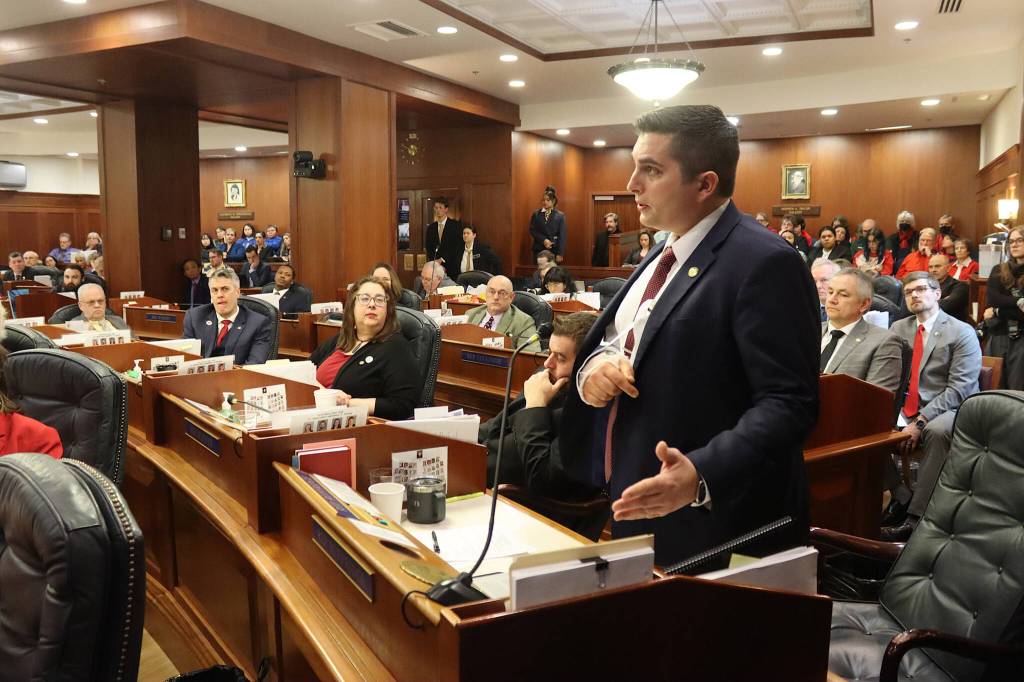
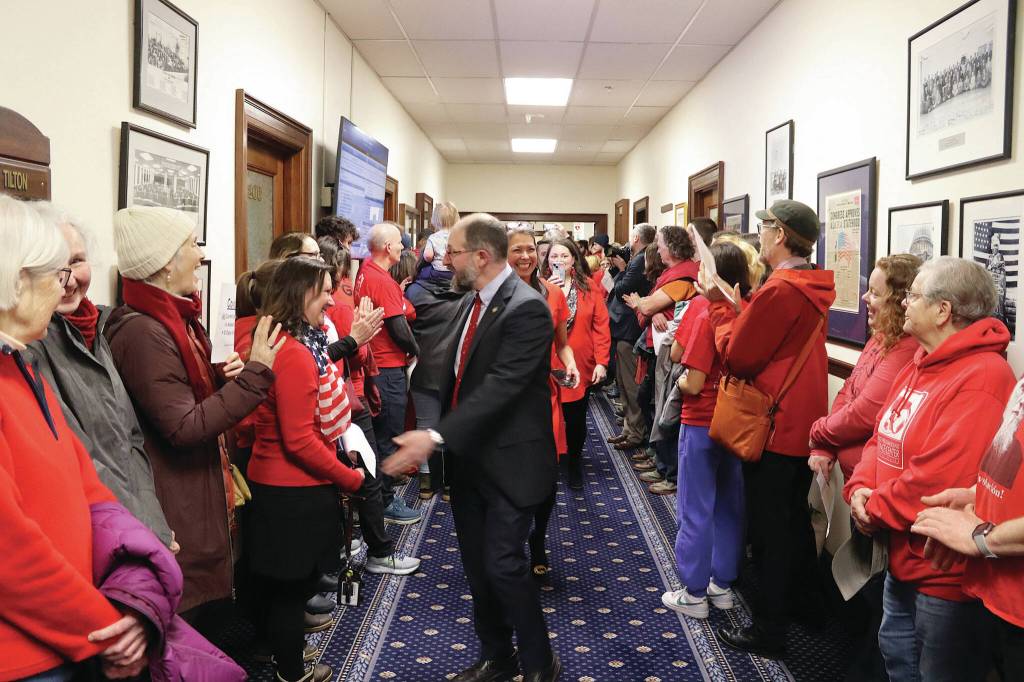
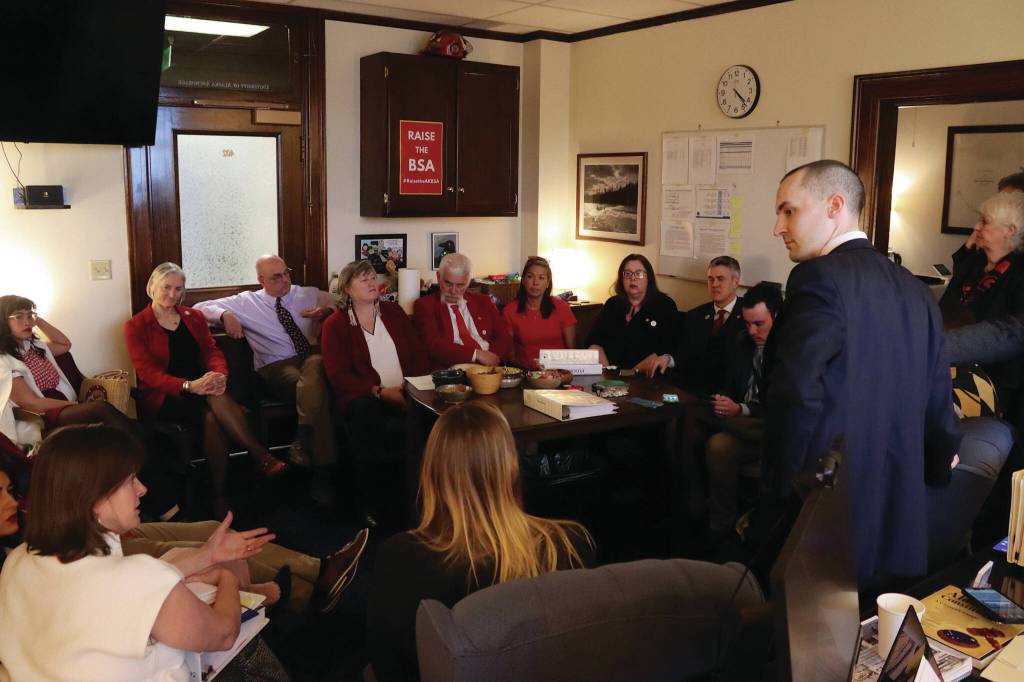

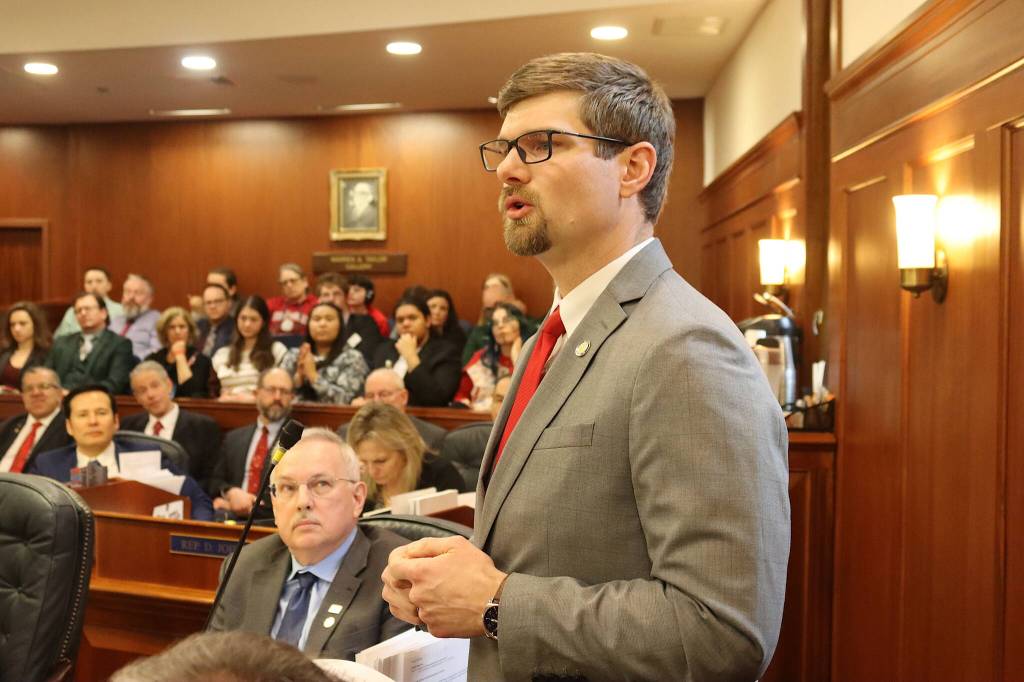


Alaska lawmakers Monday fell one vote short of the 40 votes needed to override Gov. Mike Dunleavy’s veto of a comprehensive education bill that would have increased per-student state funding for K-12 schools by $174 million.
Forty votes were needed to override the veto, handed down three days earlier, across all 60 lawmakers. After almost two hours of debate, just 39 legislators voted to override. Among those who voted to override were Rep. Justin Ruffridge, R-Soldotna, and Sen. Jesse Bjorkman, R-Nikiski.
Dunleavy last Thursday followed through on his threat to veto the bill if lawmakers didn’t also pass some of his other priorities, which included improved access to charter schools and a $54.5 million teacher bonus bill. He warned during a Friday press conference that even if lawmakers successfully overrode his veto, he gets the final approval over state funding through the budget process.
The vetoed bill considered Monday would have also created a statewide charter school coordinator position, funded the reading intervention programs mandated by the Alaska Reads Act, allowed districts to apply for federal funding to help boost internet speed and quality in rural school, funded correspondence students at the same level as students in brick-and-mortar schools, and increased funding for student transportation.
The $680 per-student increase in the state-funding base rate that school districts receive would have brought in just under $11 million to the Kenai Peninsula Borough School District, which is facing a $16 million budget deficit for the upcoming fiscal year.
Dunleavy after Monday’s vote took to social media to thank the Legislature for sustaining his veto.
“I want to thank the legislature for their hard work and commitment to implementing new education reforms that put Alaska families first,” he said in a statement shared to social media. “Let it be clear to school boards and associations: education funding will be prioritized and available – I support solutions that move us forward.”
Lawmakers were split Monday as they debated whether to override the veto.
Ruffridge, a Soldotna Republican who co-chairs the House Education Committee, voted to override the veto. He said “nothing has changed” since the first time he voted in support of S.B. 140, which is needed to provide predictable funding for school districts and support for Alaska’s home-school and charter school students.
“I was personally elected by the people of Kenai and Soldotna and they have overwhelmingly told me this is a bill that they support and as their representative, I will choose to continue to vote in support of this and I urge other members of the body to do that same,” he said.
Bjorkman, who also voted to override Dunleavy’s veto. He listed the budget cuts KPBSD will be forced to consider if it doesn’t receive a boost in state funding, such as laying off teachers, closing pools and theaters and cutting services for small schools.
“The decision that we make today has vital importance to students around our state,” he said. “Please invest in our children’s future.”
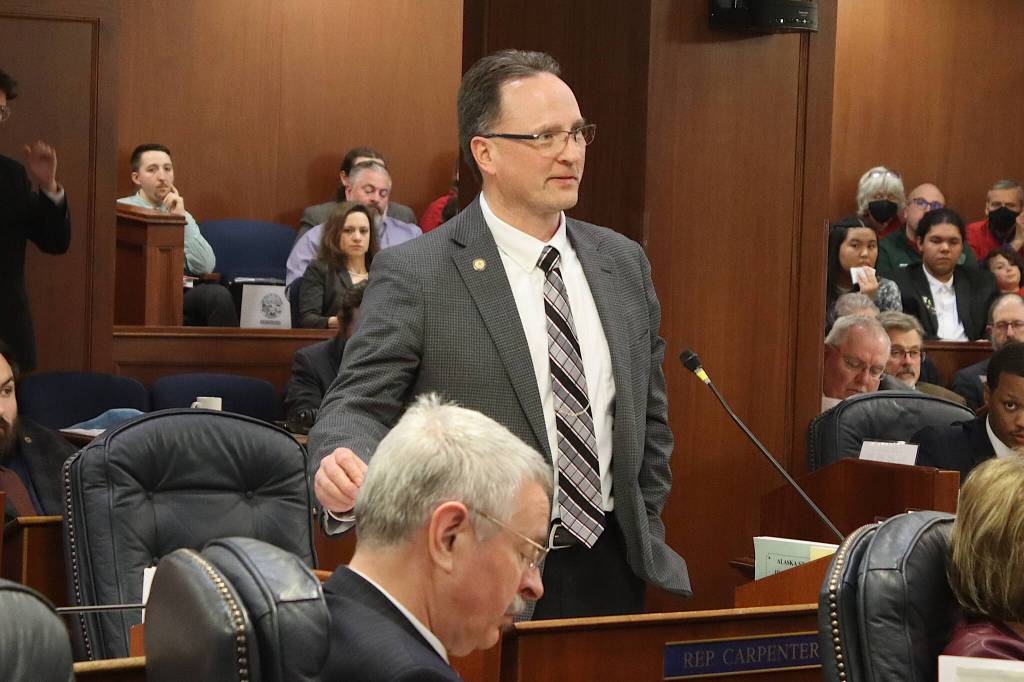
Reps. Ben Carpenter, R-Nikiski, and Sarah Vance, R-Homer, voted to sustain the veto, despite voting in support of S.B. 140 when it passed the House and Senate by wide margins in February.
Carpenter said on the House floor Monday that the only reason he initially supported the bill was “to get this to the governor and have him veto it as quickly as possible so that we can go back to the drawing board.” Lawmakers, he said, can multitask and reconsider education policies while also addressing other top issues, like energy security.
“We still have time to have conversations about good policy,” Carpenter said. “It doesn’t have to happen in this bill.”
Vance echoed those comments, saying that she supports a BSA increase and more resources for home-school and charter school students, but that there is still time for lawmakers to incorporate more opportunities for parent engagement in the bill. Students and their families, she said, “deserve a little bit more” than what S.B. 140 gives them.
“I want to continue this conversation,” Vance said. “We are only halfway through the session and I reject the notion that … supporting this veto is saying that these schools will not be funded, because we absolutely have an opportunity to do more, to do it better (and) to make sure they do get funded this session.”
Sitka Republican Sen. Bert Stedman, who co-chairs the Senate Finance Committee, said that while S.B. 140 is not an appropriations bill, it still indirectly spends state money, by rewriting the state funding formula. Stedman, who voted to override, called it “distasteful” that rural students would be “held hostage” as the state “squabbl(es)” over education funding.
“We’re never going to come up with a formula that everybody agrees that’s fair to every single thing,” Stedman said.
House Rules Chair Craig Johnson, who voted to sustain the veto, was clear to school districts: “Don’t plan on $680.” Dunleavy, Johnson said, has already vetoed the $680 BSA increase one, and there’s no reason to think he won’t do it again. Lawmakers, he said, shouldn’t give school district “false hope.” He’s predicting one-time, status quo funding moving forward.
“What I want to see this body do is to paint a realistic picture of the future,” Johnson said. “Any district that goes out and spends the $680 right now is probably not in the best interest of themselves, students or their parents.”
Legislative leaders in the House and Senate said they will try to move forward key items in S.B. 140, including a BSA increase. They said doing so, though, will be difficult knowing Dunleavy can veto any extra funds when he signs the budget in June. Multiple legislators said it will be hard to “move on” — as proposed by Dunleavy last week — to other issues.
Senate President Gary Stevens, a Kodiak Republican, voted to override the veto. He said after Monday’s vote it will be difficult to work on education and energy at the same time.
“I think it damages everything,” he said. “We have got to solve education. We can’t go on to energy until we solve education. We can’t leave here with no funding for education. I don’t think anybody wants that. So yeah, although it has really sucked all the oxygen out of the place I think, we will continue to deal with education.”
House Minority Leader Calvin Schrage, an Anchorage independent, told reporters after Monday’s vote that the 16-member Alaska House Coalition will continue fighting for education funding during the session, whether through a bill or through a budget appropriation. Schrage said leaving the issue unsettled makes it difficult to move on to other issues before the end of session.
“I think it makes it hard because now the House majority has to go to the governor for every policy and say ‘Is this good enough, governor? How should we vote on this today?’” he said. “I think that makes it very difficult to cede legislative power to the governor and put everything in his hands.”
Ruffridge said via text after Monday’s vote that he’ll continue advocating for the priorities he championed as part of S.B. 140, including predictable school funding, support for charter school and correspondence students and transportation funding. Looking at next steps, Ruffridge said he plans to confer with people who voted to sustain the veto to find a path forward.
“I am disappointed to be sure but maintain my commitment to finding solutions,” he said.
Kenai Peninsula School District Superintendent Clayton Holland on Monday reiterated KPBSD’s concerns about not knowing how much state funding it will receive until after its budget has already been created. By approving education funding early in the session, lawmakers hoped to provide districts with certainty as they put their annual spending plans together.
School board members earlier this month directed KPBSD’s finance director to build their budget with an assumed $680 base student allocation. Now, Holland said they’re likely build a document that assumes no new state funding.
“Building around that $680 number had to do with optimism about the possibility of a veto override, given than 38 of the 40 members of the House had voted for S.B. 140,” he said. “ … As far as having a budget to present to the borough that’s balanced by May 1, we have to really look at a zero increase from the state.”
Holland said he’ll recommend that the district use all of the money it has in savings to help balance KPBSD’s budget deficit, but that there’s “not going to be any area that’s untouched” as the board mulls budget cuts. Lost as “adults play their political games” in Juneau, Holland said, is the impact financial uncertainty has on students.
“(There’s) still a lot of work to do,” he said. “It can be a painful process and that’s what we were trying to avoid. We were trying to avoid splitting the community with these discussions.”
The KPBSD Board of Education’s Finance Committee is expected to meet before the end of the month to review their budget plans in response to the action on S.B. 140. The school district must deliver a balanced budget to the Kenai Peninsula Borough for consideration by May 1.
Monday’s joint session can be streamed via KTOO at ktoo.org/gavel.
Juneau Empire Editor Mark Sabbatini contributed to this story and can be reached as editor@juneauempire.com.