Board hikes Kenai River king salmon escapement goal
Published 10:30 pm Friday, February 14, 2020
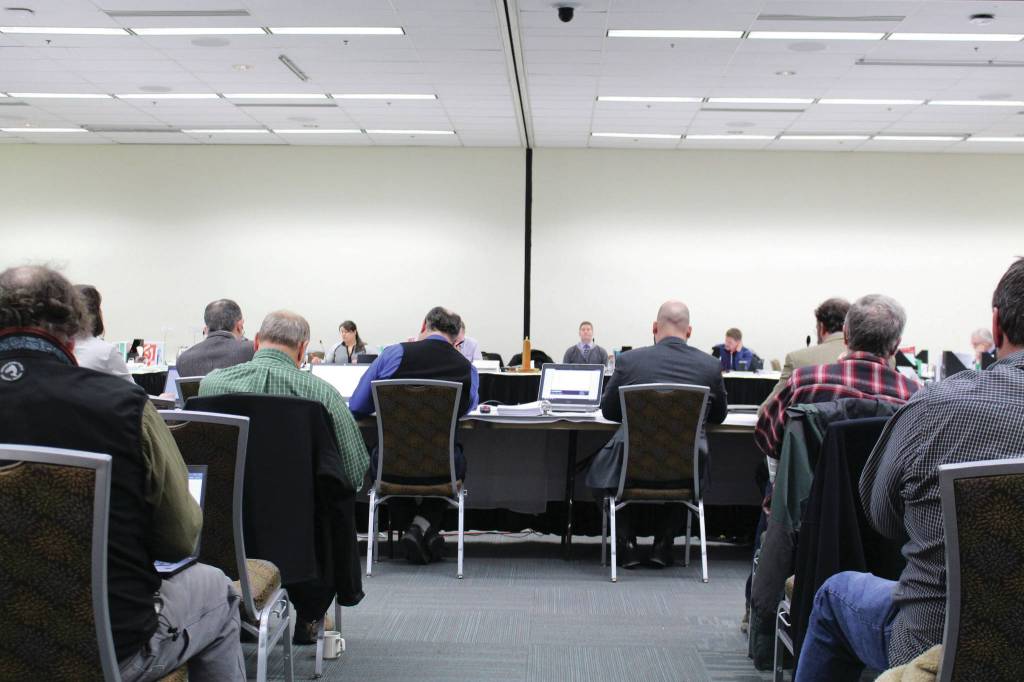
In an effort to rehabilitate the king salmon population in the Kenai River, the Alaska Board of Fisheries adopted a proposal Friday that increases the escapement goal and tightens restrictions on both sport and commercial fisheries.
Proposal 104, originally introduced by the Kenai River Sportfishing Association, was adopted by a vote of 5-2 on Friday with substitute language crafted by the Alaska Department of Fish and Game.
Board members and staff from ADF&G spent several hours on Thursday deliberating over changes to the language of the proposal.
After the measure’s passage, the Kenai River Sportfishing Association released a statement praising the decision.
“Without the collaboration of all user groups – set netters, guides and Alaska sport fishermen, this proposal may not have passed,” KRSA Executive Director Ben Mohr said in the release. “Protecting the Kenai Kings is a legacy we can all be proud of. The Board of Fisheries deserves credit for encouraging all stakeholders to collaborate on this effort.”
The original proposal was unanimously rejected by the Kenai Soldotna Advisory Committee when they met in January. In their comments submitted to the Board, the Advisory Committee noted that more clarity was needed and the proposed paired restrictions could add additional costs to the management of the fisheries. The committee also cautioned against including the proposed provisions in the Kasilof River management plan.
In their staff comments submitted to the Board, ADF&G noted that this proposal was not expected to result in an additional direct cost for the department.
Paul A. Shadura II, commercial fisherman and vice chair of the Kenai/Soldotna Advisory Committee, submitted a public comment to the Board warning against the effects that the proposed changes would have on the commercial fishing industry.
“Board members should acknowledge that actions that they take today will affect the lives of many, destroy the economy of many communities, add to the destruction of our state’s economy, cause many entities to become insolvent and create a social demise in our Alaskan communities,” Shadura said in the comment.
New Optimal Escapement Goal (OEG)
The proposal amends the Kenai River Late-Run King Salmon Management Plan in several ways, including replacing the sustainable escapement goal of 13,500-27,000 large king salmon to an optimum escapement goal of 15,000-30,000 large king salmon.
If the optimal escapement goal is projected to be exceeded, the ADF&G commissioner can issue an emergency order to extend the sport fishing season by up to seven days in the first week of August.
Sustainable escapement goals, as defined by ADF&G, are meant to conserve stock over a five- to 10-year period and are used by the Department when a biological escapement goal cannot be estimated.
Optimum escapement goals are set by the Board of Fisheries and supersede sustainable escapement goals. The goals are meant to allow for sustainable runs based on biological needs and to ensure healthy returns for all fisheries.
Large king salmon are defined by ADF&G as at least 75 cm from mid-eye to tail fork.
ADF&G released their forecast earlier this year for both the early and late runs of king salmon in the Kenai River, predicting approximately 4,794 large fish in the early run and 22,707 large fish in the late run.
The 2019 forecasts from ADF&G turned out to be off by a large margin. Last year the Department forecasted 22,105 large fish in the late run but had an estimated total of about 12,780 large fish.
Bait and size restrictions
The proposal adds a new provision to the management plan that allows the ADF&G commissioner to issue an emergency order prohibiting the use of bait and the retention of large king salmon — defined as 34 inches or greater in length — in the Kenai River sport fishery in order to achieve the optimum escapement goal.
The proposal also changes the paired restrictions for the Upper Subdistrict set gill net commercial fishery and no longer excludes the East Foreland Section from these paired restrictions.
During times when the sport fishery is restricted from bait use and retention of large king salmon, the commercial fishing periods will be limited to 36 hours per week, with a 36-hour continuous closure from 7 p.m. Thursday to 7 a.m. Friday every week. Commercial fishing periods that occur within 600 feet of the mean high-tide mark are exempt from hour and gear limitations.
If any of the time restrictions are in place, commercial fishing operations will also be limited to four gill nets no more than 35 fathoms in length, 105 fathoms in aggregate length and 29 meshes in depth, two set gill nets that are no more than 35 fathoms in length and 45 meshes in depth, or one set gill net no more than 35 fathoms in length and 45 meshes in depth. Any gill nets less than 29 meshes in depth must be identified with an attached blue buoy no less than 9.5 inches in diameter.
The gear restrictions laid out in this proposal will not apply to the Kasilof Special Harvest Area section of the Kasilof River Salmon Management Plan, but the time restrictions will apply to this section.
The provisions of the late-run management plan will be in effect from June 20 to Aug. 15.
The Board will continue to discuss proposed regulatory changes to the Upper Cook Inlet Finfish Fisheries until Tuesday, Feb. 18. Audio from the meetings is streamed live on the Board’s website and posted online in their entirety after they take place.