Air ambulances save lives
Published 4:43 pm Wednesday, August 8, 2018
Like many Alaskans, Milli Martin thrives on physical activity. She hikes, skis, horseback rides, picks berries and gardens. When Martin needs more than that, she packs up her motorhome and goes in search of distant trails to explore and water to kayak.
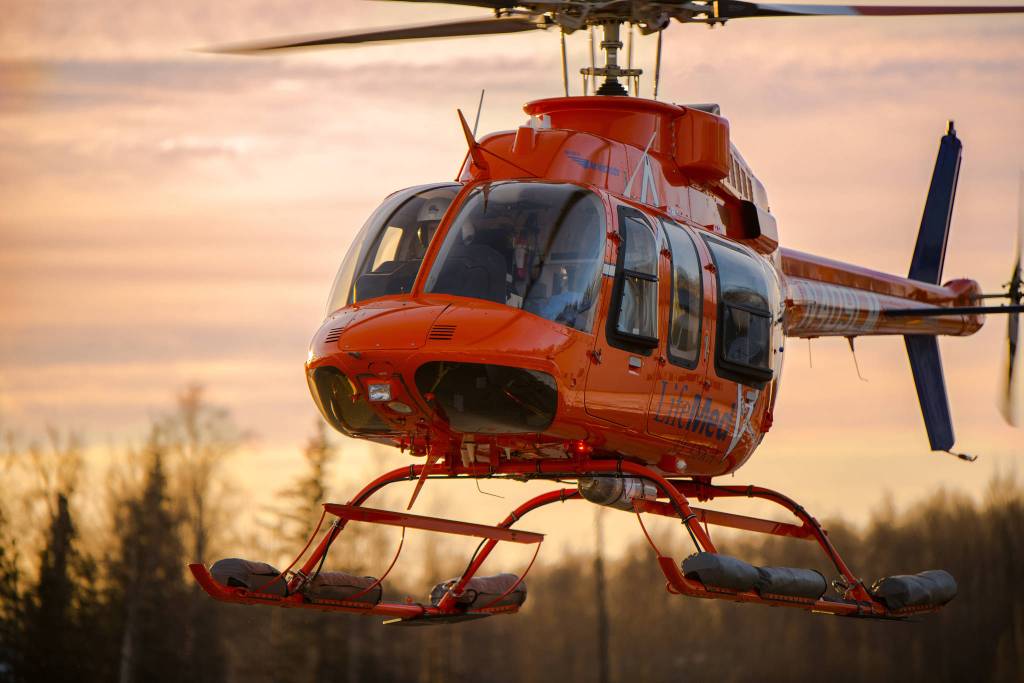
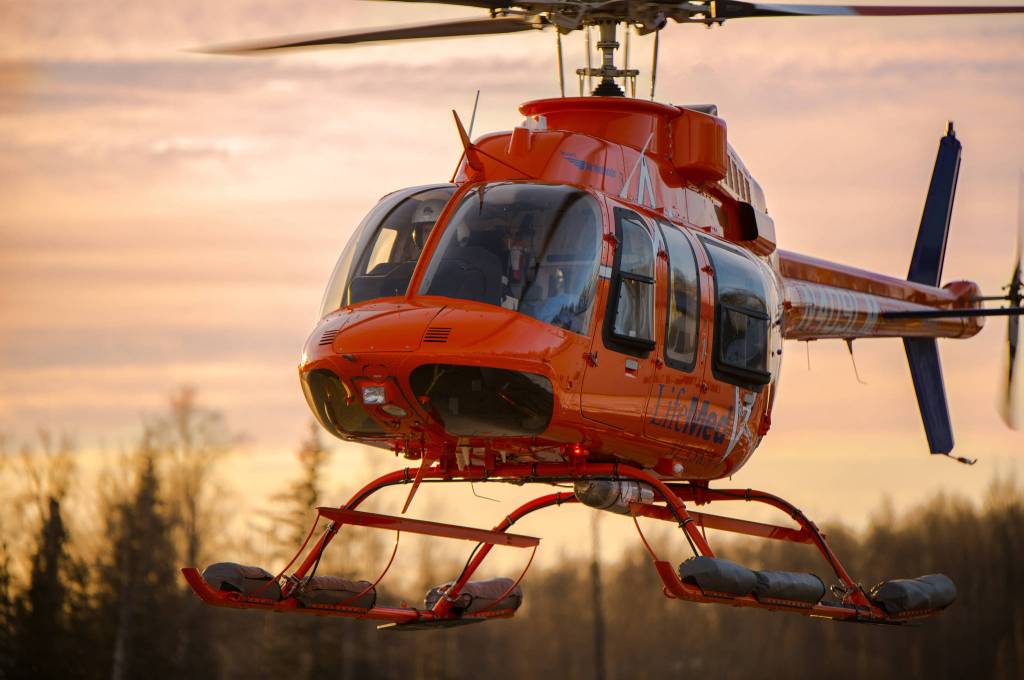
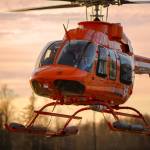
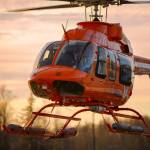
In summer 2015, when simply walking made breathing a struggle, Martin checked with her doctor who found that her left lung was bleeding. In short order, Martin found herself strapped securely into the seat of LifeMed Alaska’s Bell 407 helicopter, lifting off from South Peninsula Hospital and taking the flight of her life. Or, more accurately, a flight to save her life.
A tightness in Joe Talbott’s chest, something like mild indigestion, got Talbott’s attention on a morning this May. After enjoying lunch with friends and with the tightness persisting, he and his wife Lisa drove to South Peninsula Hospital to have the discomfort checked out. Nitro pills and an echochardiogram didn’t prove anything conclusive, but “triggered the senses of the ER doc who decided that the best choice was a quick trip to Anchorage,” said Talbott. “It was all rather surreal to me at the time, but I didn’t have any objection and Lisa was totally on board with the decision.”
Similarly to Martin, the LifeMed helo was the choice of transport. Unlike Martin, Talbott was flown to Alaska Regional Hospital.
“I have a fairly extensive background in emergency medical procedures and would say that the flight crew handled the medevac in a very professional manner. … I didn’t really need any special care during the flight. At that point I became a ‘tourist’ and took a lot of photos using my iPhone,” said Talbott, admitting, however, that his memories of the experience may be less than accurate due to having been administered morphine.
Because he was flat on his back as opposed to sitting up, the only way he could see the country below was by taking photos with his phone and then reviewing them from his prone position.
In spite of offering a wide range of medical support, South Peninsula Hospital has its limits. To make up for that, they’re classified a Level IV Trauma Center, according to Lee Yale, South Peninsula Hospital’s chief nursing officer, explaining how it is determined whether or not a situation rises to the level of needing to be sent to another medical facility.
As defined by the American College of Surgeons Committee on Trauma, medical facilities can offer four levels of trauma response:
Level I: Generally serves large cities or heavily populated areas and are responsible for providing research, professional and community education leadership;
Level II: Offers comprehensive trauma care; serves as the lead trauma facility for a geographic area; provides educational outreach and prevention programs; takes a leadership role for trauma systems; has emergency physicians and nurses to begin resuscitation and stabilization; has surgical teams on call;
Level III: Provides assessment resuscitation, emergency surgery, and stabilization; arranges for transfer to a Level I or Level II trauma center that can provide definitive care; has a surgeon available; is involved with prevention and has an outreach program;
Level IV: Small, rural facilities that provide initial evaluation and assessment prior to transfer to a larger facility.
In addition to transporting patients out of the area, SPH also receives air transports with patients “off freighters, from across Kachemak Bay, some United States Coast Guard pickups, for some things like broken hips, broken arms, legs, anything like that,” said Yale.
Two companies provide air ambulance service to SPH.
“We use LifeMed Alaska, and then we use Guardian (Flight Alaska) for VA (U.S. Department of Veterans Affairs) and tribal patients. It’s based on insurance reasons,” said Yale.
The decision that a patient needs care beyond what can be provided at SPH is done “usually within five to 10 minutes of getting a patient,” said Lee. “It depends on the condition (of patients) when they arrive and our Emergency Department doctors are very astute.”
Sometimes it takes an hour or two to stabilize a patient so he or she is ready for transported. Sometimes, conditions change.
“Some might look pretty good but when we run the first EKG (electrocardiogram), we find it’s not what we first thought,” Lee said, as an example.
If it’s LifeMed Alaska being summoned, the closest aircraft is the Bell 407 helicopter in Soldotna.
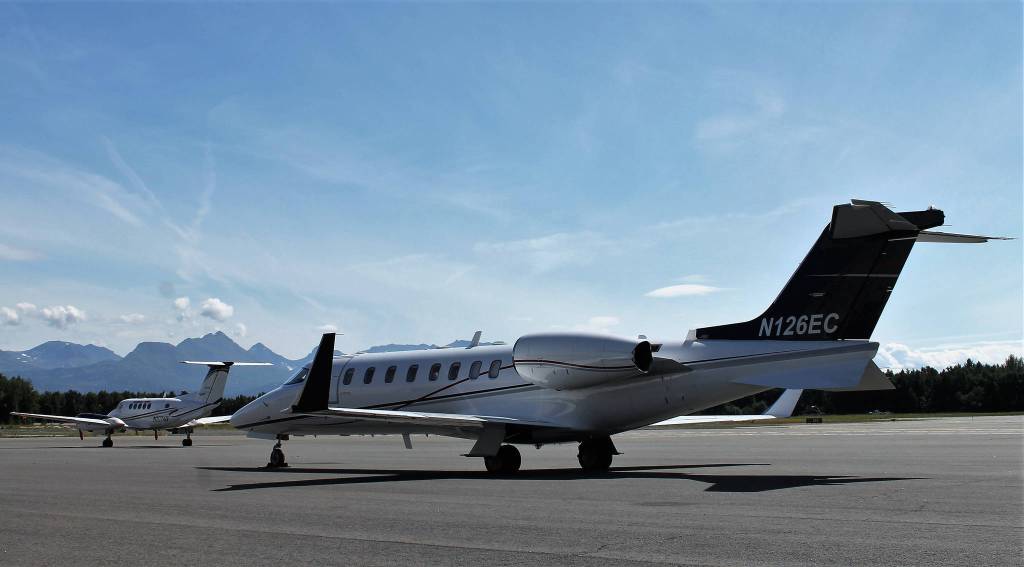
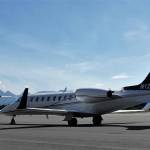
“We dispatch geographically for the fastest way to get a crew to your hospital,” said Erik Lewis, who is trained as a flight nurse and serves as LifeMed Alaska’s director of clinical services in Anchorage. If the helo isn’t available, the choice is either a Beechcraft King Air or one of the company’s Learjets capable of flying into Homer. The planes are outfitted as small emergency rooms, complete with monitors, ventilators, oxygen, compressed air, emergency medications and supplies. The crews include a pilot, a flight nurse and a flight paramedic.
Typically, if it’s a helo, the pilot will drop the crew off at SPH, fuel the aircraft while the crew is readying the patient for transport, and then return to the hospital to pick up the patient and crew.
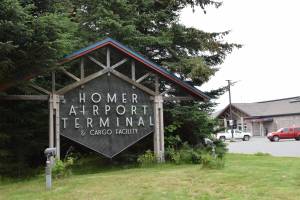
If the call for transport goes to Guardian Flight Alaska, the responding aircraft — either a Beechcraft King Air or a Learjet — will arrive at the Homer airport from Anchorage, according to Colleen Henderson, who handles Guardian Flight Alaska’s business development from her Anchorage office. The company is in the midst of upgrading the Learjet to one with 40 percent more cabin room, capable of holding two passengers, and having a slower approach, meaning pilots can make approaches with lower cloud ceilings and lower visibility requirements, according to Henderson. In addition to a pilot, the crew includes a paramedic and a registered nurse.
“We like to have one of each versus two of the same because they each bring different skill sets that are often needed,” said Henderson.
In the last three months, air ambulances have been summoned by SPH an average of 13-14 times a month according to Yale. During summer months that number goes up due to increased activity and visitors in the area.
“Recently we called and said we needed them right away, and it took about 35-40 minutes from Anchorage, which was phenomenal,” said Yale of the speedy response. “It just depends on where they are when we call.”
Although the majority of patients transported are adults, children have a priority.
“Children are fragile and we get them out of here pretty quick,” said Yale.
Flight crews are in contact with SPH prior to arriving. They also maintain contact with the facility to which the patient is being transported. Prior to Martin’s arrival at Providence Medical Center, her Homer doctor and the flight crew had alerted the Providence medical team. After reviewing Martin’s records, the Providence doctors realized a patient with a very rare autoimmune condition would soon be landing on the hospital’s helo pad.
“When I got to Anchorage, three top specialists were there to meet me: kidney, heart and lung,” said Martin.
This is LifeMed Alaska’s 10-year anniversary since LifeGuard Alaska and AeroMed merged in November 2008. LifeMed is accredited through the Commission on Accreditation of Medical Transport Systems, and provides service west as far as Attu and Russia, east into Canada, and can take a patient as far as Seattle if necessary, although the majority of patients go to Anchorage. LifeMed Alaska offers flight insurance that can be requested by a patient at the time of service.
“That means all you pay out of pocket is $49 and the rest is billed to your insurance,” said Lewis.
Guardian Flight Alaska was founded in 1997 by Frontier Flying Service and in 2000 it separated and became a stand-alone, privately owned company. It has bases in Fairbanks, Kotzebue, Sitka, Ketchikan, Juneau and Anchorage, and is accredited by the National Accreditation Alliance of Medical Transport Applications at the critical care level. Crews have round-the-clock access to medical direction from Alaska Regional Hospital Emergency Department physicians.
Rather than insurance, Guardian Flight Alaska offers an annual membership for $125 that covers air ambulance service by partnering companies in all 50 states and takes three days to process.
“We bill insurance, but if you don’t have insurance, we still do not charge you,” said Henderson.
Yale praised the level of service LifeMed Alaska and Guardian Flight Alaska provide.
“I feel safer knowing they’re here,” she said. “They are phenomenal people. … We’re lucky to have them.”
Talbott agreed.
“I think that this is a great resource for the times when a transport is essential or when the location of the individual with respect to the desired care facility makes an air evac the only option,” he said.
Secured upright in the seat next to the pilot, with the nurse and paramedic right behind her, Martin used the Homer-to-Anchorage flight to enjoy views of the Kenai Peninsula’s backcountry rather than her failing health.
“I was never afraid,” she said of her situation. “It was an adventure.”
For more information, visit lifemedalaska.com or alaska.guardianflight.com.
McKibben Jackinsky is a freelance writer who lives in Homer. She can be reached at mckibben.jackinsky@gmail.com.