100 years ago, Spanish flu devastated Alaska Native villages
Published 2:58 pm Friday, June 22, 2018

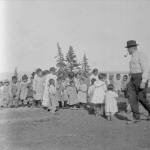
At the dawn of the 20th century, 15 people lived in the village of Point Possession on the northern tip of the Kenai Peninsula, according to census data. After the 1918 Spanish flu epidemic reached the small settlement and killed 10 people, a single family were all that was left of the Point Possession population.
A century later, the exact death toll from Spanish flu is unknown. Estimates place it between 20 million and 50 million people worldwide.
The Alaska Office of Vital Statistics reports nearly 3,000 deaths between 1918 and 1919 in the territory. Per capita, more people died in Alaska of the Spanish flu than anywhere else in the world other than Samoa.
Katie Ringsmuth, a history professor at the University of Alaska Anchorage and owner of public history consulting business Tundra Vision, said the epidemic represented total annihilation.
“This truly was as close to extinction as people experienced,” Ringsmuth said. “What’s shocking to me is that very few people are talking about this as the anniversary arrives … This was a demographic game-changer. Before, there were more native people than neo-Americans.”
Ringsmuth is working on restoring the Naknek cannery in the Bristol Bay region. She’s been compiling documents and records to tell the history of how the flu affected Alaska and the small fishing community of Naknek. Ringsmuth said it was the community’s most able-bodied that were affected by the flu.
“You tend to think it was the old people, the young, the weak, but it [wasn’t],”Ringsmuth said. “It killed the 30-year-olds, the strongest part of the community.”
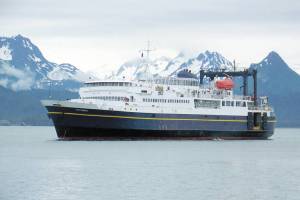
Though the epidemic began in January 1918 in the rest of the world, the virus took a long time to reach Alaska. Historians believe it was likely carried by steamships and barges from Seattle and other ports. The first cases appeared in October in Juneau, and as ships and barges made their way around the state in the fall of 1918. The pandemic seeped into the state from the coasts. In October 1918, the S.S. Victoria docked in Nome, and the men on board unknowingly delivered mail carrying the virus, according to a 2015 Senior Voice article by Alaska historian Laurel Downing Bill. A month later, 31 of the men aboard the S.S. Victoria died heading south from Nome. Dog sled teams, explorers, missionaries and people in search of their family members brought influenza into Alaska’s more isolated areas.
In historian Alfred Crosby’s “The Forgotten Pandemic,” he writes about how Spanish flu affected the U.S., how the disease made its way from one side of the country to the other and why he believes the events of 1918 and 1919 are “largely forgotten.” In reference to how quickly and virulently influenza impacted the small villages of Alaska’s northwest corner, Crosby states in his book that “the Spanish flu did to Nome and the Seward Peninsula what the Black Death did to 14-century Europe.” Crosby estimated that 8 percent of the Alaska Native population died from the flu.
Tim Troll, a former Dillingham resident, used to the run the museum there. He’s also compiling a history of how the Spanish flu affected Alaska and the Bristol Bay area.
“This was a worldwide epidemic, and Alaska is always thought of being isolated and out of the way, but not enough to keep this sort of thing out,” Troll said.
At the time, the territorial government of Alaska was overwhelmed with the demand in medical care, and the federal government had exhausted services fighting the pandemic in the Lower 48 and providing for the war effort in World War I. Territorial Governor Thomas Riggs requested $200,000 in relief aid for the state. The request was reduced by half by the U.S. Senate and then voted down in the House of Representatives.
Other diseases not previously endemic to Alaska were also making their way into the state. Cases of smallpox, influenza, measles, tuberculosis, whooping cough and other communicable diseases cropped up in villages in Alaska from the 1830s–1920. The disease was carried to some of the state’s most remote locales, often by ship and dog sled. As villages became aware of the deadly infiltration, word of mouth was often times the only way to warn other communities. In a 2012 Anchorage Daily News article, author Tony Hopfinger describes how village leaders and doctors across Alaska ordered the closure of public spaces. Travel was prohibited between villages and armed guards positioned themselves outside some communities and were ordered to shoot anybody who tried to enter. One village, Shishmaref, was able to evade the flu completely.
“(The Spanish flu) epidemic, horrible as it was, occurred in the context of wave after wave of lethal diseases that decimated Alaska Natives,” Shana Loshbaugh, an independent scholar from Kenai who now lives in Fairbanks, said. “The only thing special about it was that, apparently, it was the last major scourge.”
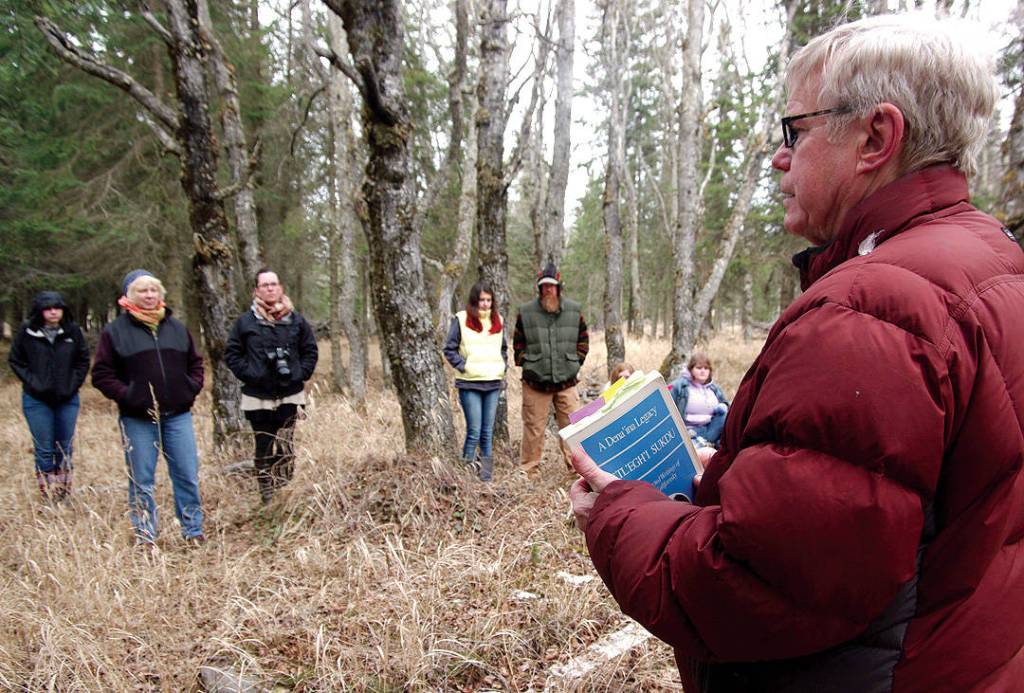
The story was similar on the Kenai Peninsula. Record-keeping at the time was limited, but Alan Boraas, an anthropology professor at Kenai Peninsula College, said about half of the Dena’ina Alaska Native population in the Cook Inlet region died from the epidemic. From 1880–1920, at least eight Dena’ina villages were abandoned after too many people died for the villages to survive.
Places like Kalifornsky, Point Possession, Nikiski, Anchor Point and other villages across the inlet became too small after the epidemic. Boraas said the survivors came to Kenai, Tyonek or relocated further north to Eklutna.
Boraas said the nearest medical facility was in Seward, and that there may have only been one medical professional in Kenai at the time.
“People just suffered and it was terrible,” Boraas said.
By the summer of 1919, the disease was gone from the peninsula.
Today, there are few reminders of influenza’s effect on the peninsula. South of Kenai near Kasilof lies the old village site of Kalifornsky. Abandoned after the outbreak, a small graveyard inside a delicate white fence holds 16 unmarked graves, and one outside the fence, Dena’ina elder and writer Peter Kalifornsky’s resting place. The graves inside the fence belong to village members who perished from disease. The village’s survivors moved to Kenai, or across Cook Inlet to Tyonek.
In Alaska, more than just lives succumbed to what is widely considered one of the world’s worst influenza epidemics. Entire communities and cultures vanished in its wake.
“There was a loss of language, culture, formal schooling and more,” Boraas said.
Reach Victoria Petersen at vpetersen@cmg-northwest2.go-vip.net/peninsulaclarion.