100% Alaska survey results, state of services discussed at town hall
Published 9:30 pm Sunday, June 4, 2023
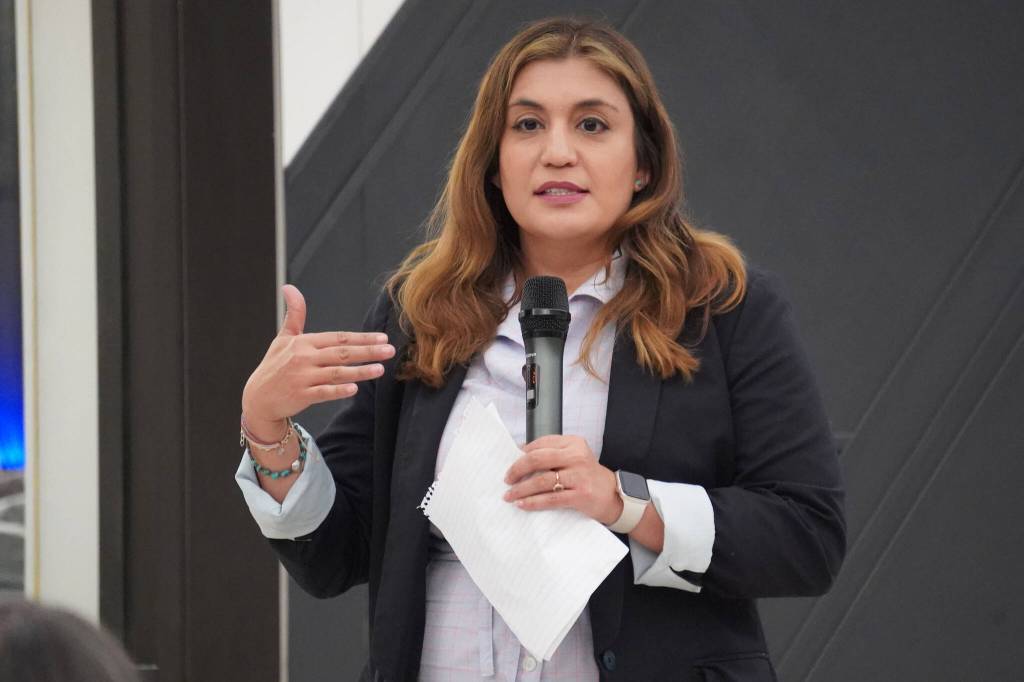
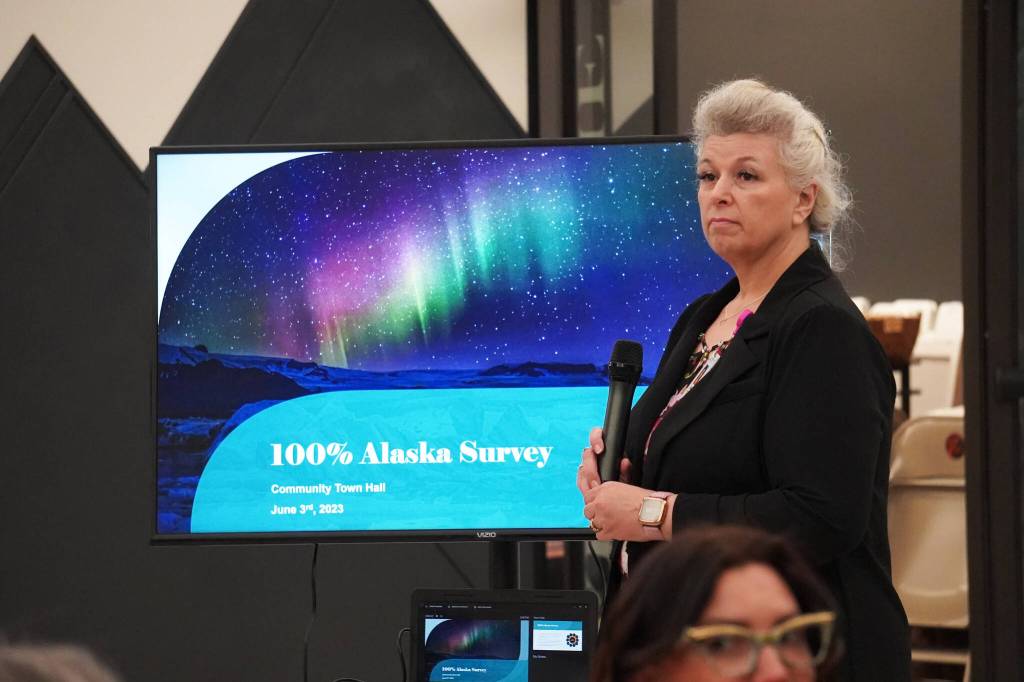
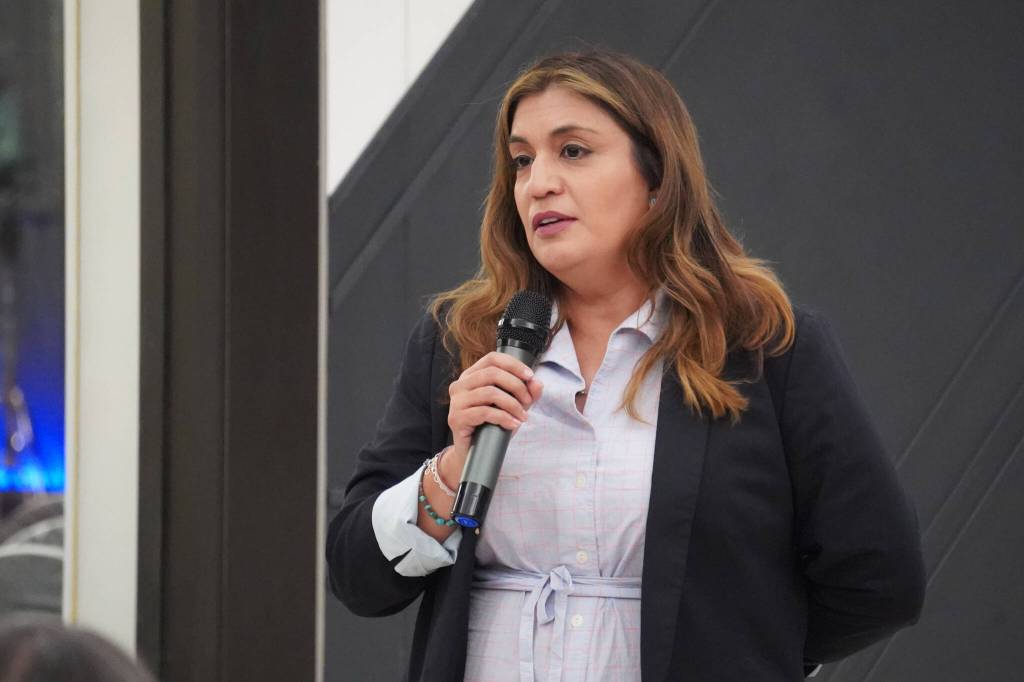


Dozens gathered at the Peninsula Center Mall on Saturday to discuss the state of 10 vital services on the central peninsula, as part of a “100% Alaska” community town hall put on by Change 4 the Kenai.
Ahead of the event, Coalition Director Shari Conner said 100% Alaska was directly inspired by “100% Community,” a book by Dr. Katherine Ortega Courtney and Dominic Cappello that outlined those 10 vital services as well as a framework for seeking improvements to them. Courtney attended Saturday’s meeting in person to answer questions and provide her own input.
The 10 vital services identified in that text and now targeted by the coalition are: medical and dental care; behavioral health care; housing security programs; food security programs; transportation to vital services; parent supports; early childhood education; community schools; youth mentor programs; and job training.
A sample of the central peninsula
Stephanie Stillwell took the lead during the town hall conversation and shared the results of the 100% Alaska survey, which drew 900 responses. Of respondents, 700 answered every question.
Stillwell noted that the response size doesn’t necessarily paint an accurate picture of the entirety of the central peninsula, and encouraged considering who the survey may not have reached.
Most of the respondents were female and most were white, the coalition said. They represented seven communities on the Kenai Peninsula, from Sterling to Clam Gulch to Nikiski.
Adverse childhood experiences
In addition to the 10 vital services, a survey run by Change 4 the Kenai late last year queried respondents about “ACEs,” adverse childhood experiences.
According to the Centers for Disease Control and Prevention, these include a variety of potentially traumatic events that occur in the first 17 years of life, including violence, neglect or abuse, as well as living in a household with adults who struggle with substance abuse, mental health, parental separation or household members being jailed.
ACEs, Courtney said, have been shown since 1997 to be “almost predictive” of what can happen to children as they grow into adults. Those who experience four or more ACEs as children have a higher likelihood of suffering from heart disease, substance abuse, lack of employment and others.
That troubling risk, she said, can be mitigated by support.
“That’s what our goal is with ‘100% Community’,” she said. “To make sure that every single family member, every single person that needs it, every single person in the community can access the services they need to survive and thrive.”
ACEs were represented in the survey as a total score, from 0-10, based on the number of experiences any one individual had. Around 81% reported at least one ACE. The average score of all individuals was 3.95, and nearly half of respondents at 46% had that “four or more” described by Courtney.
The findings of the coalition were also that the average ACE score was higher among younger age groups. In those older than 65, the average score was 2.4. In those 18-24, the average was 5.
Information provided by the coalition says that before the age of 18, more than half of the respondents were “sworn at, insulted, or put down by an adult at home.” Around 40% experienced unwanted sexual contact and around 40% experienced either physical or mental harm. Each of these three stats were more pronounced when only women were considered — 70% reported being put down, 80% reported unwanted sexual contact and 70% reported physical or mental harm.
In the discussion, attendees pointed to a lack of resources for addressing mental health issues, to changing social climates including an increase in the number of single parents, and the COVID-19 pandemic.
The findings of the coalition largely aligned with what Courtney was seeing in her own communities in New Mexico, she said. According to data updated in 2022 by the CDC, around 61% of adults in 25 states reported one type of ACE, significantly fewer than the local findings of Change 4 the Kenai.
Mental health care vital for survival
Results based on each of the 10 vital services were addressed one at a time, and the services were broken into two groups: “Vital Services for Survival” and “Vital Services for Thriving.” Much of the conversation revolved around the former, with Stillwell saying that it seems the community needs to address those survival needs first before they can turn their attention to thriving.
Mental health care services were reported by 42% of respondents to be either inaccessible or not very accessible. Around 30% of respondents said either that they weren’t looking for mental health care or that they didn’t know if mental health care was accessible.
The town hall discussion centered on perceived stigma around mental health care. Many people aren’t directed or encouraged to seek help unless they’re facing severe issues and they face obstacles when they do seek care.
Two attendees described monthslong waiting lists.
Potential improvements were a more general targeting of mental “wellness” in schools, as well as improving access to mental health professionals within schools.
In response to discussion about the role of the Kenai Peninsula Borough School District and other organizations in the conversation, Stillwell said that the information being shared at the town hall had been privately shared with partners including Superintendent Clayton Holland and Kenai Peninsula Food Bank Executive Director Greg Meyer the day prior.
Medical and dental viewed more positively
Medical and dental care were viewed as more accessible by respondents, with 64% saying access was very accessible or accessible in the central peninsula. Much of the conversation surrounded the financial burden of care and the need to get insurance approval to receive care.
“The medical industrial complex is running the show,” one of the attendees said. “At 90% of the places in town, you can’t go if you don’t have insurance.”
Another described a public clinic held in Fairbanks that featured volunteer physicians and dentists for two days who could see anyone who walked in. She suggested partnering a similar local event with an existing entity like Project Homeless Connect.
Roofs over heads and food on the table
Housing programs were viewed by more than half of respondents as not very or not accessible. Attendees described long — or unending — waits for housing assistance as well as a lack of available housing options.
Some discussion also centered on the Nikiski Shelter of Hope, which they said has been consistently full since opening and also is located far away from businesses where residents could get jobs and commute without unreasonable expense.
Similarly to medical and dental, coalition findings were that access to food pantries and programs were viewed generally favorably, with 63% saying they were accessible or very accessible. People discussed favorably both the food bank and other local food pantries, but discussed as obstacles issues with secure transportation to such facilities to acquire food.
Also suggested were more educational approaches to food security, teaching people to use their food to make it last longer, or to forage from nature berries and salmon.
Public transportation untapped
The final service for survival was access to public transportation, said by 63% of respondents to be not very or not accessible in the central peninsula. Attendees pointed out that there is very little actual public transportation where costs are spread among multiple riders.
Stillwell said locally work is being done to improve transportation by groups like the Kenai Peninsula Foundation, which in March hosted a community meeting to discuss solutions, and the Kenaitze Indian Tribe, which is developing the Khatnu Area Transit Route.
There’s lots of movement, she said, but no one wants to “own” public transportation in the area.
Building future and community for youth
In each of the five services for thriving, parent supports, early childhood education, community schools, youth mentor programs, and job training, the most significant number of respondents said that the service was not very or not accessible. In each of the five, there was less conversation, and attendees said that such a pursuit of improvement would probably have to come after some more existential issues were addressed.
In a conversation about job training, attendees acknowledged that many services are available through options like the Kenai Peninsula Borough School District, Kenai Peninsula College and the Department of Labor and Workforce Development, but said that many youth cannot engage with or “comprehend the value of the opportunities.”
“Our youth are in a perpetual state of fight or flight,” one person said. “It’s non-stop and it’s a huge barrier for them to overcome to even accomplish anything … This is so far in the future that even though we have services like that, they’re inaccessible if somebody is just trying to survive.”
Some of the conversation also covered a loss of community, especially in discussion about youth mentorship. One attendee, a mother of a teenager, said that there’s little for members of her child’s age group to do outside of school.
She described seeing the large new facility being built on the corner of the Sterling Highway and East Redoubt Avenue and becoming excited for her daughter.
“Oh my gosh, let it be a bowling alley, let it be a roller rink, let it be something that they can let off steam and actually feel like a teenager,” she said. “I think it’s a car dealership.”
Next steps
Since its debut, Conner said that 100% Alaska was a multistep process. It began with the survey, but the next step is to form work groups to tackle the 10 services and seek improvement. Stillwell pointed out during the town hall that there are groups already in the community working toward some of the same goals, and that they would seek to make some of those connections.
The coalition is actively seeking those interested in joining a work group based on any of the 10 services. They can be reached via their Facebook page at facebook.com/change4thekenai.
Reach reporter Jake Dye at jacob.dye@cmg-northwest2.go-vip.net/peninsulaclarion.