The Man Called ‘Greasy’ — Part 2
Published 10:30 pm Thursday, April 10, 2025
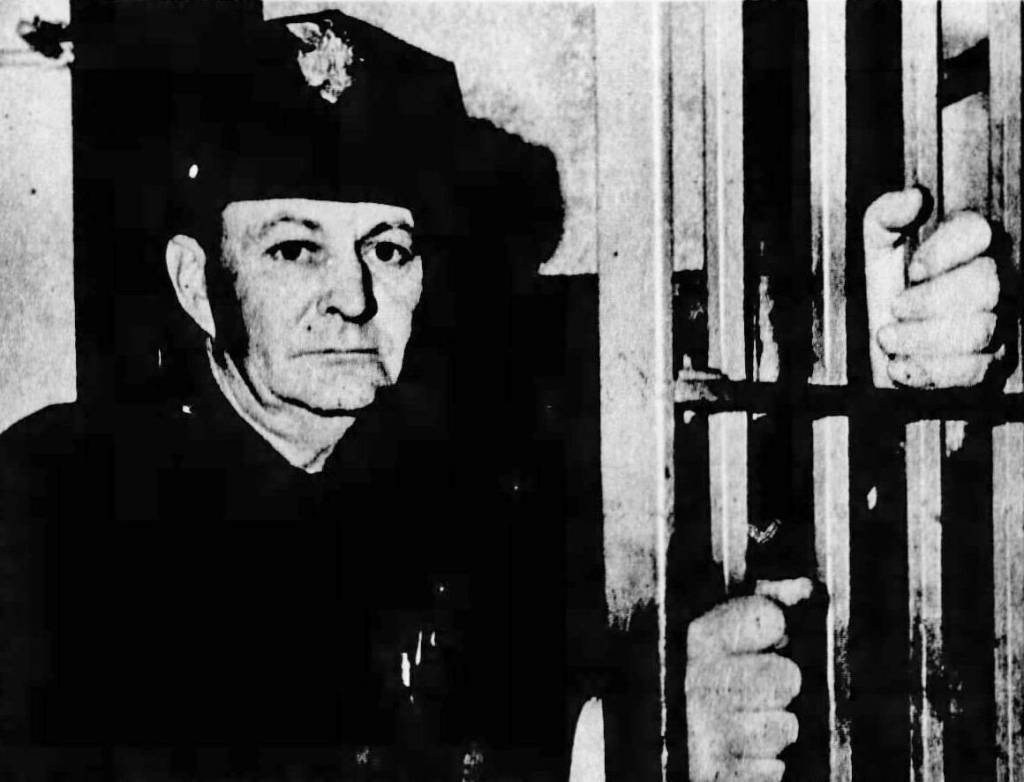


AUTHOR’S NOTE: In 1948, after nearly a quarter-century in law enforcement in Ohio, Cecil Miller, his wife Dorothy and their two youngest children moved to Alaska and settled on a large homestead on Stariski Creek, north of Anchor Point.
Two distinct versions of Cecil “Greasy” Miller received the most publicity during his brief tenure on the southern Kenai Peninsula. Oddly, both of them came from the same man — author, Miller neighbor and fellow homesteader Gordon Stoddard.
When he was interviewed by Ella Mae McGann for her history book, “The Pioneers of Happy Valley, 1944-1964,” Stoddard stuck mostly to facts and avoided the caustic characterizations he had used in his own 1957 memoir, “Go North, Young Man: Modern Homesteading in Alaska.”
Stoddard, who met Miller after Miller’s wife had left Alaska and returned to her home state of Ohio, told McGann that he had been hunting for property to buy when he first encountered Miller, who had a homestead on lower Stariski Creek. “I talked to him,” Stoddard said, “and offered to buy five acres from him. He gave me a price to consider. When I went back the next week to talk (again) about the land, he had raised the price.” Stoddard demurred and went looking elsewhere.
Ironically, a land locator led him to a man hoping to relinquish his 160-acre homestead, which happened to abut Miller’s own property, just upstream on the same creek.
In his memoir, Stoddard used literary allusions and colorful phrasing and details to paint an unflattering portrait of Miller. His new neighbor, said Stoddard, had shoulders “as broad as a bookcase” and hands “like hams.” He was so large and gruff-voiced that Stoddard said he almost expected to hear him say, “Fe, fi, fo, fum. I smell the blood of an Englishman.” Stoddard also thinly disguised Miller’s identity by referring to him as “‘Greasy’ Grogan.”
After Stoddard bought house-building lumber from a nearby sawmill, he said in McGann’s book, Miller hauled the boards in his old truck to Stoddard’s home-site. In his memoir, however, he added that McGann’s help came at a price: Stoddard had to help Miller and his son, Tommy, pour a cement cellar at Miller’s home. Although Stoddard lived up to his end of the bargain, Miller only drove the load of lumber, while Tommy and Stoddard did all the loading, unloading and stacking.
To McGann, Stoddard supplied only one explicitly sour note in his description of Miller, involving what Stoddard had taken originally as a kind gift from one of his neighbors. After checking on his trap line one day, Stoddard had returned home to find a “large hunk of frozen meat on (his) doorstep.” It was Christmastime, he said, and he was much pleased by the holiday offering.
“I thawed the meat, cooked and ate it all,” he said. When he mentioned the meat to Miller, however, Miller laughed. He told Stoddard that “it was the hind leg of an old mangy coyote he had left … for me to use in my traps. I almost choked to death while he was talking. I could not eat any meat for several days.”
It was only later, when talking to different neighbor, he learned that Miller had been putting him on. The other neighbor had been the benefactor. He had killed a young domesticated goat for the holidays and had shared a hindquarter with Stoddard because Stoddard had helped him earlier with a medical problem.
A cop’s life
Back on June 1, 1923, after working eight years for the B.F. Goodrich Company in Akron, Ohio, Cecil Miller made a career change. He joined the Akron Police Department.
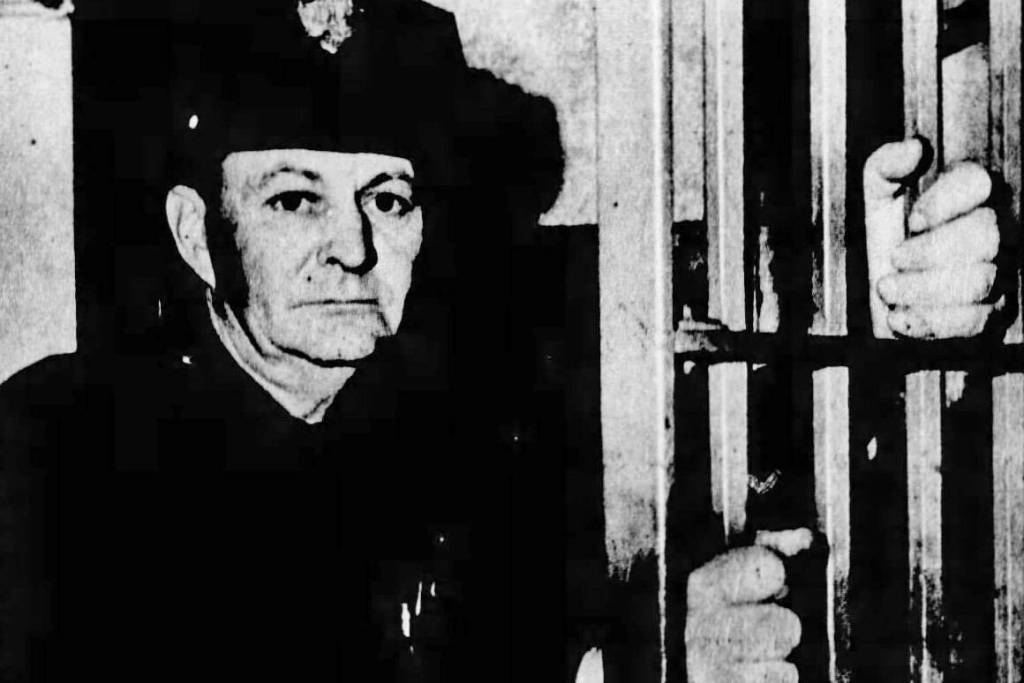
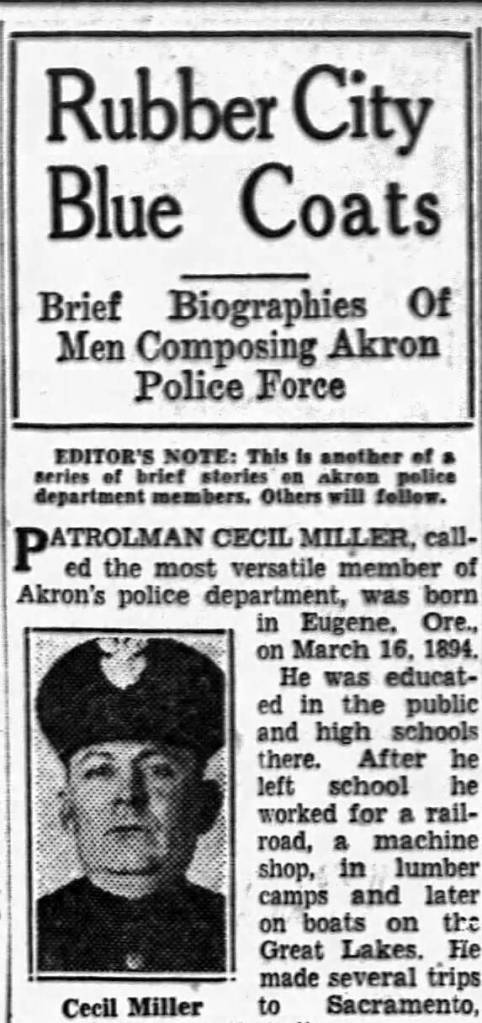
Five years into what would become a nearly 25-year career in law enforcement, Miller was highlighted in the Akron Beacon Journal in a feature called “Rubber City Blue Coats: Brief Biographies of Men Composing Akron Police Force.” Next to a stern-faced head-shot of Miller in his policeman’s cap and uniform were the basics of the first 33 years of his life.
Despite the unsmiling photograph, however, much of Miller’s police work that actually grabbed headlines in Akron seemed like part of some madcap adventure.
There was the time a 7-foot black snake curled itself around Miller’s left leg as he strolled through a meadow. Black snakes are non-venomous and subdue their prey by constriction.
“I wrestled with that snake for five minutes,” Miller told the Akron paper, “and for a time it wasn’t any cinch which way the tussle would go.” Finally, he was able to grab the snake by the back of the head and fling it away from him.
And there was the time that a prisoner being searched at the police station snatched Miller’s gun and tried unsuccessfully, twice, to shoot him with it before he was subdued by authorities.
During another prisoner search, Miller plunged a hand into a pocket, only to slice open his right ring finger on the broken mirror the prisoner had been carrying there.
In 1936, while he was off-duty and sound asleep at home, neighbors pounded on his door at 3 a.m. and urged him to hurry to their address to investigate what they were certain were burglars in their kitchen. Miller, according to a newspaper report, “strapped on his gun, picked up his flashlight and dashed for the residence.”
There, he found no intruders, but he did find a culprit — a small, gray mouse with the tip of its nose caught in a trap and frantically banging the device around as it fought to free itself. Ten minutes later, Miller was back in bed.
He was also off-duty when another neighbor’s pigs raided his garden and ate a large quantity of his carrots. The swine raid resulted in a court appearance, during which a judge suggested that the neighbor sell the pigs to avoid having them continue to be a public nuisance.
Like many careers in law enforcement, tedium and routine were a commonplace part of the job. Because of Miller’s facility with machinery, he was assigned to be in charge of traffic devices and signals. He supervised the development of safety lanes at crucial intersections, the painting of new traffic signs, and the repairs associated with all this equipment.
He received praise from superiors for his mechanical abilities and for his tendency to find money-saving means to accomplish his many tasks.
Also, over his years on the force, Miller’s once-slender frame filled out. Late in his career, he could have been considered stocky — or worse, if one accepts Gordon Stoddard’s descriptions. Stoddard also more than implied that, at least near the end of his life, Miller may have developed a problem with alcohol.
Several brief obituaries — such as the one in the Akron Beacon Journal — pointed to a medical condition as the likely cause of Miller’s demise on June 29, 1951: “Death apparently was due to a heart attack. Mr. Miller’s body was found (in his cabin) by another homesteader. The Miller family here received word of the death in a telegram from (officials) in Anchor Point.”
Stoddard, on the other hand, cast doubt on that diagnosis.
The man whom Stoddard called “my giant enemy-friend” had been drinking heavily and acting strangely, he wrote, venturing frequently to Homer “to take on a full load of booze.” At such times, Stoddard said, Miller drove him “to the verge of insanity … roaring and cursing and knocking things down.”
“As far as I was concerned,” he said later, “Greasy was a thorn on the side of the country, and the less I saw of him the less the pain would be.” Still, he professed, he was shocked by Miller’s sudden death.
Near the end his chapter on “Greasy Grogan,” he offered this grim tableau: “Greasy had been doing a lot of drinking … and all of his neighbors had gone out of their way to avoid him. When he hadn’t made an appearance on the local scene for over a week, someone had dropped in to investigate. He was (found) lying on his bunk, an empty whisky bottle in one inert hand. On his chest sat his cat, gazing hungrily into the blank, unseeing eyes…. I had no love for Greasy, but this—”
It is uncertain now how much Stoddard may have embellished Miller’s death, but he concluded with this line: “You could hardly say that I mourned the passing of Greasy, but I knew that I would miss him and his own particular Alaskan brand of hospitality.”