No Simple Matter: Finding the borough a home — Part 5
Published 10:30 pm Thursday, September 25, 2025




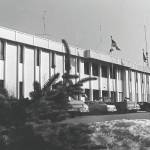
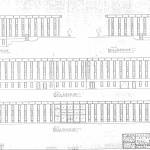
AUTHOR’S NOTE: Kenai Peninsula citizens had voted to create a second-class governing entity called the Kenai Peninsula Borough, which was incorporated at the beginning of 1964. By the end of the year, Soldotna had been selected as the seat of government power. As the borough began doing business in whatever physical space it could, it grew. It needed a home of its own.
Rising costs and concerns
The first price tag attached to the construction of the Borough Administration Building — after $20,000 had been set aside for planning and architectural purposes but before any design had been accepted — was $300,000, which Borough Chairman George Navarre included in a bond proposition placed before the electorate on Oct. 3, 1967.
Voters rejected the proposition by more than a 2-1 margin.
An architect was hired, anyway, and a preliminary design was created. In December 1968, another price tag, based on that design, was floated before the public: $507,000 for a two-story structure (a basement and main floor) or $657,000 for a three-story structure (including the basement).
After the design was finalized and the project had been posted for prospective contractors, bids were opened in June 1969, with the lowest offer coming in at nearly $860,000.
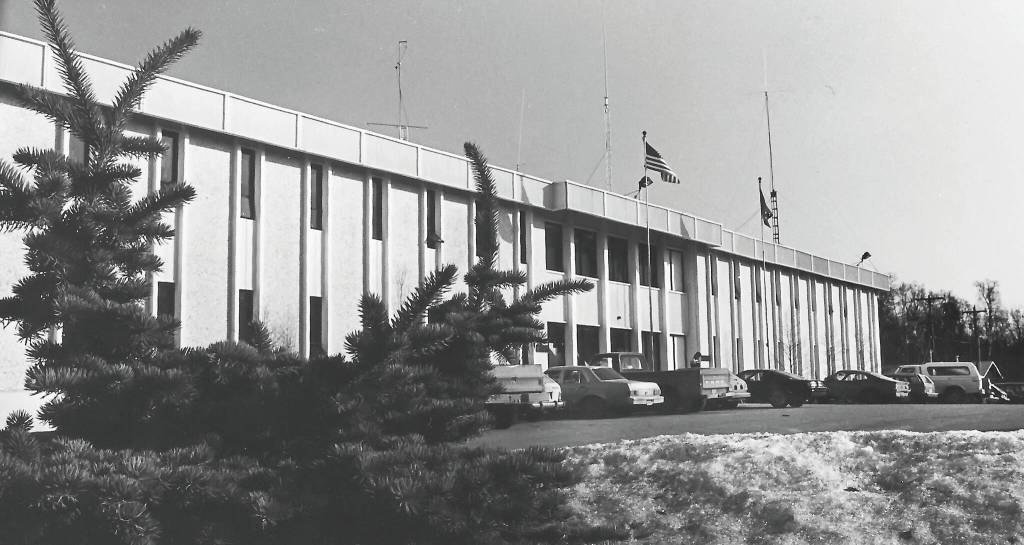
When borough and school district employees moved into the completed building on Binkley Street in Soldotna in late January 1971, the final price tag was announced as $1.36 million, not including furnishings. (According to a Dec. 17, 1970, editorial in the Peninsula Clarion, the furnishings were part of an additional $70,000 expenditure.)
Time and money are always tricky ingredients in government projects. In this case, the time involved was seven years, from the first borough assembly meeting in an Elks Hall in January 1964 until first formal meeting in the new Borough Building chambers in January 1971. And the growing costs bothered an anxious public already beset with huge bills for several brand-new schools and some intensive school renovation across the Kenai Peninsula.
So it was no great surprise to many when on Jan. 14, 1971, John Nelson, editor of the fledgling Clarion, sank his sharp editorial teeth firmly into the flanks of borough government: “There seems to be prevalent here on the Peninsula a never-ending spending of dollars by the Borough and School administration, who tell us that it is for the betterment of everyone living here.
“The ‘Taj Mahal’ they call the Borough building is large and grand enough to administer a population twice or three times the size of this Borough. I also understand that this White Elephant was built on a flood plain and therefore is difficult to obtain insurance on. (This is wise spending of our tax dollars?)”
Nelson was making an oblique reference to the assertions of Homer-based newspaperman James McDowell, who generated the Cook Inlet Courier (nee the Inlet Courier) from August 1959 until the mid-1970s. McDowell claimed that the site of the Borough Building was subject to flooding from the Kenai River at least once every 200 years, on average.
It is likely that McDowell was responding to claims from insurance executives, who in those days were making it exceedingly difficult for builders and homeowners to buy flood insurance. A long history of property damage and loss of life due to flooding across the United States had motivated many insurance executives to determine the existence of potential flood plains where scientific evidence had failed to substantiate (or, in many cases, had failed to even investigate) those claims.
After the 1965 destruction caused by the Hurricane Betsy flood surge in Florida and Louisiana, however, Congress itself became motivated, passing the National Flood Insurance Act of 1968, which led to the creation of the National Flood Insurance Program. The program identifies the levels of flood risk, establishes flood insurance rates, and provides flood insurance for structures and contents in communities that adopt and enforce an ordinance that outlines minimal floodplain management standards.
According to Dan Nelson, a former planning assistant at the borough’s Donald E. Gilman River Center, the national program was not firmly established across the country until at least the early 1970s, and the Kenai Peninsula Borough did not join the program until 1981. Consequently, flood plain determination locally in the late 1960s was a nebulous act at best.
The borough now has its floodplain lands broken down into four main categories: those considered to have a one percent chance of flooding each year, those that have a 0.2 percent chance of flooding each year, those that are considered at minimal risk, and those that have not been investigated and so have an unidentified risk potential.
The Borough Administration Building, as of 2012, stood on one of those uninvestigated pieces of land. But logic would dictate that the Borough Building is in unlikely danger, barring a cataclysm. According to Nelson, the bed of the Kenai River as it passes through Soldotna lies roughly at an elevation of 9 feet. The Borough Building, on the other hand, stands at approximately 92 feet. If the river, at high water, stood 20 feet deep, it would still be more than 70 feet below the level of the administration building.
In any regard, borough officials and planners in the late 1960s were not particularly fazed by the possibility of flooding, and so the process marched forward.
Even after the pounding his bonding proposition had taken in the polls in October 1967, Chairman Navarre remained undeterred in his efforts to finance and construct a new administration building. He came to the Nov. 7 assembly meeting with a request: The assembly should consider a prefabricated style of building.
He said that some of the prefab structures he was investigating cost about $21 per square foot to build and had a life expectancy of at least 40 years. If the assembly members were interested, he said, he would bring them more information. They were interested.
In April 1968, Navarre announced that he had contacted Anchorage-based architect, Mike Pendergrast, who was already at work designing new peninsula schools, and enlisted him to create a “basic layout” for a borough building. In May, Pendergrast submitted some ideas to the assembly for “study and recommendations.” In June, the assembly voted unanimously to select Pendergrast as the official architect for the project.
Throughout the summer and into the fall, ideas and plans were bandied back and forth until on Sept. 17 Pendergrast presented to the assembly a schematic design that he said should cost about $20 per square foot. The prefabricated building would be insulated with Styrofoam and covered with paneling on the interior. The outside walls would be large steel-reinforced concrete panels that would be fitted into place on site, while many of the interior walls, he said, would be movable. Assembly approval was again unanimous.
Plans continued to move ahead, although voters had not yet approved any money for construction. Navarre contemplated another bond proposition and then decided against it. Instead, as firmer numbers began to roll in, he inserted the cost of construction of the administration building into the 1969-70 borough operating budget.
After several work sessions and a review of plans by the Construction Advisory Board, the borough decided to allocate $800,000 for a two-story building with a full basement. Each floor would contain approximately 14,000 square feet and give the borough plenty of extra space to grow into.
Bidding on the project concluded June 20, 1969, at 10 a.m. in the borough office when the four bids received were opened officially. All of the bids came from Anchorage firms and all were higher than anticipated. The low bidder was Firor-Janssen Contracting at $858,900. The high bid was nearly $100,000 more.
Then, as Pendergrast examined the bids to look for cost-cutting possibilities, the borough lease at the Farnsworth Building expired, forcing the borough to decide whether to renew the lease for another year at $700 a month (with a six-month cancellation advance) or to rent on a monthly basis at $1,032 per month. Assembly members voted unanimously for the full-year deal.
Pendergrast returned to the assembly with his report: The only way to substantially reduce the cost of construction was eliminating the upper floor. But adding an upper floor at a later date, he said, would be substantially more expensive.
With all costs figured in, Navarre told the assembly, he expected that the total cost for construction would be about $950,000. To make up the difference, he recommended pulling $75,000 from the Seward School contingency fund and another $75,000 from surplus revenue from the 1968-69 fiscal year budget. The assembly concurred and, by a 12-1 vote on July 15, awarded the bid to Firor-Janssen.
At this same meeting, Pendergrast introduced Jack McCloud of the Concrete Technical Company (Tacoma, Washington), who showed the assembly members samples of the prefab concrete slabs to be used in construction. According to McCloud, the first concrete panels were slated for shipment from Tacoma on Sept. 20, and completion of the project was expected no later than March 1, 1970.
But big government projects rarely fall together without a hitch. And so, while it must have seemed initially that all the planning and hard work would soon bear fruit, and that the dream of having a Borough Administration Building was mere months away from becoming a reality, a different story was about to unfold.
TO BE CONTINUED….