Mary Penney and her 1898 Alaska adventure — Part 2
Published 10:30 pm Thursday, April 24, 2025
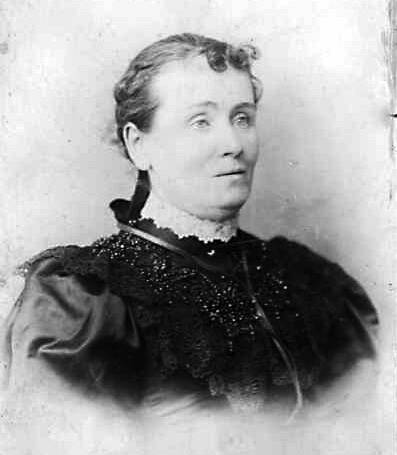
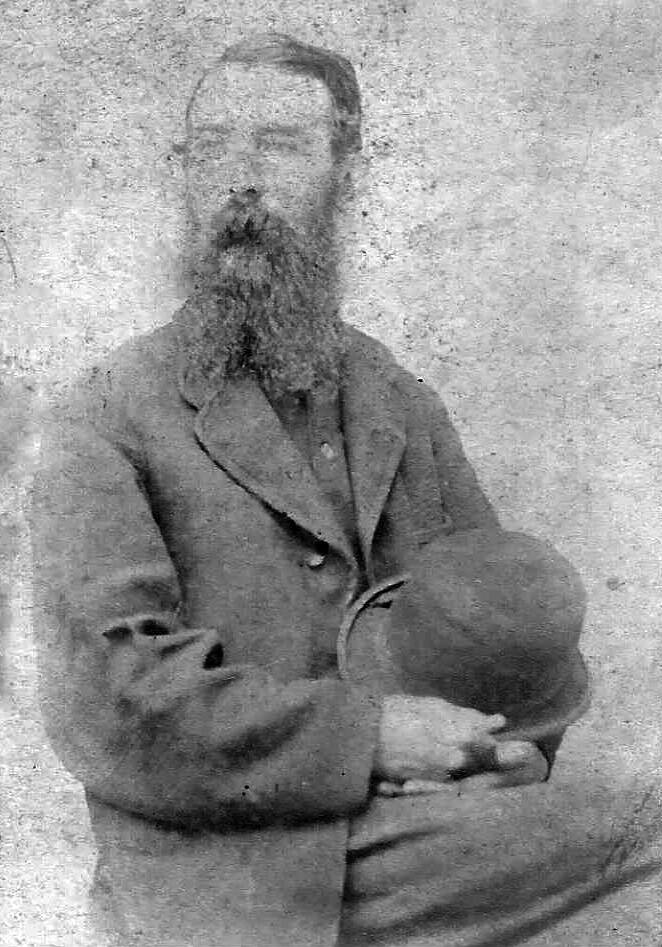
AUTHOR’S NOTE: The failed 1898 gold-seeking expedition to the Kenai Peninsula by the Kings County Mining Company has been an off-and-on topic of Alaskan conversations for more than 125 years. Of the 60 members who departed New York, with the intention of getting rich in the Klondike, two were women. About one of them, Ida Gollee, little is known, including, until very recently, the correct spelling of her last name. The other one was Mary Lovett Penney….
Two of Mary L. Penney’s granddaughters — Audrey and Ella Joyce Oliver — wrote narratives about the history of their family, including their headstrong, adventurous grandmother. Both of them featured stories about how she ended up in Alaska.
“Grandma,” they said, had learned in 1897 about the big gold strike in the Klondike and subsequently about a group of investors right in her hometown of Brooklyn that was gathering stakeholders to finance a trip to the gold fields.
Although in 1897, Mary, nicknamed “Molly,” was a married woman and a late-30s mother of five, she seemed to know almost immediately that she wanted to join the gold-seekers and would find a way to do so.
Her husband, William Franklin Penney, was unsupportive of her plans. “Molly,” he said, not mincing words, “you’re crazy!”
William — a man who was nearly 30 years older than his wife, who was set in his ways and who disliked traveling beyond the confines of his beloved Brooklyn — flatly refused to go. That was OK with Mary, who was fine leaving him and their children behind.
The Penneys were well-to-do, and Mary didn’t rely entirely on William for her spending money. She was a working nurse, and she had once invested some of her earnings in undeveloped land in the Corona neighborhood of the borough of Queens on Long Island. She had sold the property for a tidy profit and had banked her cash until the right opportunity surfaced.
The buy-in to the Kings County Mining Company was $500 (equivalent to about $19,000 in purchasing power today).
When the artistic Ella Joyce wrote about her grandmother, she illustrated the first page with a black-and-white cartoon depicting a balding, white-bearded and bespectacled William sitting in a rocking chair, reading a newspaper by a fireplace. Ready to leave — one hand on the knob of an already open door — stood a fashionably attired, slim-waisted Mary, wearing a big, fancy hat and high-heeled boots, and holding a rectangular suitcase bearing a sticker that read: ALASKA OR BUST.
Attitude at an early age
Mary Penney was born Mary Alice Lovett in the industrial city of Manchester in Lancashire County, England, on March 23 of either 1859 or 1860. Like the exact year of her birth, other portions of her earliest life are fuzzy, but much of what has been documented is likely to be true — or close to it.
For instance: Her parents — John Patrick and Mary Elizabeth (nee Elliott) Lovett — immigrated to the United States in about 1863. Mary recalled being placed upon her father’s shoulders in April 1865 so she could see above the crowds and watch the funeral train for slain U.S. President Abraham Lincoln as it passed through New York City on its nearly monthlong journey to Lincoln’s burial in Springfield, Illinois.
Mary also recalled her father as a taskmaster and firm disciplinarian, and she disliked being reined in. After her father, a tailor, whipped her when she was 9 years old — for seeming to find greater value in attending school than learning his tailoring trade — she ran away from home.
She apparently never went back. According to family lore, she was taken in by Catholic nuns in New York and wound up with a family named Ware, probably also in Brooklyn.
There also appears to be a link around this time between Mary and Cedar Rapids, Iowa, but the nature and timing of that connection is unclear. It is worth mentioning, however, because, in middle age, Mary — as will be seen later in this story — will have a clear-cut Iowa bond.
When Mary was 14, she found herself in the company of a “young matron” who was about to give birth. The woman’s doctor was said to be on his way, but it became apparent that the baby was not going to wait for his arrival. Mary assisted with the birth, and both mother and child survived.
When the doctor did arrive, he was impressed by Mary’s level-headedness. He praised her efforts and indicated that she had real nursing potential.
She took him seriously. Perhaps she subsequently lied about her age, but while still apparently a teenager she was enrolled in nursing training at St. John’s Hospital on Long Island.
At some point in 1874, according to Penney family descendants, Mary escorted an elderly woman patient needing medical treatment to Saratoga Springs, in upstate New York. When the woman died, Mary found herself alone and was taken in by the Otis family, owners of the Otis Hotel. She became the governess and companion of the Otises’ only daughter, Alice — niece of William Penney’s second wife, Sarah.
It was at this time, in Saratoga Springs, that she first encountered William.
A widower for a second time, William was a Brooklyn-based maker of custom furniture, a skilled painter, a politician of sorts and an inventor. In his late 40s, he was also nearly three times Mary’s age. Nevertheless, according to family narratives, she was “swept off her feet” by him. It was probably in March 1877 when they became husband and wife.
Like Mary, William had been born in Lancashire County in England — either 27 or 28 years before her birth. Like Mary’s parents, William’s, too, had immigrated to the United States and wound up in New York. In his early 30s, William, son of James and Mary Holland Penney, married for the first time to yet another Mary.
William and first wife Mary tried to raise a family but without much success. Their first child, named William after his father, lived into adulthood, but the other four children did not escape infancy. In fact, the other four may all have been stillborn. On Dec. 15, 1861, just 12 days after her final unsuccessful birth, Mary herself died, apparently from medical complications. She was 25 years old.
Seven years later — when Mary Alice Lovett was only 8 or 9 — William F. Penney married for the second time, to Sarah Levison Morrow, aunt to young Alice Otis. William and Sarah remained married for four years, until February 1872, when, it is believed, she, too, succumbed to complications from childbirth. It appears that William and Sarah produced no living children.
It was about this time that William’s sole living child, his son William, became ill with tuberculosis. Some members of the elder William’s family believe that the younger William was sent to a tuberculosis sanitorium in Saratoga Springs, which may have accounted for the elder William’s presence there when a young nurse named Mary Alice Lovett entered the scene.
Neither their marriage nor their many children, however, prevented Mary Lovett Penney from doing what she wanted to do, even when that meant leaving William in charge of the Penney clan whenever she was called out in the middle of night to help deliver a baby or when she sailed for Alaska.
TO BE CONTINUED….