Handmade duck calls attract a following
Published 1:06 am Friday, May 9, 2014
When Scott Simmons received a wooden duck call in college, he was instantly intrigued by the possibility of making one.
“I recognized then that those little duck calls were a folk art piece that could be handed down from generation to generation,” said Simmons, of Kirksey, Kentucky. “When I realized I could escape the busyness of everyday life and become engaged into the world of wildlife through the use of game calls, I knew then that I had found a passion.”
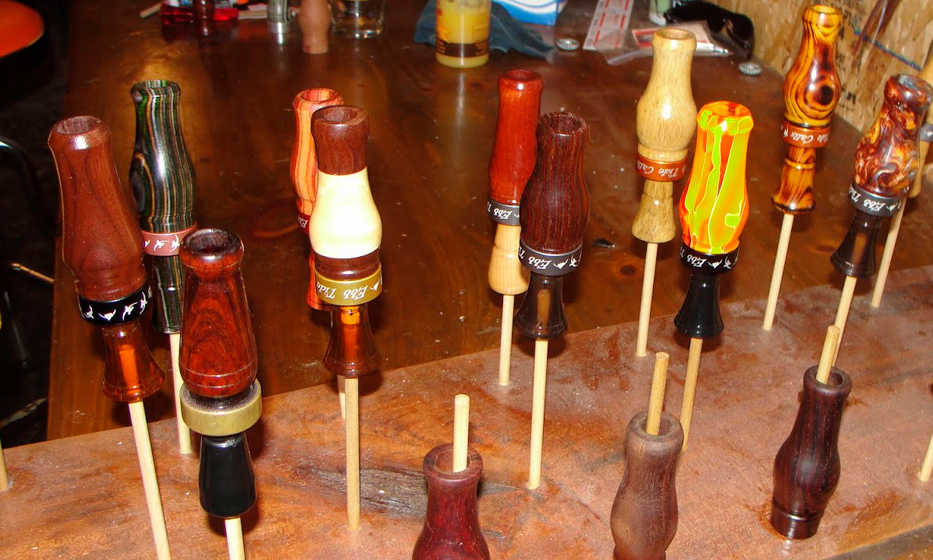
Hunters, woodworkers and wildlife enthusiasts have been carving and decorating duck calls for generations. The small woodwind instruments, made of wood or acrylic, are designed to mimic the quacks of ducks.
Interest in making and collecting duck calls has grown with the popularity of the A&E television show “Duck Dynasty,” said Simmons, who belongs to a national association of collectors. The show follows the Robertson family, owners of Duck Commander, a company that makes duck calls and other duck-hunting merchandise in West Monroe, La. The show has been renewed for a sixth season.
“It’s unbelievable the amount of interest that show has stimulated in calls,” said Simmons.
A growing recognition among art collectors about the value of antique duck calls also has made more people aware of the hobby, said Howard Harlan of Nashville, Tennessee, a founding member of The Callmakers and Collectors Association of America.
“A lot of collectors are not duck call collectors. They are folk art collectors,” he said.
Many duck calls are decorated with elaborate patterns, birds or nature scenes.
Two years ago, a collector paid $103,500 at auction for a duck call that depicts a rattlesnake, alligator, hound, duck and pheasant. Carver J.T. Beckhart is believed to have made the call around 1890.
Harlan, who taught himself to make duck calls in 1960, has been a collector for years and estimates he has about 5,000 calls.
“I don’t use them at all. I sit there and look at them,” said Harlan, co-author of “The Legacy of the American Duck Call” (self-published, Harlan Anderson Press, 2012).
Often, duck calls are made by hand on a lathe. The call-maker first turns the barrel with a hole bored through it, and then makes an insert that holds the reed and helps produces the sound. Historically, calls were made with a single reed. In recent years, double reed calls have grown in popularity because they are easier to use.
Simmons already has carved a duck call for his 2-year-old son, Tanner. Made of red cedar, it shows resting mallards and Father Time. It earned Simmons first place in the hand-carving category of the Grand National Callmaking Competition in 2013. He looks forward to Tanner getting old enough to learn to carve.
“I’ll be crushed if he doesn’t like duck calls,” said Simmons, who said he changed his college major from nursing to biology after learning to make duck calls. Today, he works for the U.S. Fish and Wildlife Service.
Making a duck call is about more than appearances, said Tate Estis of New Kent, Virginia. Sound is critically important, said the 13-year-old, who has been making calls for about 18 months.
Tate, who sells his calls online for between $40 and $75, said customers praise them for their sound.
“My goal is to give people a good call,” said Tate, who was 5 the first time his dad took him duck hunting. “I use them all the time and have called in many ducks.”
The sound can be the trickiest part, agreed Charles Rose, a call maker in Bartlett, Tennessee. A longtime woodworker, he started making calls a few years ago. Call makers can change the sound by trimming the reed or filing the sound board.
“I’m not 100 percent satisfied with my sound yet,” he said.
He enjoys spending time turning the instruments on his lathe and sharing the finished product with friends.
“I just love working with wood — the detail and the accuracy,” he said. “Things have to be just so for pieces of wood to fit together and sound good.”