Fresh Start: The Grönroos Family Story — Part 1
Published 10:30 pm Friday, April 5, 2024

It had been a good vacation, the first time in a decade that Sophia Grönroos had been outside of Alaska. Unfortunately, as she peered through the heavy fog and eyed the dark, churning waves below, Grönroos knew this trip was not going to end well.
But she was determined to survive.
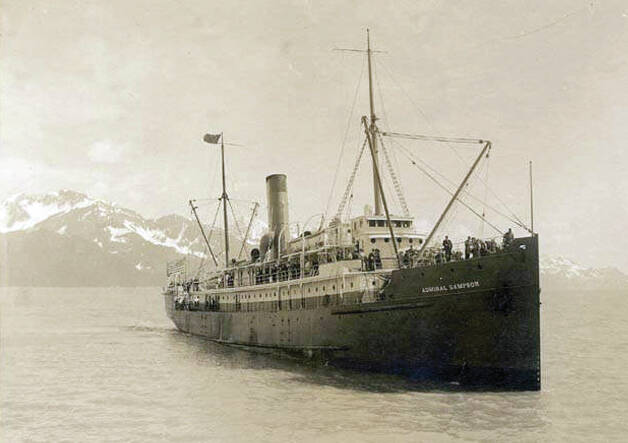
With that firm resolve, Grönroos—a 54-year-old grandmother fresh from visiting her grandson, son-in-law and pregnant daughter in Everett, Washington—leaped from the deck of the S.S. Admiral Sampson into the frigid waters of Puget Sound and began to swim.
It was just before 6 a.m., Wednesday, Aug. 26, 1914.
Only a few minutes earlier, Grönroos had been belowdecks. Because of poor visibility in the sound, the crew of the Admiral Sampson was running at three-knot crawl near Point No Point, 18 miles north of Seattle. In addition, extra lookouts had been posted, and the ship’s whistle was being sounded at regular intervals.
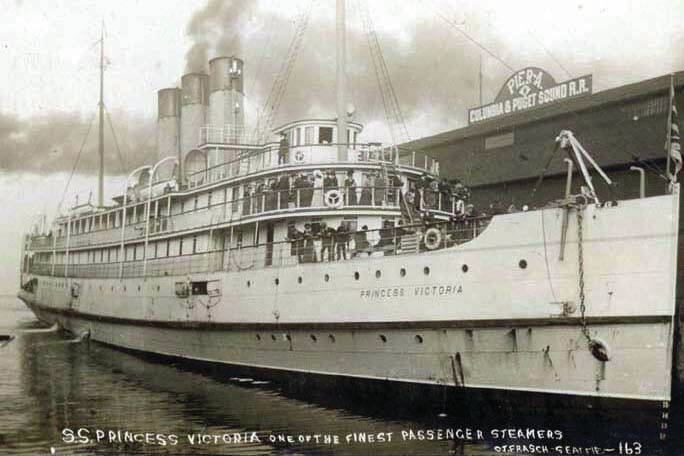
Despite these precautions, disaster struck. Out of the fog at about 5:46 came a Canadian steamship, the Princess Victoria, traveling faster while heading inbound to Seattle and employing similar safeguards—all for naught.
The Princess Victoria struck the Admiral Sampson broadside, crumpling its own bow while tearing a gash in the Sampson’s hull.
In order to slow the flow of water into breach in the Sampson, the captain of the Victoria kept his ship moving against the other vessel. He simultaneously ordered his ship’s lifeboats lowered to prepare for rescue efforts.
Aboard the Admiral Sampson, carrying 126 passengers and crew, Captain Zimro Moore ordered his own lifeboats lowered, as it was clear that his ship was beginning to sink.
Compounding the problem was the fact that the impact between the two vessels had ruptured an oil tank aboard the Sampson and started a fire. The Victoria was forced to pull away, allowing ocean water to accelerate through the hull breach.
About 15 minutes after the initial collision, the Admiral Sampson, in approximately 90 fathoms of water, sank out of sight.
Capt. Moore, choosing to remain with his ship, drowned, along with seven other crew members and three passengers. Another injured crew member died later in a hospital. Quick thinking and quick action saved the rest, including Sophie Grönroos.
Sixteen years later, she recalled the incident for the editor of the Seldovia Herald. “She was an accomplished swimmer,” reported the newspaper, “and this saved her from drowning. She figures that she was in the water for two hours before being picked up by a life-boat, though part of this time she was able to conserve her strength by clinging to a broken timber.”
In mid-September, the S.S. Admiral Watson, which for several years had been running a Seattle-San Francisco route, was chosen to replace the Sampson for the Pacific Alaska Navigation Company’s service between Seattle and Alaska, starting in mid-September.
A notice in the Sept. 16 edition of the Seward Gateway reported that Sophia Grönroos was, at last, heading back home to Anchor Point, this time as a passenger aboard the Watson.
About three weeks later, in early October, U.S. Marine inspectors announced that both the Princess Victoria and the Admiral Sampson had been at fault in the Aug. 26 collision.
On Halloween, Grönroos’s daughter gave birth to Florence, a daughter of her own.
And Speaking of New Arrivals….
Eleven years earlier on the other side of the continent, when the S.S. Westernland docked in the port of Philadelphia, its passenger manifest included two other members of the Grönroos family: Sophia’s husband, 42-year-old John, and their eldest child, 19-year-old Johan.
It was March 5, 1903. The Westernland had departed Liverpool, England, on Feb. 18.
According to the ship’s manifest, both men were laborers from Helsinki, Finland. John reported that he carried $17 in cash, while his son had more than $30. They said this was their first time to set foot in the United States, and they claimed that their final destination was “Kerno, Alaska,” almost certainly a reference to either the village of Kenai or the Kenai Peninsula.
The handwritten documents are difficult to read, but the Grönrooses said they planned to meet with a friend there whose name appears to have been “Abe Sukelaigia.” They seemed ready to travel on to San Francisco, from which they would undoubtedly arrange steamship passage to Alaska.
It was likely their mission to find suitable land and use the approaching Alaskan summer to construct a suitable dwelling for the rest of the family, Sophia and the two younger Grönroos children: nine-year-old daughter Aino and 12-year-old son Laure.
According to Aino’s naturalization paperwork four decades later, she and her brother and mother arrived in New York City on the S.S. Bertha on Sept. 2, 1904.
Finlanders had begun trickling into the United States just before the mid-1800s, with the biggest concentration arriving between about 1890 and 1910. Like many European immigrants of the time, they came mainly for the opportunities America seemed to promise: inexpensive land and more elbow room, better jobs, religious and political freedom. At first, immigrants from Finland and other Scandinavian countries gravitated mainly to the Midwest, but soon more of them were settling in the West and venturing north to Alaska.
One major downside for some foreign settlers in Alaska was a restriction in the homesteading laws: Only citizens of the United States or those who had officially declared their intent to become citizens were allowed to gain title to a parcel of land. An individual or a family with alien status could develop a homesite and live on it as they wished, but they could not own the ground.
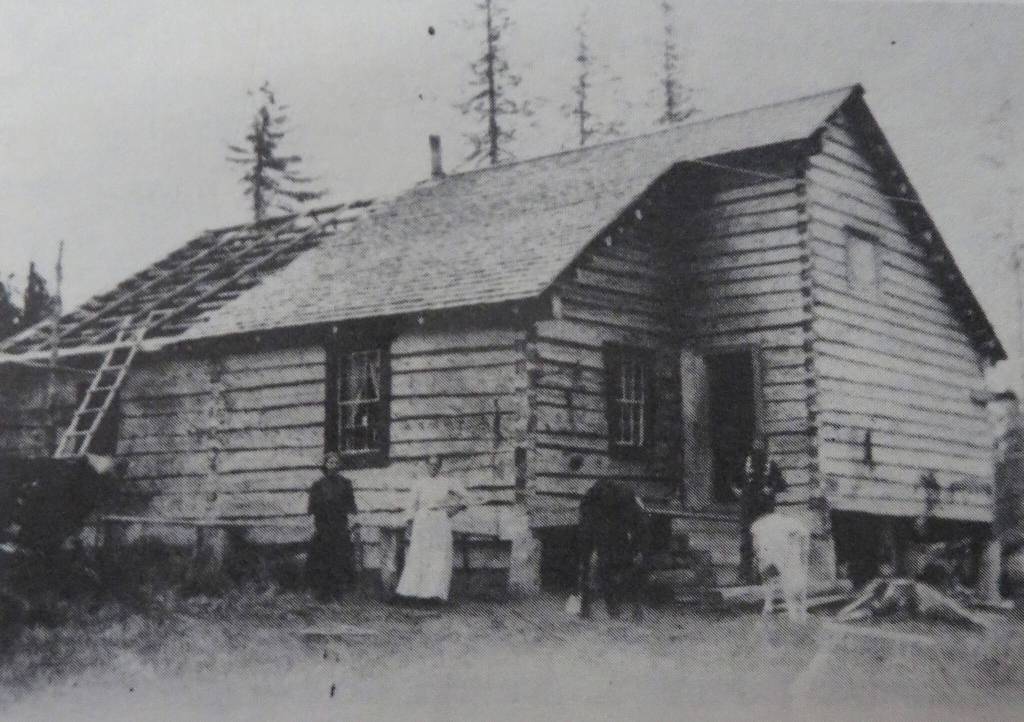
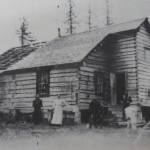
The Grönroos family settled just north of the mouth of the Anchor River. There, they constructed a large, two-story log house, with hewn exterior walls held in place by dovetail joints. They insulated the ceiling with moss and rabbit skins. They built their own furniture. They made themselves a home.
Although this home would remain in the Grönroos family for more than four decades, no Grönroos would ever gain title to the land upon which it stood.
When the 1910 U.S. Census was enumerated on the southern Kenai Peninsula, all five members of the Grönroos family were still living near the Anchor River mouth, and none of them had filed for naturalization. Over the next decade, however, many changes would come.
In Kasilof on Aug. 20, 1911, Aino Wilhelma Grönroos, about one month shy of her 18th birthday, married another Finnish immigrant, a blond-haired, blue-eyed 30-year-old named Gustaf Hill. The couple remained in the area long enough to produce their first child, Howard, in September 1912, and then moved to Washington.
It was when Sophia Grönroos was sailing home from her first visit to Aino’s family that the ship on which she was traveling was rammed by the Princess Victoria and sank into Puget Sound.
Before that tragedy, however, there had been another one—much closer to home.
TO BE CONTINUED