Winter rescue: Saving the teacher’s life — Part 5
Published 4:30 am Friday, July 31, 2026
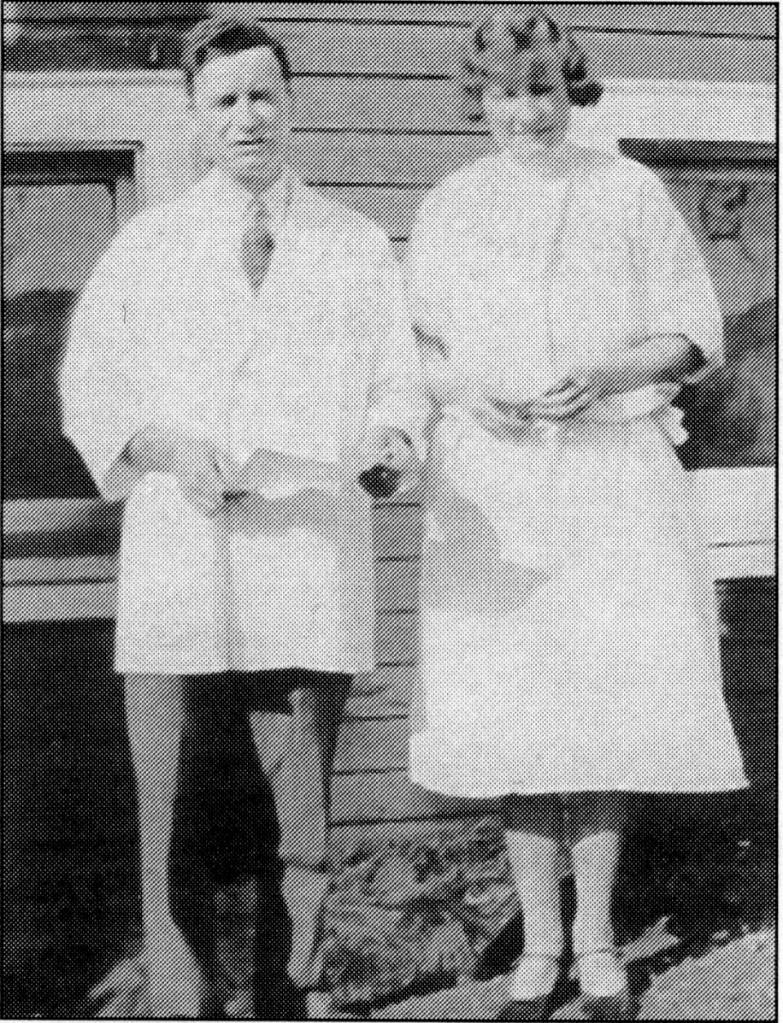


John Bess Fancher (nee Howe) had nearly died in Ninilchik in November 1927 after accidentally shooting herself in the abdomen while cleaning a gun. It took the efforts of many people to see her through this episode and allow her to live out her life to a more natural conclusion.
Fancher, who was a 21-year-old government schoolteacher when she was injured, died in her home state of Texas in December 1991 at the age of 86, having outlived her husband and all but one of her five siblings.
Many of the people who helped Fancher enjoy her long life were not nearly so fortunate. Granted, some of them were much older than the young teacher at the heart of this story, but others were merely unlucky.
This final chapter concerning Fancher’s rescue explores the fates of many of the other individuals mentioned in the previous four parts of the story.
Second coda
VICTOR KELLY: The only person involved in this drama to die at a later date than Fancher (Howe) was Ninilchik-born Victor James Kelly, who accompanied Walter Kotoff from Ninilchik to Kasilof to send a distress call for medical aid. Kelly, who was born in 1908 and served as a technical sergeant in the Aleutians during World War II, died in the hospital in Homer in October 2000 at the age of 92.
DRS. LAYNE AND JENSEN: When the radio distress call from Kasilof reached Seldovia, its two resident physicians, Dr. Arthur Layne and Dr. Jens J. Jensen, both of whom had been practicing in Alaska for more than a decade, volunteered to travel to Ninilchik by boat to supply medical aid. They were dissuaded from doing so because of a storm in Cook Inlet.
Within five years, both men were dead.
Dr. Layne, who had come to Seldovia in 1926 and was about 60 years old, died there of heart failure in May 1928. Dr. Jensen, who had lived in Seldovia since 1918, died there from “glandular disorders” at the age of 72 in 1932.
ADAM LIPKE: The distress call was received in Seldovia and relayed to Anchorage by veteran radio operator Adam William Lipke, born in November 1893 in Buffalo, New York. Lipke was still operating his radio out of Seldovia well into the 1950s, and he died there in November 1957 at the age of 64.
BILLY WILLIAMSON: Owner of the radio that allowed Walter Kotoff to telegraph Seldovia and Anchorage in November 1927 was Featherstone Wilson “Billy” Williamson, who, with his wife Harriet (known as “Mickey”), operated a fox farm on the north side of lower Kasilof River. Williamson, born in Pennsylvania in August 1884, died in California in August 1948, just shy of his 64th birthday.
BERTHA STRYKER: While Miss Howe awaited rescue in Ninilchik, she was ministered to by longtime educator Bertha May Stryker, who had been born in February 1869 and who lived longer than anyone else in this tale. Stryker died in 1965 at the age of 96. She was buried in the Spruce Grove cemetery in Kasilof.
DR. SWARTZ: When Miss Howe finally reached the Anchorage Railroad Hospital, she was operated on by its chief surgeon, Dr. Rex Forrest Swartz, whose skills helped assure Howe’s survival. Born in Kansas in May 1893, Dr. Swartz lived a long, productive life. He died in California in July 1978, at the age of 85.
DR. HAVERSTOCK: The physician who made the stormy flight from Anchorage to Ninilchik with renowned pilot Russ Merrill on Thanksgiving Day 1927 was Dr. Arthur David Haverstock, who was born in Minnesota in 1884 and served as a hospital surgeon in Seward from 1930 to 1937. His Seward tenure was cut short when he developed health problems. He moved to California in April 1937 to seek medical help but died there in September.
His wife later returned with his remains to Seward, where a well-attended memorial service and burial were performed.
DR. MASON: One of the founders of Virginia Mason Hospital in Seattle, Dr. James Tate Mason—born in Virginia in May 1882—personally tended to Howe during the weeks she spent there before being allowed to return home. With his own health, however, he was less fortunate. After developing an arterial blood clot, he had one of his legs amputated in early May 1936 and died in his own hospital a month later.
NARENE ELLIOTT: Nurse Narene Elliott, born in about May 1885 in Ohio, accompanied the convalescing teacher from Anchorage to Seattle aboard train, steamship and ambulance in December 1927. Her story is one of the most tragic of those named here. She married in 1928 and moved with her husband to Nome in about 1930. For reasons that are not clear, she was murdered in July 1940 while aboard the S.S. Seeandbee during a cruise on Lake Erie.
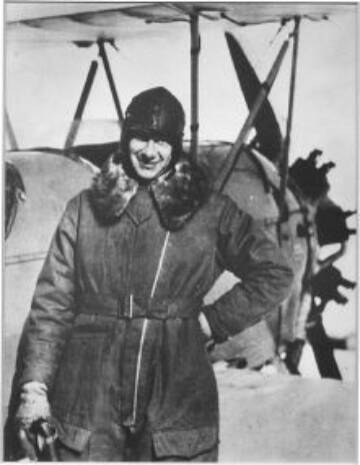
RUSS MERRILL: The namesake of Merrill Field in Anchorage and Merrill Pass in the Alaska Range, Russel Hyde Merrill was a dashing, daring Alaska pilot who operated an open-cockpit, single-engine freight-and-passenger plane for the Anchorage Air Transport company. In November 1927, he flew from Fairbanks to pick up Dr. Haverstock and then brave a Cook Inlet gale to land on a frozen lake near Ninilchik.
Less than two years later, on Sept. 16, 1929, during his third flight of that day, Merrill’s plane disappeared as he traveled with a load of freight from Anchorage to Bethel and Sleetmute. Neither he nor his aircraft were ever found, although fabric from the plane’s tail was recovered along Cook Inlet, leading to speculation that he had crashed into the inlet. He was only 35 years old.
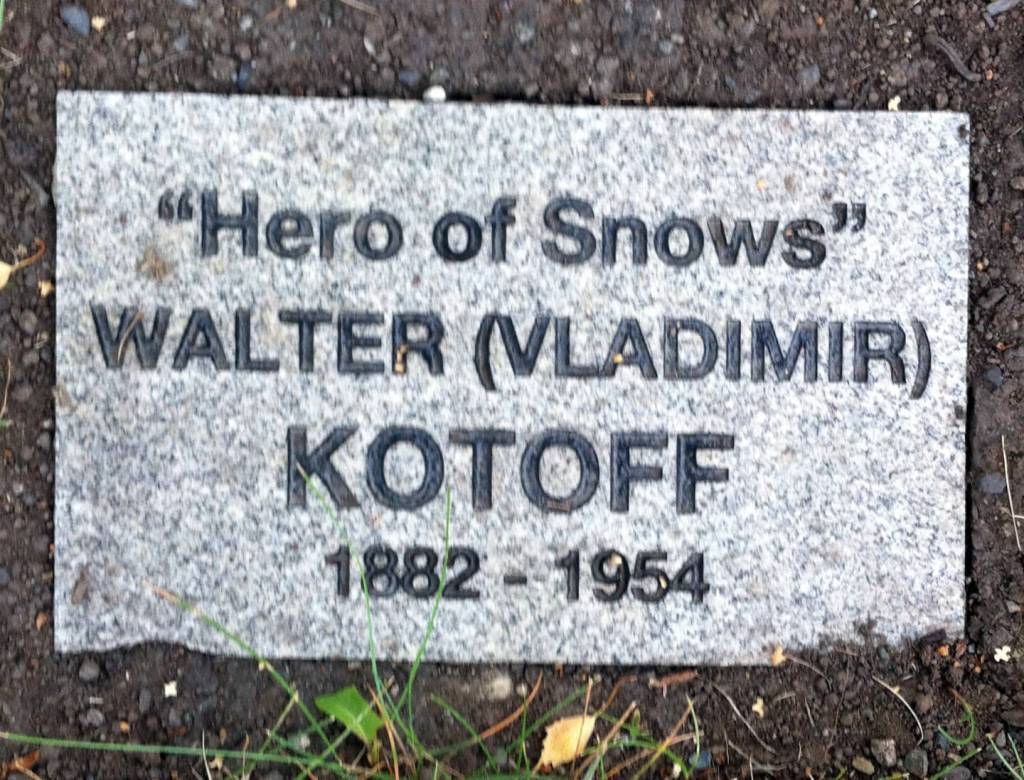
WALTER KOTOFF: Born in Boguchar, Russia, in December 1882, Vladimir “Walter” Kotoff, emigrated to the United States in 1906 and was in Alaska by at least 1910. Although he had been a civil engineer in Russia, he spent most of his life in Alaska as a commercial fisherman. At the time of Miss Howe’s injury, he was a 44-year-old student in her classroom, purportedly attempting to improve his English skills prior to completing his naturalization process.
Shortly after learning of Howe’s accident, he volunteered to walk to the Williamson fox ranch in Kasilof and have a radio telegraph message sent to Seldovia and Anchorage to enlist medical aid. Accompanied by Victor Kelly, he arrived at the Williamsons’ place early the next morning and recalled enough about his own telegraphy experience in Russia to send a message.
Unsure whether his message had been received, he then—after a stop at Ninilchik to check on Miss Howe—walked on to Homer and, a day after he arrived there, found a boat owner willing to take him across the water to Seldovia, where he learned that his message had been received and Howe had been rescued.
Less than two months later, he helped save another person in an eerily similar way. When U.S. Marshal William Fursman shattered an ankle during a fall while driving a dog team near Kenai, Kotoff was alerted and traveled once again to the Williamson fox ranch to radio for aid.
The wife of William H. “Billy” Fawcett, owner of two adventure magazines, Whizbang and Triple-X, believed that Kotoff deserved special recognition for his accomplishments. She wanted him to receive an award from the Carnegie Institute in New York, but it is unclear whether that ever occurred. Kotoff was, however, lauded for his efforts by a proclamation from the Seward Chamber of Commerce.
Kotoff died as a naturalized American citizen in Anchorage on May 3, 1954. He was 71 years. He was buried in Anchorage.