Tracing a disease to its origins
Published 10:30 pm Friday, April 24, 2020
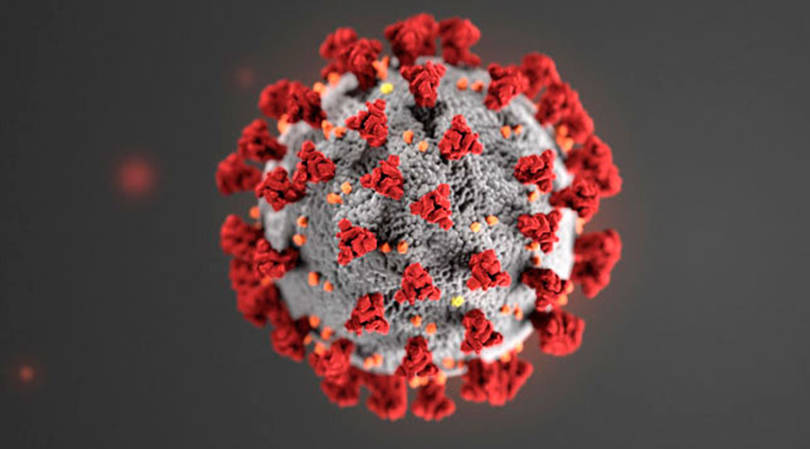
When it comes to identifying and isolating both confirmed and potential cases of COVID-19, a handful of public health nurses on the Kenai Peninsula are working every day to get the job done.
Kenai Public Health Nurse Sherra Pritchard spoke to the Clarion on Friday about the process of contact tracing, which she said is a major part of the state’s approach to mitigating the spread of the disease.
“We kind of box it in,” Pritchard said. “Step one is test, step two is identify our positives, step three is get their contacts and step four is quarantine or isolate.”
Contact tracing involves reaching out to each person who has tested positive for COVID-19 and determining all of the other people that person may have been in contact with while contagious. It’s an inexact science that is part clinical, part investigative work, but Pritchard said that contact tracing is not unique to the COVID-19 pandemic and has always been a primary responsibility for public health nurses.
“We do this with all reportable conditions,” Pritchard said. “So this would be the same for things like HIV, syphilis, gonorrhea, salmonella, cryptosporidium, Campylobacter, Giardia. And that’s the great thing about public health nursing: we have the capacity to do this, whereas local providers maybe don’t have that capacity.”
Every time the state lab identifies a positive case of COVID-19, the Division of Epidemiology gives that information to both the doctor who collected the sample and the public health team closest to the person’s residence, Pritchard said.
The Kenai Peninsula has two teams of public health nurses, one based in Kenai and another based in Homer. The Kenai public health nurses, which includes Pritchard and six others, handle all cases from Hope to Ninilchik. Everything south of Ninilchik is handled by the two public health nurses in Homer.
Pritchard said that usually a patient has been contacted by their doctor before they hear from public health, but that is not always the case.
For the first phone call, Pritchard asks a number of basic questions related to contact information and demographics: the person’s date of birth, first and last name, address, phone number and email, the date of their test, the date they got their results and the first day they were symptomatic.
Information is collected about pre-existing medical conditions, whether or not someone is pregnant and whether or not someone is a smoker, and Pritchard said that all of this data and more is collected by the CDC in order to get a better sense of what populations are most vulnerable to the disease.
After all the basic information is collected, the investigative questions begin.
What were you doing two days before you became symptomatic? One day? Who were you in contact with for those two days?
Pritchard said that if the source of the disease can’t be identified easily for a given person, the questions will go back as far as 14 days before being symptomatic, which is estimated to be the maximum incubation period for COVID-19.
When it comes to the definition of “contacts,” public health nurses are looking specifically for anyone that was within 6 feet of the patient for more than 10 minutes. Contacts that do not meet that description are still tracked in certain instances where public health nurses feel it’s in the public’s best interest, but Pritchard said that determination is made on an individual basis. Briefly passing someone in the aisle of a grocery store, for example, would likely not be considered a contact.
Asking people to remember what they were doing two weeks ago can be tricky, but Pritchard said for the most part people have been keeping their contacts to a minimum these days, which makes the investigation process that much easier.
“We acknowledge with all of our patients that sometimes it is very difficult for individuals to be great historians about what’s going on,” Pritchard said. “But what we’re seeing now is that with all of our kind of social distancing here locally that people have been staying at home. They’re not doing a lot of socializing right now, which is good for us because that’s how we mitigate the number of contacts that we have to reach.”
Typically, the process of reaching out to contacts is as simple as getting their information from the “index case,” or the patient that tested positive. Contacts usually end up being family members, coworkers or close friends, Pritchard said, that are relatively easy to find. The contact is then called and notified that they’ve been exposed.
Similar demographic information is collected, and contacts are asked if they’ve recently felt any symptoms associated with COVID-19: fever, cough, shortness of breath, loss of taste or smell, nausea, vomiting, headaches, abdominal pain and diarrhea, to name a few. If a public health nurse determines that the contact is symptomatic for COVID-19, they are given a referral to be tested for the disease, but that’s still only the beginning of the process.
The initial phone calls to the patient who tested positive and their contacts are the first of many. Pritchard said that public health nurses call the cases to which they are assigned every day to ask about their symptoms, specifically their fever. The calls continue until the nurse determines that the patient has not had a fever for 72 hours without the use of fever-reducing medications and has shown improvement in their respiratory symptoms. It also has to be at least seven days since the patient first showed symptoms that the nurse can clear them and count them as recovered.
Additionally, anyone determined to be a contact is called and monitored by public health every day until 14 days after their initial exposure to the index case. For example, if someone was exposed to a positive case on April 25, they would be monitored until May 9.
As of April 24, there have been 19 positive cases of COVID-19 identified among Kenai Peninsula residents: one in Anchor Point, two in Homer, four in Kenai, three in Seward, six in Soldotna and three in Sterling. Pritchard said that, of the 16 cases being tracked by Kenai Public Health, only two are still considered active investigations. The rest have recovered.
Pritchard said the process has been fairly smooth so far, with the exception of one day when the phone lines at the Public Health office were down and the seven Kenai public health nurses had to share just two state-issued cell phones.
In addition to tracking local cases during the week, the public health teams on the peninsula are on a rotating weekend schedule with the rest of the public health teams in Alaska to track cases across the state. Pritchard said that last weekend, for example, she was conducting investigations for Southeast Alaska, calling communities like Craig, Juneau and Ketchikan.
Pritchard grew up on the Kenai Peninsula and has spent her whole public health career in Kenai. She feels that her local roots and understanding of the community have been beneficial in the contact tracing process, a process that she and the other nurses were well-prepared for prior to the outbreak.
“The great thing about my job is that I got to come back and work in the community that I was raised in, and I like that,” Pritchard said. “In a way I think just having those strong community ties makes me a better public health nurse.”