Soldotna delays riverfront zoning legislation for 2nd time
Published 9:30 pm Monday, September 22, 2025
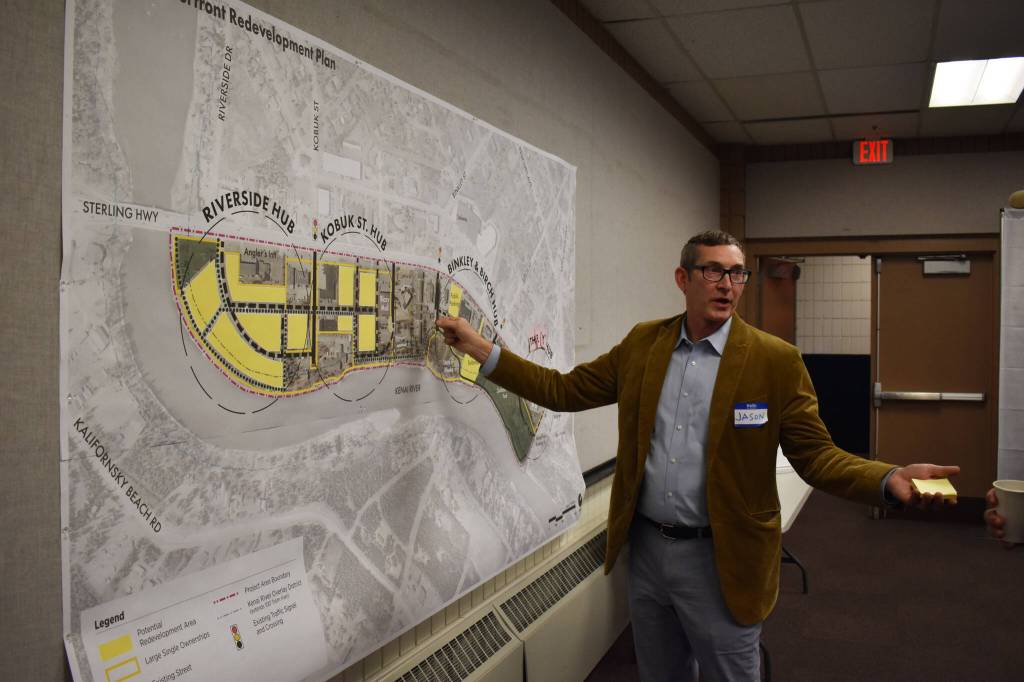
For the second time, Soldotna’s city council has delayed action on legislation to rezone the area that is set to be part of the Riverfront Redevelopment Project. The new delay pushes a pair of ordinances that would establish and then implement the riverfront zone into February of next year.
The two ordinances being considered would first establish a new “Riverfront Mixed-Use District” and then apply that district to a roughly 50-acre area between the Kenai River and the Sterling Highway, extending from Birch Street to David Douthit Veterans Memorial Park Bridge. That reaches from the southwestern edge of Soldotna Creek Park to include River Terrace RV Park.
The ordinances were first set for action on June 11, months after Soldotna’s planning and zoning commission had begun to work with the city on the proposal starting in January and also following an open house hosted by the city in April. Council member Linda Farnsworth-Hutchings in May said the ordinances were too “big” to consider during the summer as she asked for a delay to September because not enough residents were participating in the discussion.
On Sept. 10, the date set by Farnsworth-Hutchings’ delay, members of the council again said that the changes in the ordinance were too “significant” to act on, pointing to multiple members of the council, including Mayor Paul Whitney, who were absent from the meeting and council chambers devoid of engaged residents.
A member of the city’s planning and zoning commission, Genevieve Smithwick-Aley, resigned from that body this summer citing the council’s repeated decision to delay the new zoning legislation.
“This is something that I know our team has put a significant amount of time and invested themselves into to get this here before us today,” member Jordan Chilson said in calling for the second postponement. He said that he was concerned about unforeseen impacts from the ordinances to the city’s sales tax revenue and cited a desire to ensure that the city doesn’t allow “certain things that are not compatible” with the “dream” of a “walkable, shoppable downtown district.”
The proposed zone describes an effort to create a “sustainable” and “accessible” environment with public gathering spaces, housing options and methods of travel within the area, to the Kenai River, and to nearby commercial areas. Allowed in the zone would be concert halls, restaurants, bars, banks, hotels, museums, offices, parks, hair styling, retail storefronts and recreation facilities. The document says that conditional approval can also be given to dwellings and day cares, parking lots, repair services and schools, among others.
Barred from the district are all forms of marijuana establishments, as well as laundromats, storage units and transmission towers, among others. Gas stations and RV camping are both included as “prohibited” uses, though an RV park and a gas station already exist in the area set to be rezoned.
The draft says that buildings can be up to 48 feet tall in the zone, and it describes more lax parking requirements than the rest of the city. Homes require only one parking space, hotels need one space for every two rooms, and most businesses need one space per 400 square feet.
The council set another work session for the ordinances on Feb. 10 before a third date for action on the ordinances on Feb. 24. Members Farnsworth-Hutchings and Dave Carey both said they hope the city does more to engage with people who live and work in the affected area, who they said have not made their perspectives clear in the last year of development and open houses on the legislation.
A full recording of the meeting and the full text of both ordinances can be found at soldotna.org.
Reach reporter Jake Dye at jacob.dye@cmg-northwest2.go-vip.net/peninsulaclarion.