Homer single-use plastic bag ban takes effect
Published 1:30 am Saturday, January 4, 2020
Seven years after Homer’s first single-use plastic-bag ban took effect, the city once again has prohibited the bags for retail use. The new law went into effect on Wednesday, Jan. 1.
A citizen initiative in 2013 overturned Homer’s first attempt at a plastic bag ban less than a year after it had started. This time around, Homer City Council member Caroline Venuti’s ordinance went straight to the voters for approval. They did so by an overwhelming majority vote in October’s election of 946 to 497 votes, or 65%.
Ulmer’s Drug and Hardware co-owner Patrick Mede said he thinks Homer shoppers will adapt well to the change.
“People will probably adjust their habits pretty quick,” he said. “… Just follow the letter of the ordinance and call it good.”
Former council members David Lewis and Beau Burgess sponsored the 2012 bag ban ordinance, but Venuti said she based the 2019 ordinance on a version passed by the city of Soldotna in 2018.
The Homer plastic bag ban applies to all city retail businesses providing carry-out bags, including grocery stores, convenience stores, general merchandise and liquor stores, restaurants, and temporary retailers such as farmers markets and fair vendors.
It defines a single-use plastic carryout bag as “a bag made from plastic that is neither intended nor suitable for continuous reuse and that is less than 2.5 mils thick, designed to carry customer purchases from the seller’s premises.”
A mil is 1/1,00th of an inch thick, or about the thickness of a human hair. The single-use plastic bags with handles are sometimes called “T-shirt bags.”
The ban does not apply to all thin plastic bags, though. The following types of plastic bags have not been banned:
• bags used by customer to package bulk items such as fruit, vegetables and nuts;
• bags used to package hardware items such as nails and bolts;
• bags used to contain dampness or leaks from items such as frozen foods, meat or fish, flowers or potted plants;
• bags used to protect prepared foods or bakery goods;
• newspaper, laundry or dry cleaning bags;
• bags provided by pharmacists to contain prescribed drugs;
• bags sold for consumer use off the seller’s premise for things like garbage or pet waste collection;
• bags provided by charities at food banks;
• bags used at garage sales, and
• bags made of any material labeled as “biodegradable” or “compostable.”
The biodegradable or compostable exemption wasn’t in the 2013 version. Venuti said she took that exemption from the Soldotna law.
“It came about because some businesses were saying they used biodegradable plastic bags,” she said. “… It seemed like they were possibly allowed in most cities.”
More modern biodegradable bags look similar to petroleum-based plastic, but are made of plant material like cassava root.
While the ordinance took effect on Jan. 1, retailers can use up and distribute existing stocks of single-use plastic bags through Feb. 14, as long as they were purchased before Jan. 1. At its Dec. 9 meeting, the city council passed an ordinance making some technical changes to the plastic-bag ban and clarifying some points. It fixed a typographical error and also set the “use by” dates and clarified that a $50 fine for providing prohibited bags would apply by the day.
The Feb. 14 “use by” date might catch some summer businesses with single-use bags on hand they can’t legally distribute. City Planner Rick Abboud, whose department enforces the law, acknowledged that, but noted there could be some confusion if single-use bags continued to be given out into the summer.
“We just voted on this,” he said of why bags have to be used up by Feb. 14. “People expected this to be in effect.”
The city has been doing an outreach campaign since last fall to let businesses know of the impending plastic-bag ban. The city website includes a full explanation, brochures, posters and other information.
“I’ve been trying to make it as straightforward and clear to businesses so we can minimize disruption and confusion,” said Jenny Carroll, special projects and communications coordinator for the city.
At Ulmer’s, Mede said the store will provide paper bags as an alternative to plastic bags. Ulmer’s also will sell at cost reusable bags with the store’s logo. The general merchandise store sells other types of reusable bags, like one that rolls up into a pocket-size pouch. Similar items are sold at Sustainable Wares and the Homer Bookstore.
“We’ll see how things go and adjust, and make sure we have enough offerings to make people happy,” Mede said. “I imagine it won’t be too much trouble.”
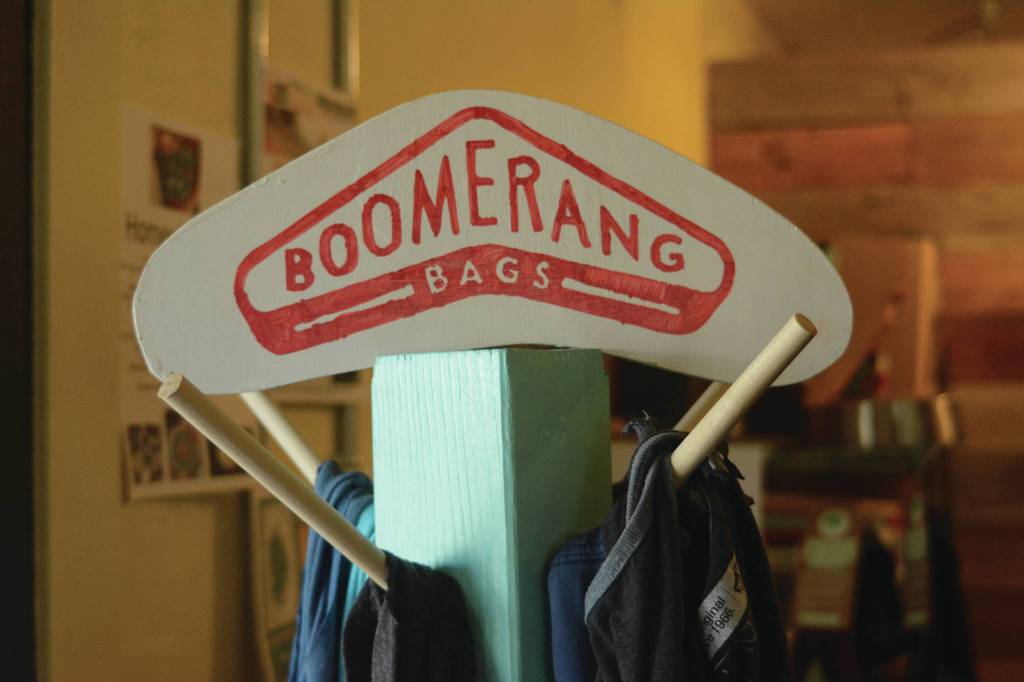
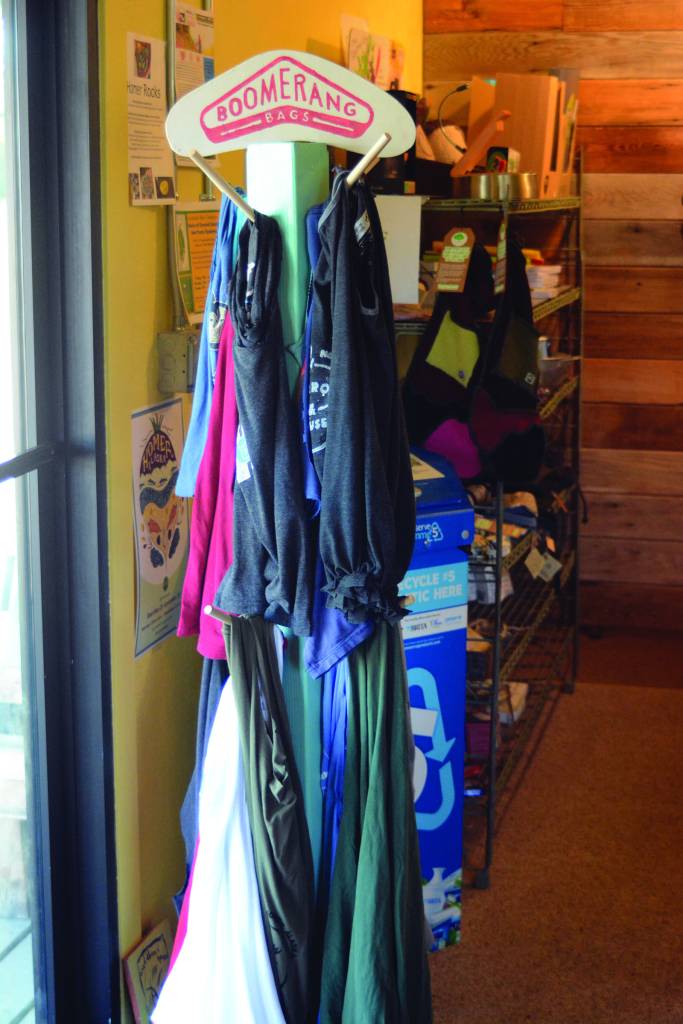
The Center for Alaskan Coastal Studies has been making upcycled reusable bags made from old T-shirts through its Boomerang Bags. Ulmer’s and other participating stores have racks where people like tourists can take Boomerang Bags for free.
Save-U-More, one of Homer’s two large grocery stores, also will provide paper bags to give away, said manager Mark Hemstreet.
“We always have boxes available, which is a good option,” he said. “We’ll definitely encourage people to use their reusable bags. It might take people awhile to get used to the habit.”
Mede said he thinks that for Homer shoppers, the transition will go smoothly.
“Locals will get used to it. They probably have a good assortment in their cars,” he said.
“Personally, I kind of like it,” Mede added. “I get the theory of it. … We’ll do our part.”
At press time, a corporate spokesperson for Safeway did not return phone calls asking how the Homer grocery store would provide alternatives to single-use plastic bags.
Reach Michael Armstrong at marmstrong@homernews.com.