How will the student loan forgiveness plan impact Alaskans?
Published 10:30 pm Tuesday, August 23, 2022
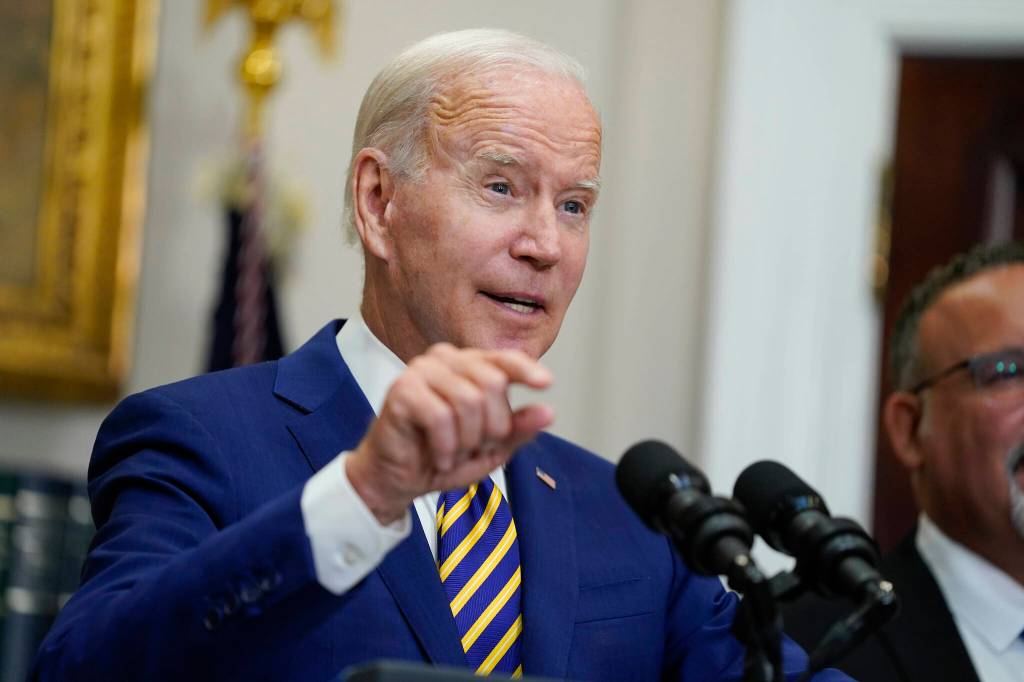
President Joe Biden recently announced his plan to do a long-awaited deed that has had many past and present university students across America holding their breath.
Wednesday the president announced his detailed plan to fulfill his campaign promise to provide $10,000 in student debt cancellation for students across the country and even larger cancellations for people in the greatest financial need.
“My Administration is announcing a plan to give working and middle class families breathing room as they prepare to resume federal student loan payments in January 2023,” Biden wrote in a recent tweet.
The plan outlines a way for people with federal loans who earn less than $125,000 a year or families earning less than $250,000 to receive loan forgiveness based at $10,000 and adding upward to an additional $10,000 forgiven for recipients of Pell Grants, an addition reserved for undergraduates with the most significant financial need.
About 60% of current loan borrowers land under that umbrella, according to the White House.
Biden also announced his plan to extend a pause on all federal student loan payments. The pause was scheduled to come to an end Aug. 31, but will now continue until the end of 2022.
The U.S. currently sits with $1.6 trillion in outstanding federal student debt, with about 1 in 5 Americans holding student loans averaging out at more than $37,000 in debt per the 43 million individual borrowers, according to a study by the Educational Data Initiative last updated in late July. Biden’s effort will aid 20 million people who are expected to have their debt completely canceled because of the move.
“Both of these targeted actions are for families who need it the most: working and middle class people hit especially hard during the pandemic,” Biden said Wednesday afternoon in a speech at the White House.
What does this mean for Alaska residents?
An April 2022 study by the Educational Data Initiative study found more than 65,000 Alaska residents are currently living with student loans and just under 50% of them are 35 years old or younger. Overall, that equates to 9.2% of the state’s residents having some type of student loan debt and more than 80% having at least $5,000 in debt to repay.
In a news release Wednesday, U.S. Sen. Lisa Murkowski, an Alaska Republican, wrote in opposition to the Biden administration’s student loan proposal stating that although she is empathetic to the burden of high student debt, Biden’s action does not recognize those who have already paid off their student loans.
Those who borrow money, she wrote, have a duty to repay it.
“As I travel to communities across Alaska I continue to hear how individuals and families are being impacted by rising inflation — from paying for fuel to their grocery bills and other basic necessities. While cancelling some student loan debt for some Alaskans will help ease their budgets after the repayment pause expires, there is no such thing as ‘cancelling’ student loans.
“This action would add $300 billion to our national debt that every American will be on the hook to pay,” she said. “There are a number of other commonsense alternatives to address this issue, but this is not the appropriate path forward.”
University of Alaska President Pat Pitney said in a statement she welcomes the news because it will aid the many students who borrow to pay for college at UA. She said the school will continue to work toward making college more affordable across the state.
“UA strives to make college more affordable and limit student debt through our many scholarship programs including the UA Scholars program, and why we support the Alaska Performance Scholarship, WWAMI and student grant programs,” she said. “Alaskans should explore educational opportunities through UA programs for teachers, engineers, accountants, and the variety of technical programs we offer to meet Alaska’s workforce shortages.
“Given these shortages, now may be the time to restart the state’s student loan forgiveness program like the process used in the late 1970’s and 1980’s when we saw similar workforce shortages. I think now is the time to restart the program to keep our best and brightest in state.”
Lori Klein, the vice chancellor of enrollment management and student affairs at the University of Alaska Southeast, said she was pleased for students and graduates looking for debt relief.
“Without a doubt, this is welcomed news,” she said.
She said in recent years UAS has seen a trend of students making efforts to not take out loans by reducing the number of classes taken to pay less per semester. Instead, students have shifted to going to school part-time or taking breaks between semesters to raise funds to continue with their education.
“The debt forgiveness program might influence students to be more consistent in their complete pathways and this having that debt forgiven might be able to help them continue that pathway to completion,” she said.
According to data from the Integrated Postsecondary Education Data System, 16% of UAS undergraduate students took out student loans, averaging $6,410, during the 2019-2020 school year. The 2020-2021 information has yet to be released.
Klein said there are a lot of unknowns surrounding how this plan might impact enrollment at UAS in the future, adding it depends on the extent to which this plan will apply in the future. That future is currently unclear.
She said UAS has been taking measures in recent years to keep the costs of its education down as the cost of higher education continues to rise across the country, and said one of the steps includes the decision to keep tuition flat for the past three years despite inflation.
“I’m not sure what the future holds, but I think the president’s decision to forgive some debt is a big part of this conversation and so is the rising cost of higher education,” she said.
When will the relief roll out?
The administration said the Department of Education would release information in the coming weeks for eligible borrowers to sign up for debt relief. Cancellation for some will be automatic if the department has access to their income information, but others will need to fill out a form.
Current students would be eligible for relief only if their loans originated before July 1, 2022. Biden is also proposing capping the amount that borrowers must pay monthly on undergraduate loans at 5% of their earnings, down from 10% previously.
The Department of Education is to post a proposed rule to that effect, which would also cover the unpaid monthly interest for borrowers who remain current with their monthly payments — even when the payments are $0 because their incomes are low.
The Biden administration plan would also raise the income floor for repayments, meaning no one earning below 225% of the federal poverty level would need to make monthly payments.
Biden’s plan builds on $32 billion in targeted student debt forgiveness his administration has enacted for certain groups of borrowers. Much of that went to borrowers who say they were defrauded by for-profit colleges.
The administration also temporarily relaxed the rules for Public Service Loan Forgiveness, a complex program that allows teachers, social workers and other public servants to get student debt canceled after 10 years of monthly payments.
The Department of Justice released a legal opinion concluding that the Higher Education Relief Opportunities for Students Act gives the Education secretary the “authority to reduce or eliminate the obligation to repay the principal balance of federal student loan debt.”
The legal opinion also concluded that the debit could be applied on a “class-wide” basis in response to the coronavirus pandemic.
Why now?
Biden has become more vocal about his shifted focus to aim at fulfilling his campaign promise in recent months as the current soaring inflation has negatively impacted his political image. Inflation hit a 40-year high in June at 9.1% and only slowed to 8.5%, according to data from the U.S. Bureau of Labor statistics.
Biden’s plan has been met with celebration and criticism.
Democratic Sens. Elizabeth Warren and Chuck Schumer released a joint statement in favor of the move and the chair of the House Progressive Caucus, Rep. Pramila Jayapal, tweeted, “This will bring real relief to 43 million people and is a MASSIVE step in the right direction.”
Others have expressed opposition.
“Today’s announcement is an insult to every American who played by the rules and worked hard to responsibly pay off their own debt,” said Sen. John Barrasso, chair of the Senate Republican Conference, in a statement.
Senate GOP leader Mitch McConnell said, “President Biden’s inflation is crushing working families, and his answer is to give away even more government money to elites with higher salaries. Democrats are literally using working Americans’ money to try to buy themselves some enthusiasm from their political base.”
People across social media have shared their opinions on the plan, with #studentloanforgiveness trending in the top spot on Twitter as of Wednesday afternoon.
A survey of 18- to 29-year-olds conducted by the Harvard Institute of Politics in March found that 59% of those polled favored debt cancellation of some sort — whether for all borrowers or those most in need — although student loans did not rank high among issues that most concerned people in that age group.
Biden is expected to share more information on the plan in the coming weeks, according to the White House.
Contact reporter Clarise Larson at clarise.larson@juneauempire.com or 651-528-1807. Follow her on Twitter at @clariselarson.