Fritz Creek General Store told resident cat violates code
Published 1:30 am Thursday, February 28, 2019
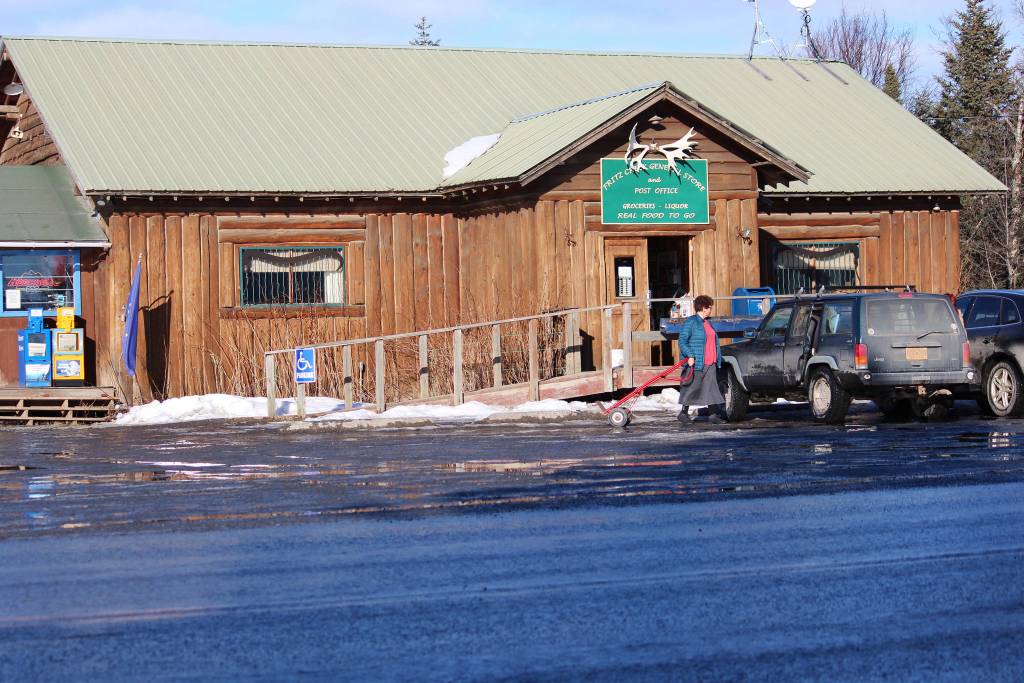
A beloved cat that has long been a fixture of a general store near Homer just got served an eviction notice by the Alaska Department of Environmental Conservation, and many locals aren’t happy about it.
Stormy, a black, slightly overweight female cat, has called the Fritz Creek General Store home since being relocated there in 2012. She can often be seen lounging around on one of the large, wooden chairs in the center of the store, or tottering up to a customer for a pat or two on the head.
Kady-Lee Hackett is the cat’s original owner. She got Stormy from the animal shelter along with her sister, Rain, when they were both kittens. Hackett said she re-homed Stormy to the general store in 2012 because she was having problems being over dominating with the other cat.
Fritz Creek General Store is owned and operated by Sean Maryott and Diana Carbonell. The Alaska DEC’s Food Safety and Sanitation Program gave the owners notice that having Stormy in the store violates the state’s food safety code.
“We did receive a complaint (about the cat),” said Jeremy Ayers, section manager for the DEC’s Food Safety and Sanitation Program.
The owners of Fritz Creek General Store didn’t return a call for comment by press time. Bridget Maryott, Sean’s sister, said her family will be taking Stormy in and that she can live out the rest of her days with them.
One argument local residents have been making over social media is that Stormy’s eviction isn’t fair considering the long reign Mayor Stubbs, an orange Manx mix who was considered the in-name-only mayor of the unincorporated community of Talkeetna, had in a local establishment there called Nagley’s Store. Stubbs was known to frequent both the store and West Rib Pub & Grill. The owners who took over both establishments in 2015 actually signed a contract that stipulated the cat must stay with the store.
As it turns out, Stubbs was never actually allowed to be there, either. Having a pet like a cat or dog in a facility that serves food is in violation of Alaska’s code for food safety, according to Ayers. He oversees the areas of Anchorage, Ketchikan, Sitka, Juneau, Dutch Harbor and Western Alaska.
Though he is not in charge of the area that includes Nagley’s Store where Mayor Stubbs lived out his days, Ayers said he knows a staff member from the Wasilla office did contact the establishment in the past to let them know the cat was not allowed to be there.
“That cat was technically never allowed to live in that facility,” he said of Stubbs.
According to the Alaska food code, food establishment operators shall ensure “live animals are not in the establishment, except for edible fish, crustacea or molluscan shellfish, fish in aquariums, patrol dogs accompanying police officers, or service animals accompanying persons with disabilities.”
Since Stubbs died in 2017, the store has replaced the symbolic mayor with Denali, who, according to an Instagram page dedicated to the cat, is now in the Nagley’s Store.
Having an animal in a facility that serves food violates Alaska code, but Ayers said this isn’t an infraction members of the Food Safety and Sanitation Program actively go looking for. It’s not high on their list of priorities compared to high-risk health and safety violations.
The only reason the DEC would investigate a pet in something like a general store would be if it received a complaint about that animal, or if an environmental health officer happened to see one while doing a facility inspection.
In addition to the department receiving a complaint about Stormy, Ayers said an environmental health officer who was recently at the Fritz Creek General Store did see the cat as well.
“If an EHO sees it, they need to take action,” Ayers said.
Ayers said an environmental health officer stationed in Soldtona has followed up with the general store and notified the owners that Stormy cannot be there. Other than that, there are a number of steps the department can take if an establishment doesn’t get back in compliance with code.
Some locals, however, don’t feel the rules laid out in the state’s food code make sense when applied to certain traditional aspects of rural Alaska life. Linda Chamberlain and Al Breitzman live down East End Road, and frequent Fritz Creek General Store often.
“I’m in there every day, and it just seems like if the DEC is concerned about hygienics, having the cat there is a lot more hygienic than not having the cat there, because the cat keeps the rodent population down,” Breitzman said.
He and Chamberlain added that Stormy is very much a part of the social culture of the store and greater East End Road community. In a place like that, everybody sees everybody, they said — and Stormy is part of that everybody.
Chamberlain said several people go into the store to connect with the cat. She said it’s disappointing that certain regulations can be applied without considering the special circumstances of a different lifestyle. It makes sense to have these kinds of health and safety regulations and apply them to metropolitan areas, Chamberlain said, but they don’t always translate well to unique situations like Fritz Creek General Store.
“I’m glad that I knew Stormy and I got to see this kind of … wonderful tradition and social connection,” she said.
Breitzman pointed out that, with an older building like the one the general store is in, rodents can often be a problem.
“Part of the point of having a cat is cleanliness,” he said.
Since pets in food establishments aren’t a high priority compared to more serious health violations, Ayers said staff don’t always have the resources to be able to follow up on them right away. He said, if it was discovered later on that a facility still had an animal after being warned to get rid of it, they would likely get a letter from the DEC letting them know there could be consequences for not complying with code.
If the situation continued, there are actions the DEC can take against a facility, he said, such as permit suspension.
Reach Megan Pacer at mpacer@homernews.com.