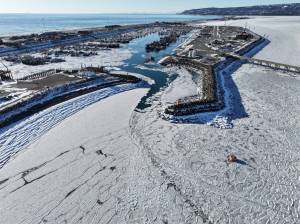
Fishery council closes federal waters in Cook Inlet to commercial salmon fishing
Published 10:30 pm Tuesday, December 8, 2020

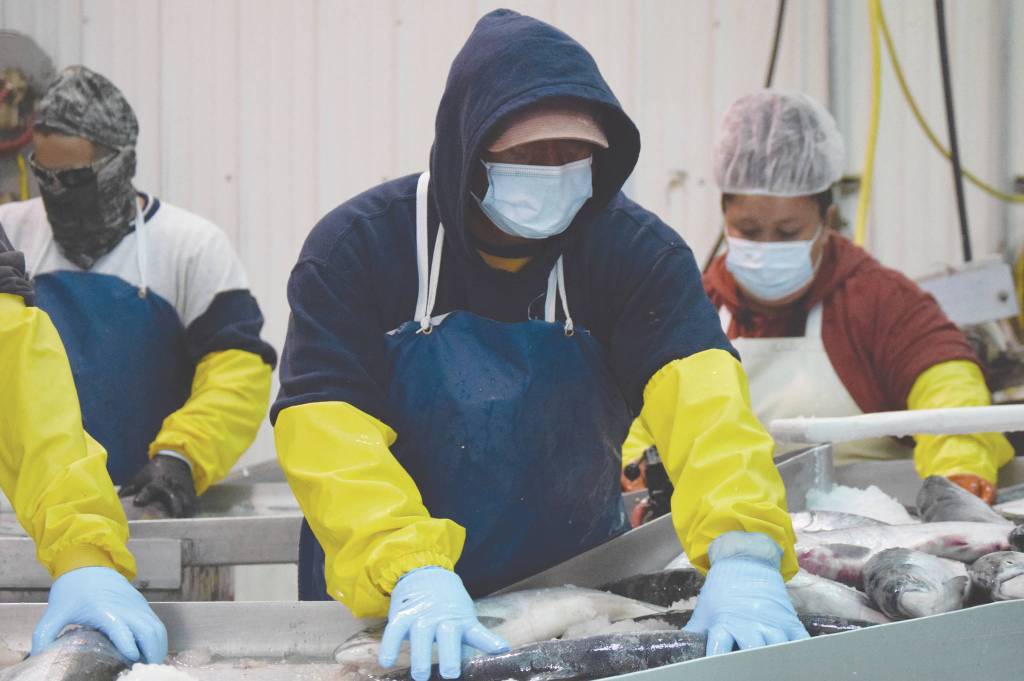


The body that oversees fisheries in federal waters off Alaska’s coast voted this week to close a portion of Cook Inlet to commercial salmon fishing, a move fishermen, processors and elected officials had warned against.
The North Pacific Fishery Management Council voted on Monday to close the federal waters in Cook Inlet — called the Exclusive Economic Zone, or EEZ waters — to commercial salmon fishing. The council voted 10-0, with council member Jim Balsiger abstaining.
The Cook Inlet EEZ, which runs from south of Kalgin Island to about Anchor Point, was removed from the council’s Fishery Management Plan in 2012. The state has managed fisheries in those waters for years. A recent ruling by the U.S. Ninth Circuit Court of Appeals required the council to include the Cook Inlet EEZ in a Fishery Management Plan by the end of this year.
The choice to close the Cook Inlet EEZ to commercial salmon fishing was one of four options before the council. Alternative 1 would have taken no action, and left the status quo of fishing and management of those waters. The council said that alternative was not an option due to the Ninth Circuit Court ruling.
The second alternative was to have federal oversight of the waters with certain management delegated to the state. The third alternative was federal oversight and management of the Cook Inlet EEZ, and the fourth alternative was federal oversight of those waters, with the waters closed to commercial salmon fishing.
This closure limits the Cook Inlet commercial salmon fishery to the state waters which stretch to 3 nautical miles off Alaska’s shore.
More than 220 written comments were submitted ahead of the meeting and more than 30 people testified on Monday, the majority of whom were against the closure. Commercial fishermen, both drift gillnetters and set netters, said closing the federal waters will increase competition among user groups and negatively impact, and potentially kill, the fishery. They testified that the closure will lead to a sharp reduction in catch numbers, which will make it almost impossible for the few remaining fish processors to stay open. With no one to buy their fish, public commenters said, the fishery would die out.
“It was a pretty big blow to the industry,” said Matt Haakenson, fleet manager at Pacific Star Seafoods in Kenai, after the decision.
Anticipating lower catch numbers, Haakenson said maintaining the business model at Pacific Star is not going to be sustainable.
“Obviously we’re going to try to do what we can to stay in business, but it’s going to make it a whole lot harder,” he said.
Homer in particular has a large stake in the fishery. According to a resolution passed by the Homer City Council last month opposing Alternative 4, Homer has the highest level of vessel participation in the fishery out of any participating community, with an average of 24% of participants and 197 vessels.
Additionally, the vessels based in Homer get the highest gross revenue from the fishery, the resolution states, with an average annual revenue of $5.5 million, or 28.6% of the fishery’s total revenue.
“It is a complete reallocation of economic benefit,” said Homer Mayor Ken Castner of the closure, via email. “There are winners and losers and they are okay with that.”
According to the Environmental Assessment/Regulatory Impact Review prepared for the council, Alternative 4 was not considered to have a “significant” impact on salmon stocks in Cook Inlet.
“Given that drift gillnet fishing in the EEZ is only one source of salmon removals in Cook Inlet, and that compensatory fishery effort would be expected in State waters, any reductions in the harvest of Cook Inlet salmon stocks are not expected to result in significant impacts,” the review states.
The idea that commercial fisherman could recover some catch lost from the closed federal waters by fishing in the 3 nautical miles of state water is “ridiculous,” Haakenson said. The fish don’t school up in the corridor of state waters, and fishermen don’t catch anything near the amount they do out in the EEZ waters, he said.
The environmental assessment and impact review goes on to state that the closure under Alternative 4 is likely to result in an overall reduction in salmon harvests in Cook Inlet, and that “commercial salmon harvest patterns would be expected to change.”
“But whether fish unharvested in the EEZ go unharvested elsewhere is hard to quantitatively predict,” the review states. “However, salmon surplus to escapement needs are expected to be harvested in State waters salmon fisheries, including the State waters drift gillnet fishery whenever possible.”
Commercial fishermen who wrote comments and spoke during Monday’s meeting, however, said they’re not going to be able to successfully fish in the 3 nautical miles of state water left for them, especially when sharing that water with set netters, who can extend out to 1.5 miles off shore.
Sen. Peter Micciche, who himself is a commercial fisherman, said in his testimony to the council that the alternative would result in lower catch rates.
“Changing (the fishery) to the state management waters would exacerbate all of the allocation and competition problems,” he said. “I know some people kind of don’t support over escapement. Well that’s fine with a few hundred thousand fish, but dump a couple of million into the system and see what happens.”
Four other Kenai Peninsula legislators submitted either written or oral comments to the council: Rep. Sarah Vance (R-Homer), Rep. Ben Carpenter (R-Nikiski), Sen. Gary Stevens (R-Kodiak) and Rep. Louise Stutes (R-Kodiak). Additionally, the peninsula cities of Kenai and Homer, and the Kenai Peninsula Borough Assembly passed resolutions opposing Alternative 4.
The only entity, both in the submitted written comments and during public testimony during the council meeting, that was in favor of Alternative 4 was the Kenai River Sportfish Association.
Before Alternative 4 was introduced as an official option at the council’s October meeting, much analysis and discussion was focused on Alternative 2, which would have formed federal oversight of the waters with management measures delegated to the State of Alaska. Ahead of Monday’s vote, council member Rachel Baker, deputy commissioner of the Alaska Department of Fish and Game, said that the state is “unwilling to accept delegated management authority.” She then made a motion for the council to approve Alternative 4, closing the federal waters.
In their reasoning and discussion ahead of the vote, the other council members lamented the negative effects the closure is likely to have on the commercial fishery and processors, but said they felt left with no options. None favored Alternative 3, which would have meant complete federal oversight and management.
Several council members said they would have chosen Alternative 1 and left the fishery in status quo, if not for the Ninth Circuit Court ruling.
“I think, for one, we shouldn’t count on compensatory harvest,” said council member Nicole Kimball. “… I don’t think we should be in a position to make this choice. I’m really disappointed that we are. I don’t think there are any positive outcomes of any of the alternatives with the exception of status quo, which is not available to us.”
Asked whether the state would be supportive of a possible congressional change to the Magnuson-Stevens Fisheries Conservation and Management Act that would allow the state to manage the salmon fishery in federal waters, Baker said she couldn’t speak for future administrations but that the state’s position has consistently been to support the status quo. If there was a congressional change to the act in the future that would allow that status quo to be feasible, Baker said it was reasonable to say the state would examine it.
Seeking to amend the federal act is the next step, Micciche said in a later interview. He said the goal is to not have a single fishing season in which the EEZ closure is actually in effect.
Changing federal law is never easy, he said, but the Cook Inlet commercial salmon fishery is not the only state fishery in federal waters, so there are more wide-reaching grounds to have this management issue addressed in the Magnuson-Stevens Act. Micciche said he thinks Alaska’s congressional delegation would be able to adequately explain its importance and fight for it.
Micciche expressed disappointment in the decision, but also the process. He cited the fact that much of the focus over the last few years has been on Alternative 2.
“I actually believe that it was unfair that the public and the council wasted any time on the discussion of Alternative 2,” he said. “… The state and some council members already seemed to have made up their minds that they were unwilling to accept delegating management. If that was the case, that should have been stated originally. The public, including myself, put a lot of energy into the effects of Alternative 2, and clearly it was not an option.”
Moving forward, Micciche said it’s going to be important for all user groups to stand together to avoid being susceptible to drastic changes like the EEZ closure.
Reach Megan Pacer at mpacer@homernews.com.
Editor’s note: This article has been updated to clarify which government bodies passed resolutions opposing Alternative 4. They were the Kenai and Homer city councils and Kenai Peninsula Borough Assembly.