Assembly OKs new tax exemptions for independent power producers
Published 10:30 pm Tuesday, May 17, 2022
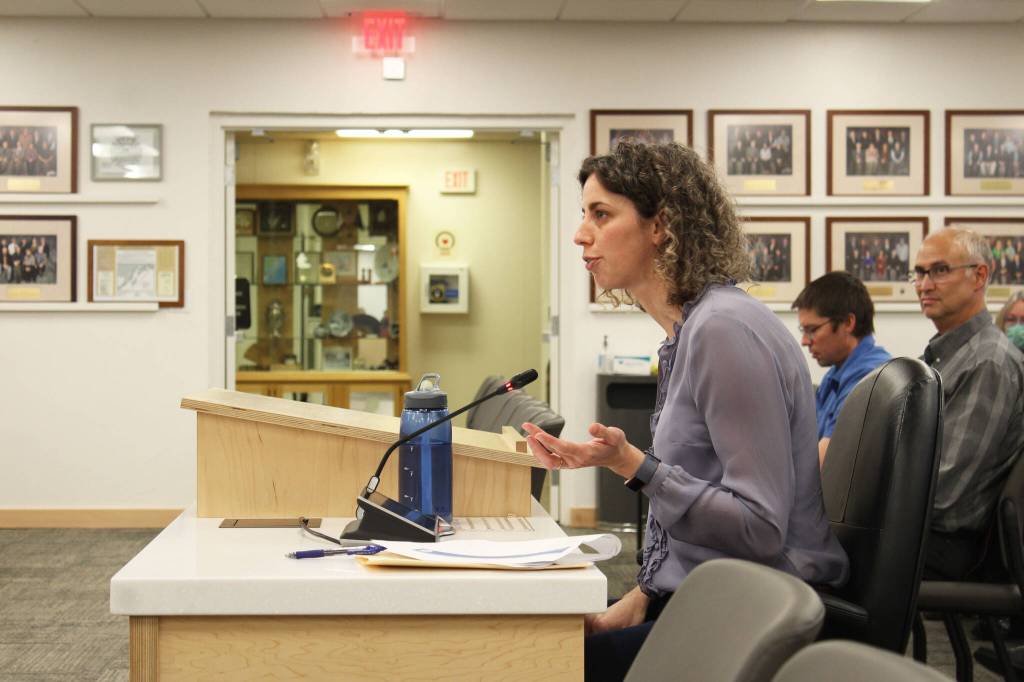


The Kenai Peninsula Borough will offer a new kind of tax exemption for independent power producers following approval from the borough assembly during their regular meeting Tuesday.
The ordinance passed Tuesday came after months of deliberation and designates independent power producers as eligible to be partially exempt from borough property taxes. Those who supported the code changes say it will help diversify the borough’s energy sources and spur economic development in the borough, while those opposed said the proposed agreement lengths were too long.
Per existing borough code, the exemption amount is determined by the assembly and can be for up to 50% of the property’s assessed value. In the case of IPPs, an exemption can be given for up to 15 years. The ordinance defines independent power producers as companies that own and operate a power generation facility larger than two megawatts and that sell electricity to a public utility regulated by the Regulatory Commission of Alaska.
The process of writing IPPs into that section of borough code kicked off after Renewable IPP, a company that develops, constructs and operates utility-scale solar farms, last year approached the assembly about putting a solar farm on the peninsula. The project, if it goes through, would be the biggest solar farm in Alaska at 60,000 solar panels and would cover about 160 acres in Sterling.
Assembly members killed an effort by Richard Derkevorkian, who represents Kenai, to reduce the maximum length of an exemption from 15 years to five years, which is consistent with the length of other exemptions in borough code. In proposing the reduction, Derkevorkian said any companies receiving borough subsidies should be able to stand on their own after five years.
“I’m not opposed to incentivizing new business, but I’m opposed to subsidizing a business for 15 years,” Derkevorkian said. “If it can’t stand on its own after five years, it shouldn’t be a business.”
Assembly member Lane Chesley, who represents Homer, pushed back on the idea that independent power producers can be compared to other businesses because of how heavily the industry is regulated. He added that the borough’s precedent of maximum exemption lengths of five years may not be long enough because it hasn’t brought new development to the borough.
“I don’t think five years is long enough,” Chesley said. “I don’t know what the magic number of years is, but we’ve had five years on the books for a long, long time and it’s not attracted economic development to the borough.”
Kenai Peninsula Borough Mayor Charlie Pierce has long pushed for Renewable IPP to come back with clearer numbers showing how the project would benefit borough residents if the company receives a borough tax exemption. Pierce said Tuesday he’d like to see a review process put in place for exemptions, especially if the agreement is for 15 years.
Assembly member Tyson Cox said in response that a new section of borough code will require any exemption recipients to certify annually that the factors that made them eligible for the exemption “remain in existence.”
When Renewable IPP CEO Jenn Miller first presented the project to assembly members last October, she said the company was looking for a property tax exemption of around 80%. The Kenai Peninsula Borough mill rate in Sterling is about nine, about 2.35 mills of which could be eligible for exemption under the ordinance.
Mill rates are used to figure out how much someone will pay in property taxes during a certain fiscal year. To calculate how much property tax they expect to pay, an individual must divide the mill rate by 1,000 and then multiply that by their property’s taxable value.
If fully exempted from the eligible two mills, Renewable IPP’s property tax exemption would be around 25%. Though the exemption is not what Renewable IPP originally asked for, Miller said during an April 5 assembly meeting, the ordinance language that would make the exemptions last for up to 15 years “certainly helps.”
Miller said Wednesday that Renewable IPP is continuing to progress the Kenai Peninsula solar farm project and “look(s) forward” to applying for the exemption “once studies are complete and we can clearly demonstrate the economic development benefit and need for exemption to the borough.”
“We are thrilled that KPB is incentivizing IPPs to help make our electricity supply more resilient and cost competitive,” Miller said via text message. “The Assembly’s ordinance approval sets the stage to inform our analysis and decision making, making it much easier to develop IPP projects in the Kenai Peninsula.”
The assembly voted 7-1 in favor of the new exemption opportunity, with Derkevorkian casting the vote in opposition.
The Kenai Peninsula Borough Assembly’s Tuesday meeting can be streamed on the borough’s website at kpb.us.
Reach reporter Ashlyn O’Hara at ashlyn.ohara@cmg-northwest2.go-vip.net/peninsulaclarion.