The 2 most deadly years — Part 6
Published 10:30 pm Thursday, December 19, 2024

AUTHOR’S NOTE: The two most deadly years for people on or near Tustumena Lake were 1965 and 1975. This series discusses the tragedies of those two years. This chapter in the series offers the conclusion to the story of John and Kerri Dolph.
On June 16, 1975, Kerri Lynn Dolph found herself in the Veterans Administration office in Denver, Colorado, applying for a military marker for the grave of her husband, John Donald Dolph Jr., who had died eight days earlier at Tustumena Lake on the Kenai Peninsula, Alaska.
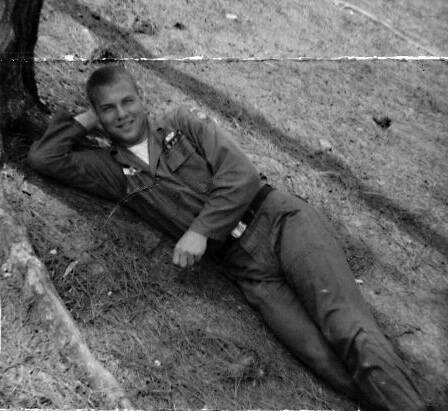
John had served six years in the military, starting in 1964 when the Gulf of Tonkin Incident prompted an escalation in U.S. involvement in the ongoing Vietnam War. He had reached the rank of Specialist 5th Class, which typically involved a technical or support role rather than direct combat.
Kerri’s request for a marker was approved and forwarded to the Sheidow Bronze Corporation for processing. John was buried in Highland Cemetery in Denver.
“His funeral was very sad for so very many, family and friends who loved him dearly,” Kerri said. Because of John’s Army service, there was a military component to the funeral. Kerri remembered flinching at the rifle shots during the three-volley salute.
Kerri Dolph was likely operating on some type of personal auto-pilot by the time she walked into the VA office. On Friday, June 13, only three days earlier, she had been rescued from an isolated cabin near Indian Creek on Tustumena Lake, where she had been waiting, benumbed and helpless, while acting as a kind of sentinel over John’s body.
On that Friday, her rescuers had transported her from the wilderness to the road system. She was questioned by authorities, then hospitalized overnight in Soldotna and treated with intravenous fluids. A day or two later, still in shock, she was placed aboard a commercial flight to Denver, where she was met by family members.
John’s body had been moved to Walsh Mortuary in Kenai, where it was examined and then prepared for passage home. Although Kerri didn’t know it at the time, John’s body lay in the baggage compartment of the same plane in which she had traveled.
Tragedy
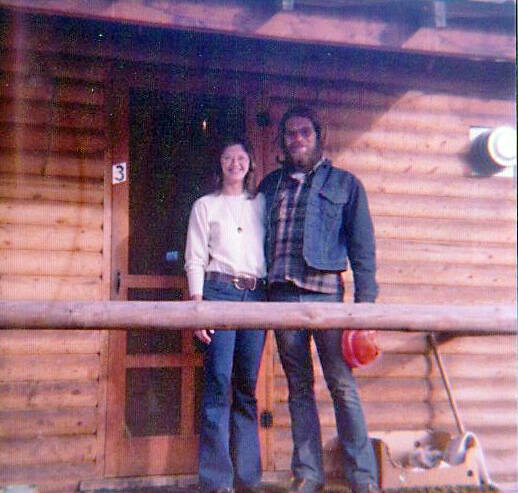
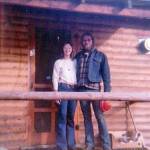
John and Kerri Dolph had been married only about seven months when they came to Alaska for what Kerri called a “delayed honeymoon.”
Shortly after marrying in late November 1974, they had moved into a one-room cabin in Clark, Colorado — a community, said Kerri, consisting of only seven cabins and a post office. John had worked in nearby Craig, and they were happy.
John had been “a good friend of some of my uncles — that’s how we met — all respectable guys. Ornery but respectable,” Kerri said. “He was soft-spoken yet strong, and with a gentle look to his eyes, eyes that lit up when he smiled. My dad liked him, and that says SO much. He was (also) quiet, maybe a bit of an introvert, liked his solitude, but then, so did I.”
John had planned the Alaska trip. He had read about Alaska, dreamed about it. He had studied maps and selected the location for their adventure. He had made all the arrangements.
On the last day of April, they packed their car and left home. They drove into Nebraska, where Kerri’s parents lived, then to Las Vegas and Boise and into Canada. They navigated the Alcan and drove through Palmer and Anchorage to Kenai, where they engaged a floatplane pilot to fly them to the lake and confirmed that he would return in three weeks to pick them up. They arrived near the mouth of Indian Creek at about 8 p.m. on June 7, set up their tent and admired the beauty and vastness around them.
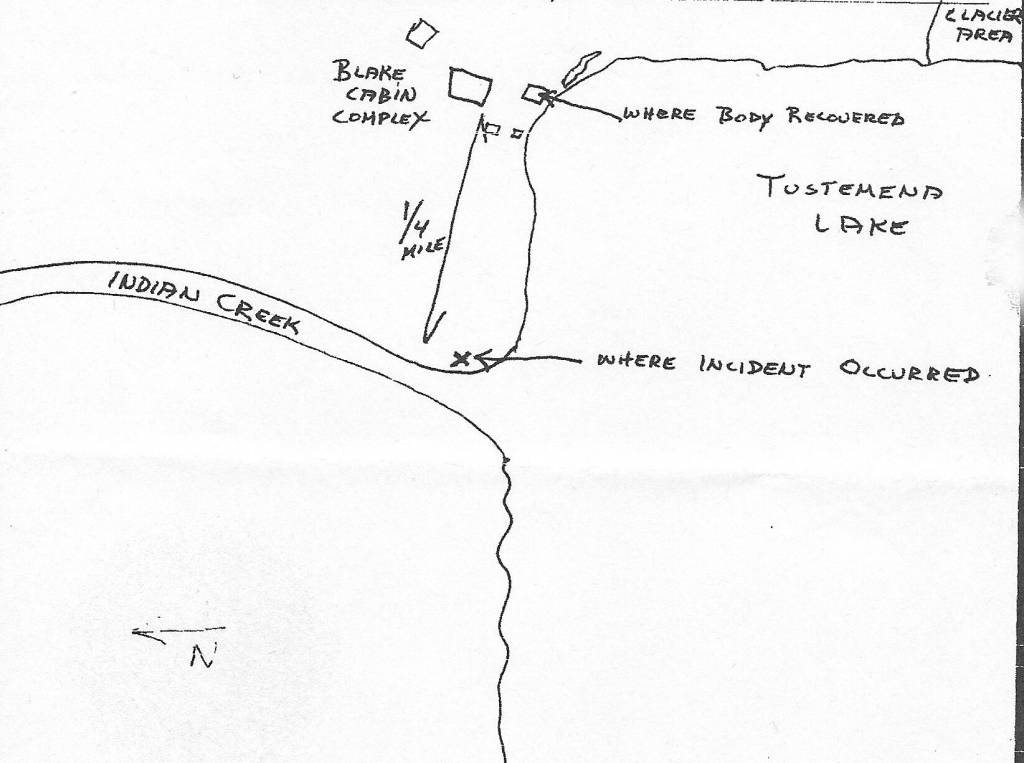
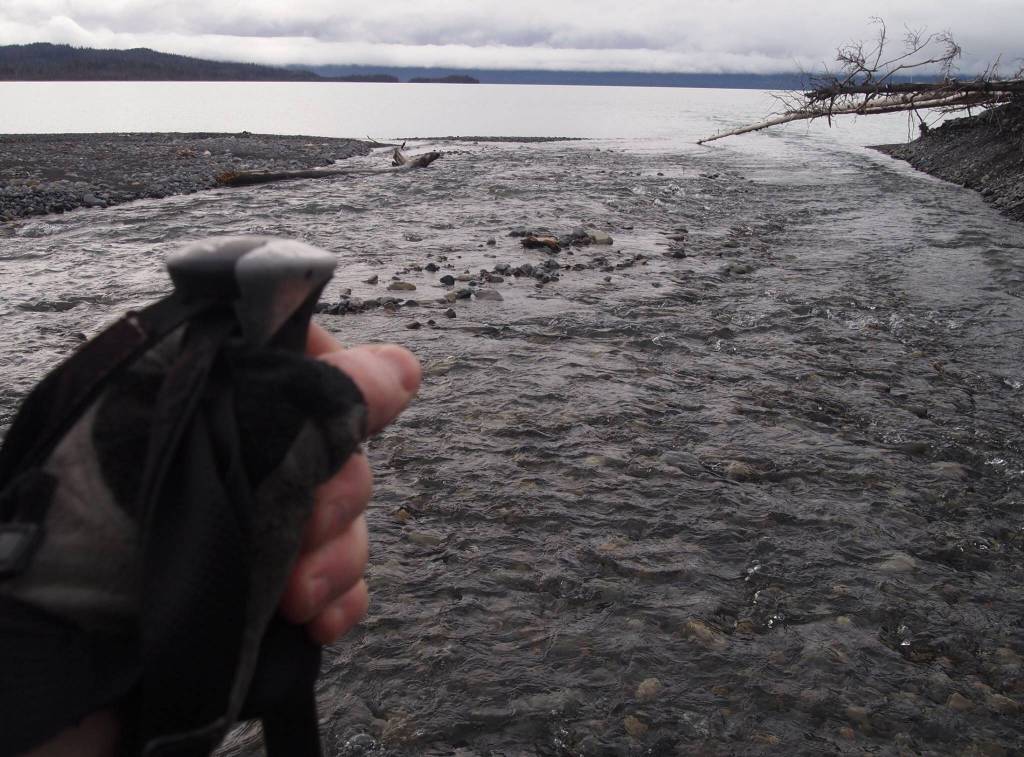
Rising the next morning, John picked up a container and ambled west along the lakeshore to Indian Creek to collect water for camp. For bear protection, he carried a .44-magnum Hawes revolver in a cross-draw-style holster that held the gun on his left hip. Kerri stayed in camp, she said, “putzing (around)” until John returned.
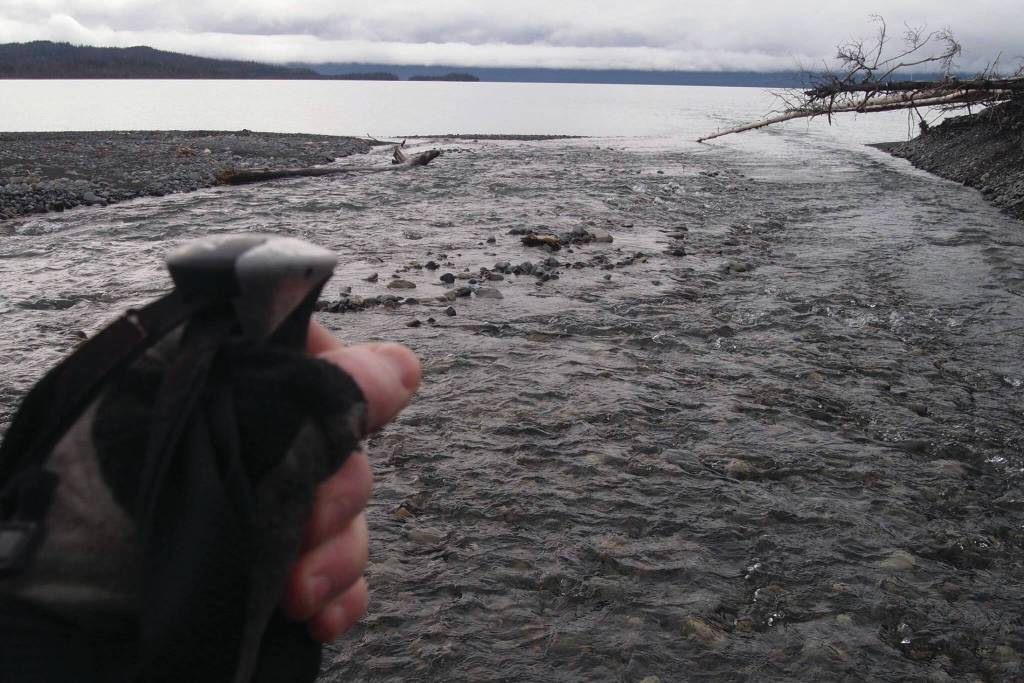
Indian Creek is fed primarily by the Indian Glacier, one of many branches (like Tustumena Glacier) of the massive Harding Icefield in the Kenai Mountains. At its mouth in early spring, the creek runs shallow and mild, its waters clear. As temperatures climb in late spring and early summer, the melting at higher elevations causes the creek to rise significantly, the water increasing in turbidity and velocity.
Back at camp, Kerri was growing concerned. “He didn’t come back and didn’t come back,” she said, “so I went to see if I could find where he told me the stream was.”
She found John lying “20 to 40 feet up the stream from the lake,” she said. “He had a bullet hole in his chest, and as I tried to give mouth-to-mouth — not knowing what else to do — I could hear the air, my air, coming out of the hole in his chest.” But there was no life left in him.
“I sat down beside him,” she said. “I don’t know for how long. It was all so surreal.” That John could, so suddenly, be dead made no sense to her.
Finally, she knew she needed to act. “I couldn’t leave him out there, but moving — dragging — him was…. I couldn’t stand thinking that my dragging him along those rocks was hurting his head, so I went back to camp … and got (our) rubber raft.”
Returning to the creek mouth, she collected John’s revolver, which she found roughly halfway between his body and the water. Then she was able to slide John aboard the raft and float his body back to camp.
This task complete, she became starkly aware of how alone she was. Boat traffic on the lake — common during fall hunting seasons — could be rare in early June. She was unfamiliar with the geography, with other people who might be in the vicinity and with the locations of other cabins. She had relied on John for all of that.
Their floatplane pilot, she reminded herself, was not due to return for another 20 days.
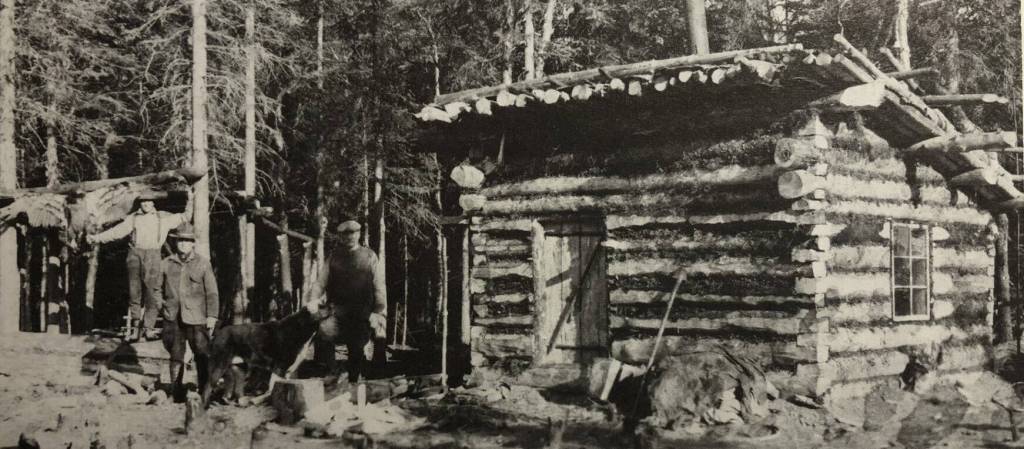
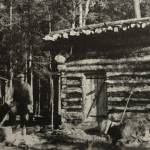
The property where they had camped was a legal inholding, established by Emil Berg and now owned by Ray and Lorraine Blake. It consisted of a two-story log house set back from the lake, a log barn deeper in the woods, and a smaller, log shed standing closest to the water.
“Not wanting to be camping out in the open wilderness,” she said, she moved John and most of their gear into the shed.
The side of the building facing the lake had a window frame but no glass, “so I wasn’t much safer from ‘intruders,’ sitting there with all our food supplies and pretty much everything, and the body of my dead husband. Without John, the mountain man, I needed to be inside, ‘safe’ from whatever happened…. I sat at the side of that window opening … just staring.”
She waited five more days.
Aftermath
“I don’t recall any ‘official’ findings,” Kerri said, “other than it being an ‘accidental shooting.’ (John) was not unexperienced in the wild, nor with firearms…. There was mention of him possibly being startled by a bear or some other animal. There was a reason he had his firearm out of its holster.”
The uncertainty played itself out briefly in the press. The Anchorage Daily Times, for instance, reported on June 14 that, according to State Troopers, John Dolph had died from an accidental gunshot wound. The Cheechako News, on the other hand, ran two short, conflicting articles in its June 19 edition.
The Cheechako article on page 8 called the death a hunting accident but offered no details. The story on page 9 mentioned nothing about hunting but offered more specific information: “(Dolph’s) .44 magnum revolver apparently fell from a cross-draw-type holster, the hammer of the revolver striking a rock and discharging.”
The Troopers’ official report said the fatal bullet entered the John Dolph’s left chest and exited his left back. The entry wound was singed, said the report, indicating that the gun had been fired from point-blank or near-point-blank range.
Beyond that, the report offered no definitive conclusion concerning how the accident had occurred. In fact, Kerri Dolph — now Kerri Copper, age 70 and still living in Colorado — never saw the Trooper report and had not seen the Cheechako article until this year. For five decades, she had been left to speculate and wonder.
“It had to have been just a terrible, tragic accident,” she said. The idea of the accidental discharge, whatever the cause, she said, has “assuaged my memories, and I truly do appreciate that.”
NEXT: Two Tragedies, Five More Deaths