Beautiful bread is performance art
Published 9:30 pm Thursday, October 16, 2025


My mother taught me right from wrong and told me to trust my heart. She asserted to me that I am a good person, and when I face moral trials that my instincts will guide me down a just and honest path. She coached me to believe that I am a brave person, and that I should challenge injustice with ferocity and honor. She told me that an act is wrong when it causes harm, and that if my morality is guided by compassion and altruism, that I would make the right choices in life. I have tried all my life to live by these principles, albeit imperfectly, and have been raising my son to have the same heart my mother passed down to me.
My mother taught me to bake and told me to trust my intuition. She told me that recipes are only guidelines, and that following them to their letter sometimes works, but often doesn’t, so we must rely instead upon our senses and our minds. Bread is performance art, not science, and our eyes and hands are more useful tools than measuring cups and spoons. The smell of the bubbling yeast, the texture of the shag, the spring in the ball, the sound of it sticking on the counter as it you knead, all signs learned through instruction first, then practice and expertise.
The bread of life cannot be enforced by doctrine. It is always changing, as true morality is not based on tradition, but is guided by a constant state of peer review. My morality is lateral because I believe we are all equals, and I know that authoritarian morality is endlessly corruptible and can never be trusted. I trust only my good heart and the wisdom of my experience to guide me.
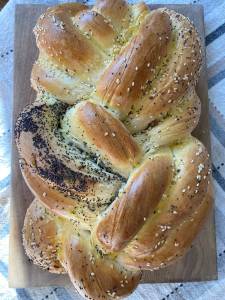
My mother was a baker and made beautiful bread. On special occasions she would make bread bowls for soup, crusty and firm for brothy soups or pillowy soft for thicker stews. She taught me to always decorate the bowls because even though they exist only for an evening and will soon be eaten and gone, the effort will not be wasted, because we have one life to live and we should make it beautiful. It has now been 18 years since she left us.
Ingredients for four bowls:
4 cups all-purpose flour
2 tablespoons active dry yeast
2 tablespoons sugar
Around 1 ½ cups warm water
1 tablespoon olive oil
2 teaspoons salt
Directions:
Gently stir together the warm water, sugar, and yeast in a large bowl and let rest until the mixture is bubbly and fragrant- about 10 minutes.
In a separate bowl sift together the flour and salt. It’s important to make sure the salt is evenly incorporated so don’t skip this step.
Stir the oil into the bubbly yeast then add ¾ of the flour.
Mix gently with your hands until the dough comes together. It will be very sticky.
Sprinkle on the remaining flour, ¼ cup at a time, until you get the consistency you want. If you’re aiming for a softer bowl, the dough should be wetter and stickier, if you want a firm and crusty bowl, it needs to be drier and denser.
When you reach the consistency you want, turn out onto your clean counter and get to work kneading. Lock your elbows and use your whole body to roll the ball back and forth for 10 minutes. This dance is time for you to meditate or sing the song in your heart.
When the pitch is high when you slap it, the dough is ready to rest in a well-oiled bowl until doubled.
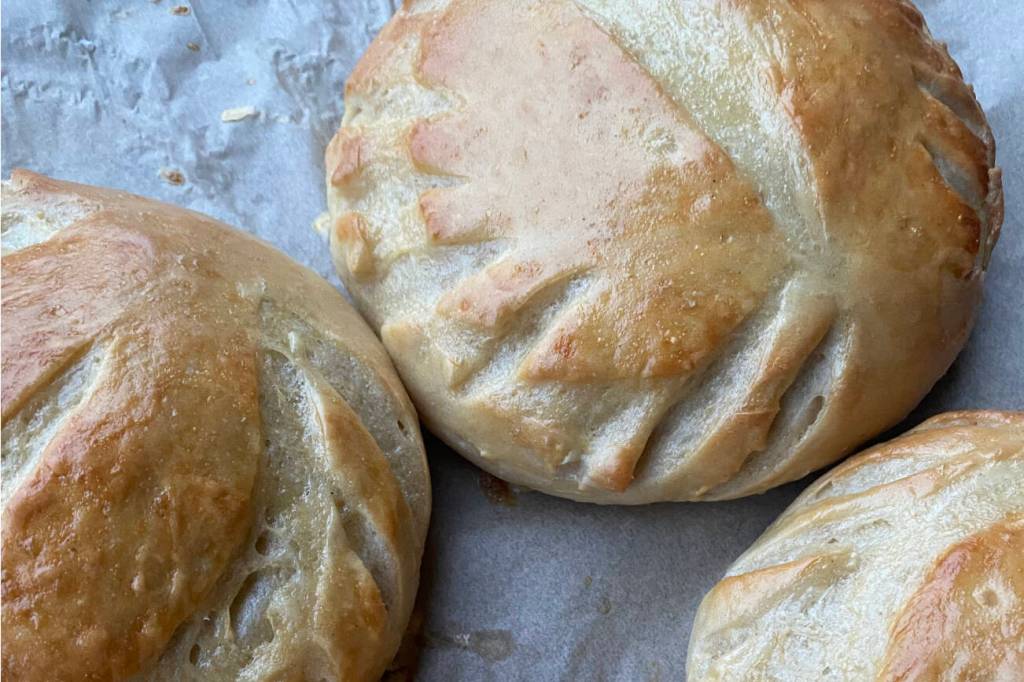
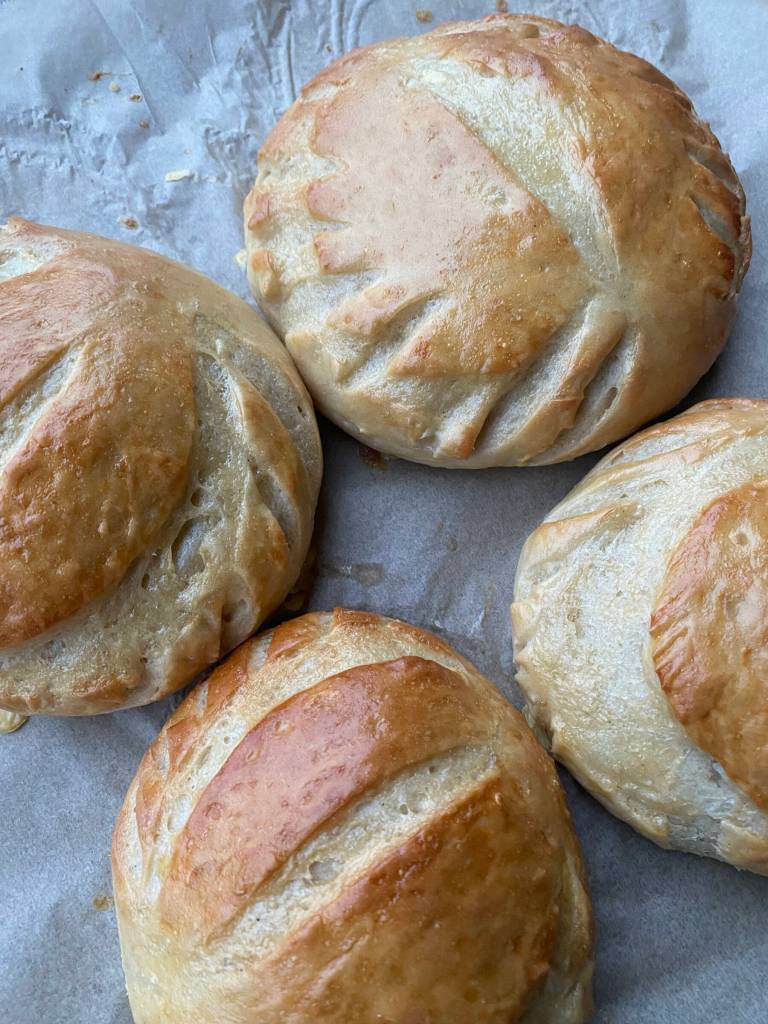
Punch down the dough and separate into four equal portions. Roll those portions into smooth balls and arrange on a parchment lined baking sheet. Cover and allow them to rise until you see bubbles just under the surface- start checking at 30 minutes.
Artfully score and bake at 400 degrees until they make a hollow thump when you tap them with your fingers — start checking at 25 minutes.
Cool slightly before removing the top and hollowing them out for soup.
Tressa Dale is a writer, pre-K educator, culinary and pastry school graduate, and a U.S. Navy veteran. She lives in Kenai with her husband, 5-year-old son, and beloved black cat. Find her on Instagram @tressa.m.dale.