State cuts ripple through borough budget
Published 5:28 am Sunday, May 7, 2017
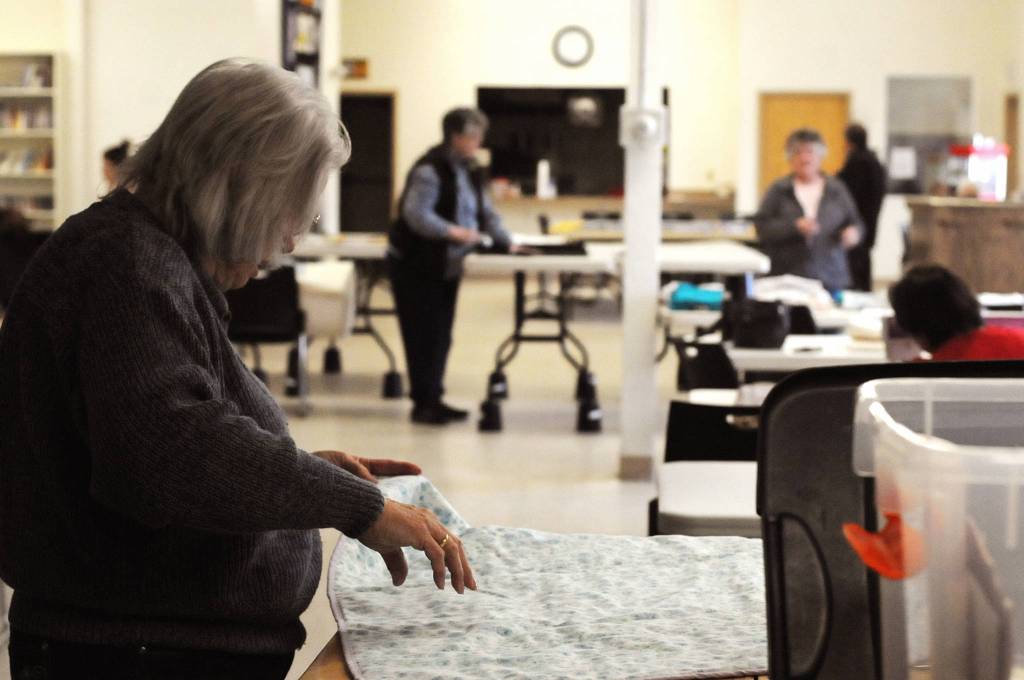

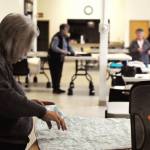

Quilts covered the walls at the Funny River Community Center, the result of hours of work by charity-minded community members. But on a Thursday afternoon, the sewing machines whirred and the coffee machine dripped as cheerful quilters made yet more, preparing them as gifts or auction items.
It’s a pretty typical day for the center, said board president Marilyn Pitts. The center’s 168 paying members and members of the community at large turn up for a variety of meetings throughout the week, including a morning coffee group of mostly men and a crafting group that meets for members to work on their own projects.
The annual fees are small, and up to this point, the center has relied on borough and state funding to meet its annual costs and capital project needs, Pitts said. A lot of the material, such as the sewing machines and fabric, are donated, but there are still the utilities and the material costs to cover.
“It costs about $20,000 a year to keep this place open,” she said.
Funny River is one of a handful of rural community centers and agencies on the Kenai Peninsula working around reduced state grants and borough support amid the state’s fiscal crisis and resulting budget gap. For years, the state has provided unincorporated communities around the state with a disbursement through the Community Revenue Sharing Program, retitled in 2016 as the Community Assistance Program.
Funny River Community Center has been the receiving entity for the program, but the Alaska Legislature did not appropriate additional funds for it for the last two years, so the funding is in question. So in the meantime, the center members are taking things into their own hands.
They plan to drum up funds through their annual July festival, at which an enormous quilt will be raffled off, and through new membership. A membership at the center is currently $20 per year for a single person or $30 for a couple, which may have to increase, Pitts said.
They’re also hoping to revitalize membership among younger people, who have been moving into the area more recently, she said. In the past, Funny River has had a primarily older demographic, with a large number of snowbird and summer homes as people retire and move to the peninsula for its quiet communities, accessible recreation and senior-friendly tax breaks.
The community center put in the playground two years ago, which has some frequent younger visitors, and the members are excitedly awaiting a new slide to be shipped up from the Lower 48, Pitts said.
“It’s hard to keep the younger people sometimes,” she said. “We’re hoping to change that image.”
As the Kenai Peninsula Borough Assembly begins wading through its budget for fiscal year 2018, one consistent concern throughout the departments is declining contributions from the state. The Legislature, now three weeks past its three-month deadline and working into overtime on a budget deal to help bridge the approximately $3 billion budget gap, doesn’t have the money to approve grants for community services and capital projects like it used to, and local governments and communities are trying to find ways to make up for it.
In his proposed fiscal year 2018 budget, Borough Mayor Mike Navarre noted concerns about increased pressure on the boroughs to contribute to the public employee retirement funds. If the state doesn’t cover the overrun of the annual cost, the borough will have to swallow an additional $700,000, according to the budget. Other concerns include reduced funding for schools, solid waste and roads. The borough’s projected sales tax revenue also came in about $700,000 under projections, primarily because of lower gas prices, according to the budget.
“With reductions in revenues from the state government, lower than forecast sales tax revenue and increased contributions for schools, a mill rate increase is being proposed as part o the FY 2018 budget to support the increased contributions to the school district,” Navarre wrote in the budget memo to the assembly.
More direct state contributions are also drying up. The North Peninsula Recreation Service Area, a service area in Nikiski that provides a recreation and community center, ice rink and a pool, among other facilities, has an approximately $2.17 million budget and relies on a 1.0 mill levy to fund maintenance and operations. Between 50,000 and 55,000 people use the pool every year, said Rachel Parra, recreation director for the service area, during a budget presentation to the assembly Monday.
The decline in state grants, though, is pushing more pressure onto the community and the borough to fund facility improvements and capital projects. In fiscal year 2018, the service area board plans to reevaluate the fee structure for some of the services and increase membership opportunities.
“It is putting more pressure on the local communities to fund the programs that in the past have been partially funded by state dollars,” said former borough finance director Craig Chapman in the budget presentation. Chapman retired after 20 years with the borough but returned to make the budget presentations this week.
Central Emergency Services faces a similar struggle with the loss of state grants for replacing equipment. In 2015, voters approved a bond issuance for the service area to buy two new ambulances, two new fire trucks and a ladder truck rather than relying on tax revenue or state revenue. Grants have funded a lot of purchases in the past, but the state is not likely to fund them in the near future, so the service area is considering alternative funding sources, Chapman said.
Demand also increases every year for emergency services as the peninsula population grows and ages — CES sees an approximately 7 percent increase in service calls every year, many of which are non-emergency medical help, according to Navarre’s budget.
Some organizations do have other revenue streams. Many of the community organizations on the peninsula that received funding through the Community Revenue Sharing Program are also nonprofits, which are eligible to receive donations through the Pick.Click.Give program. However, due to Gov. Bill Walker’s vetoes in June 2016 cutting the Permanent Fund Dividend checks in half, Pick.Click.Give donations were down a little. That resulted in a slight decrease in donations for individual nonprofits.
The Funny River Community Center also runs the area’s Chamber of Commerce and functions as a 501(c)6, which is not eligible for nonprofit grants and donations. At its annual membership meeting on May 20, the members plan to discuss whether to separate the two organizations so the community center will qualify for 501(c)3 grants, Pitts said.
They’re not sure what the end result will be, she said, but the plan is simple.
“We’re just going to work our tails off,” she said.
Reach Elizabeth Earl at elizabeth.earl@cmg-northwest2.go-vip.net/peninsulaclarion.