From sea to sale: Fishermen skip processors, go straight to buyers
Published 5:20 am Sunday, July 31, 2016
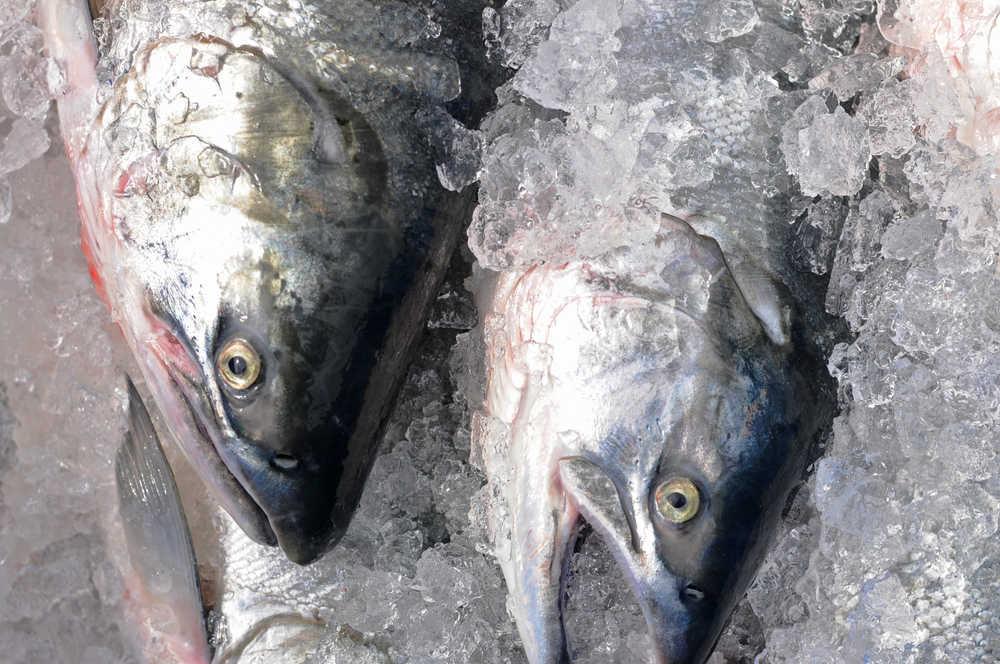
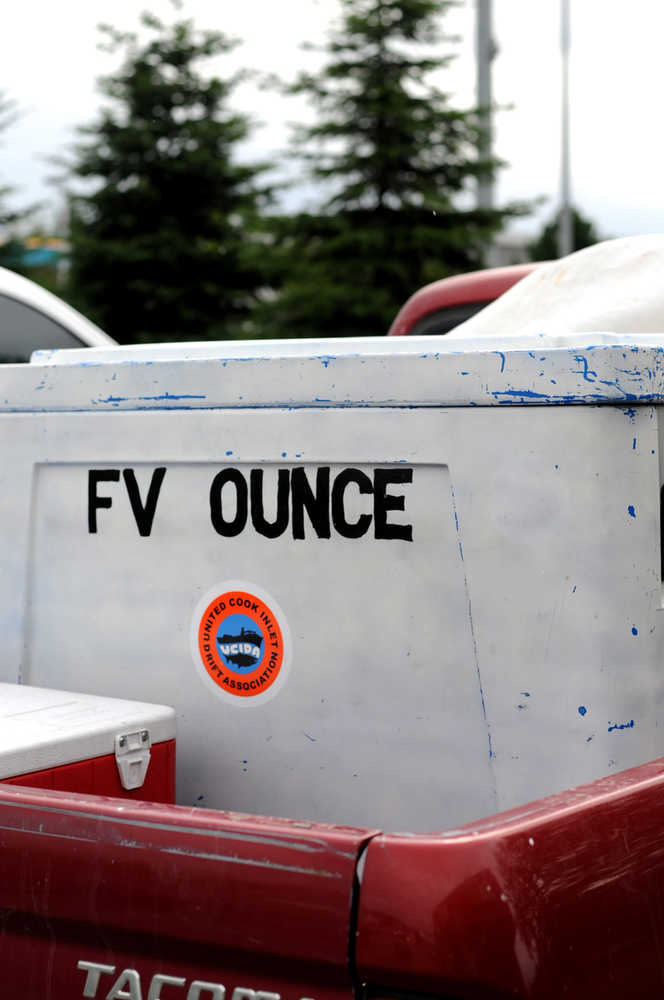





Many of the salmon that wind up in the nets of the fishing vessel Ounce have their buyer’s name on them from the moment they come out of the sea.
Out in Cook Inlet, Chuck Lindsay and his business partner Hannah Heimbuch will haul in silver, red and chum salmon from their drift gillnets and sort them for clients in Alaska and elsewhere. Though most of them will cross the dock at one of the area’s processors, about one-fifth will be carefully packed into a cooler in the back of Lindsay’s truck and delivered to his customers’ doors.
Lindsay, a co-owner of Kenai Wild Salmon Co. with Heimbuch, has directly marketed part of his catch to customers for the past three years. Once the boat has docked for the day, if he and his partner are not fishing the next day, they will deliver the fish in the morning. The fish is always delivered within 12 hours, he said.
“It’s a balance of time to figure out when you can fill that order, when the customer is able to receive that fish and when you have a day off fishing,” Lindsay said. “…We don’t keep fish on hand, fresh or frozen.”
Buying fish straight from the fisherman who caught it is one of the oldest traditions in the industry. Today, most of the state’s commercial fishermen sell their catch directly to processors, who pay for it by the pound before processing and selling it. Direct marketing, on the other hand, allows the fisherman to skip selling the fish to the processor and send it directly to the customer.
About 31 fishermen currently hold direct marketing licenses in Cook Inlet, said Shellene Hutter, who coordinates the direct marketing permitting program for the Alaska Department of Fish and Game. It’s not a complicated process, which a lot of fishermen misunderstand, she said. The initial permit itself only costs $25 and is a simple joint application for the Department of Revenue and Fish and Game.
GETTING STARTED
Some people will go the simplest route, where clients will come down to the dock and pick up their fish straight off the boat — but every direct marketer’s business is different, said Tyson Fick, communications director for the Alaska Seafood Marketing Institute.
“It depends on how successful you are at developing your own markets,” Fick said. “Some folks try it out and see if it works for them. Social media is a good opportunity to get your word out there in a cost-effective way.”
Getting started takes a commercial fishing permit from the Commercial Fisheries Entry Commission, a boat registration and the permit from Fish and Game and the Department of Revenue to directly market seafood. However, fishermen can’t process it themselves under just that permit — they’d have to have fish custom-processed in a licensed processing facility, she said. To process it themselves, fishermen have to apply to the Alaska Department of Environmental Conservation. To process seafood on board, they have to meet a number of standards, many of which can be cumbersome onboard a vessel, Hutter said.
Aspiring processors have to submit a hazard analysis — identifying possible health hazards while working with the food — and a strategy if any hazards are identified, floor plans of their facility or vessel, wastewater and other sanitation plans, said Bevin Durant with the DEC’s Division of Food Safety and Sanitation. They don’t necessarily have to undergo an inspection, she said. Once the application is complete, the state asks for up to two months to get it squared away.
“It usually does not take that long, but it all depends on how much we get at any given time,” Durant said.
To run a company, fishermen also have to obtain a sole-proprietorship business license from the Alaska Department of Commerce, Community and Economic Development. In the Kenai Peninsula Borough, where the borough charges a 3 percent sales tax, fishermen have to register with the borough to charge sales taxes. Then there’s the time and brainpower it takes to manage the orders, run the company and do the actual marketing itself.
“It adds up,” Lindsay said.
HIGHER PRICES
The payoff of direct marketing is that fishermen can charge more. Lindsay said he makes about twice as much for sockeye salmon and three times as much for silver salmon as fishermen who sell to processors.
Falling salmon prices are the most common concern Hutter said she hears when fishermen say they’re interested in starting up direct marketing.
Fishermen across Alaska have had to swallow some costs because of lower salmon prices since last season. Optimism was high for rising prices in 2016, but so far that prediction has yet to prove true. In Cook Inlet, the prices for sockeye salmon thus far are lower than they were in 2015 and about a dollar less than in 2014. Commercial fishing permit values fell for drifters, seiners and setnetters in Cook Inlet as well, according to the 2015 Situations and Prospects report prepared by the Kenai Peninsula Economic Development District.
Direct marketers have the chance to market to smaller customers, though. Hutter gave the hypothetical example of a small restaurant that only wants to order 200 pounds of salmon per week, which is too small an order for some of the larger processors. An individual direct marketer would be able to provide that amount, and the restaurant might be willing to pay more per pound for the convenience of not having to purchase thousands of pounds of fish it won’t use, Hutter said.
“There are these little mom and pop relationship kind of things that allow both businesses to profit,” Hutter said. “They can market it as directly from the fisherman, which is important for a lot of people.”
There’s the advantage of the “ethically sourced” food movement as well. Many buyers are willing to pay more for a product that is labeled as ethically or sustainably sourced. Adding the note that the fish was bought directly from a fisherman adds extra personality that pushes the price up above that of processor-sourced fillets, Fick said.
“I think no matter what seafood you choose from Alaska, it’s going to fall in that (ethically sourced) category,” Fick said. “A direct marketer can certainly tell a more personal story.”
The Alaska Seafood Marketing Institute provides recipe cards and supporting information, such as aggregated fish prices, to support direct marketers. Lindsay said he tucks the recipe cards into the boxes he ships.
The University of Alaska’s Sea Grant Marine Advisory Program offers a full manual for direct marketers, with tips on everything from how to approach inspections to how to make a boat more attractive to customers on the dock.
Hutter said she wants to see the program grow more. Many fishermen aren’t aware of it, or if they are, have a misconception of how much paperwork it takes, she said. For the simplest operation, it’s no more than the permit application — “it takes five minutes,” she said — and commercial fishermen have to do fish ticket accounting at the end of the season anyway, she said.
“I think it’s a really wonderful permit,” Hutter said. “If you use it one time, you probably made the license fee back.”
There’s also the personability of delivering the catch straight to a buyer, Lindsay said. Though many direct marketers freeze and ship their salmon to the Lower 48, the vast majority of Kenai Wild Salmon’s customers are in Alaska, he said. He also markets through the Kenai Peninsula Food Hub, a local farmers market-style website that allows buyers to order agricultural and fishing products online. Once he has the order placed, Lindsay typically delivers the salmon himself, sometimes dropping off whole salmon at offices or front steps.
“We pick fish out of our net, and we’re like, ‘This is going to Kent,’” Lindsay said. “We’ll text him from our boat and say, ‘We caught your fish! Here’s a photograph.’ There’s that connection to the fisherman, to their fish. I think that a little bit can be lost with the direct marketing down to the Lower 48.”
Reach Elizabeth Earl at elizabeth.earl@cmg-northwest2.go-vip.net/peninsulaclarion.