Refuge Notebook: Alaska’s smallest sea monster
Published 2:46 am Friday, June 16, 2017
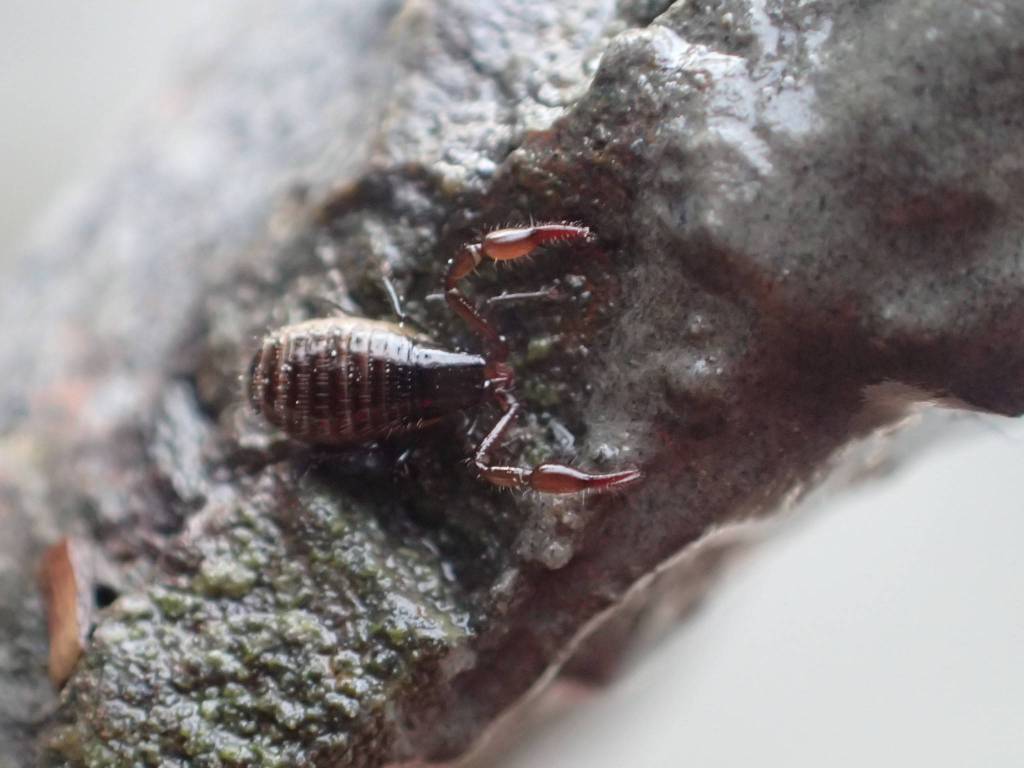
Lurking in some of Alaska’s woods, swamps, and rocky places is the tiniest monster one could conjure into existence. With oversized pedipalps (pincers) protruding far from the cephalothorax (head and chest), its waxy body is coated in a fine layer of bristles, giving our creature an enhanced tactile sense for seizing unsuspecting prey. Silk glands produce cocoons in which these beasts mature and brood.
This micro-monster is a psuedoscorpion, an order of arachnids. They are most easily recognized by their large pedipalps, which resemble those of a scorpion, and their plump, pear-shaped body and eight legs.
Pseudoscorpions are similar to true scorpions, but they don’t have long tails that end in a stinger. These tiny predators have no ability to bite, sting or pinch humans. Also unlike scorpions, some pseudoscorpions have been known to hitch rides on flying insects, a behavior known as phoresy. Phoresy is when an animal latches onto another animal only for the ride.
A perceptive eye is necessary to spot the elusive pseudoscorpion. They range from two to eight millimeters—about half the size of a Kenai Peninsula mosquito! Our very small neighbors are rarely seen, spending most of their lives hidden in dark places.
Male pseudoscorpions possess the skills to woo females. When pseudoscorpions prepare to take a mate they will lock onto each other’s pedipalps and the intense mating dance begins! The male parades the female around until he deposits a stalked sperm packet onto the ground. He then guides her over it, where she takes it up. Truly quite the rendition of the two-step.
Three thousand species of pseudoscorpions exist globally, 300 of which can be found in the U.S. and Canada. Seven pseudoscorpion species are native to Alaska, but few people have laid eyes on these monsters due to their small size and secretive habits.
Prior to June 8, the Kenai National Wildlife Refuge only had one pseudoscorpion species in its checklist of more than 2,000 species. That morning, I accompanied Refuge Entomologist Matt Bowser and his son Ethan on a hike down the Gull Rock Trail near Hope. We crossed through Forest Service lands to reach a piece of rocky coastline along Turnagain Arm that is managed by the Kenai Refuge.
We timed the hike to ensure that the tide was totally out when we reached Gull Rock. Flipping over rock after rock and checking crevices that line the small tide pools, Ethan did indeed find the Intertidal Pseudoscorpion (Halobisium occidentale), a fantastic species we are proud to call a resident of the Refuge.
Outside the Kenai Peninsula, the Intertidal Pseudoscorpion is widely distributed on rocky North Pacific coasts from California to the Aleutian Islands.
The mission of the National Wildlife Refuge System is to provide a network of public lands and waters for conservation and management. Understanding what lives within our refuge boundaries is the first step in making educated management decisions. Finding this new species was very exciting and a great addition to our understanding of the complex ecological web on the Kenai National Wildlife Refuge.
So keep your eyes wide open for the incoming tide, and these little monsters that play their part in this big world to which we all belong.
Cade Kellam, an undergraduate student at the University of Alaska Fairbanks, is a biological intern this summer at the Kenai National Wildlife Refuge. Find more information at http://www.fws.gov/refuge/kenai/ or http://www.facebook.com/kenainationalwildliferefuge.