Off the shelf: Paradise versus privilege
Published 9:30 pm Wednesday, February 12, 2025
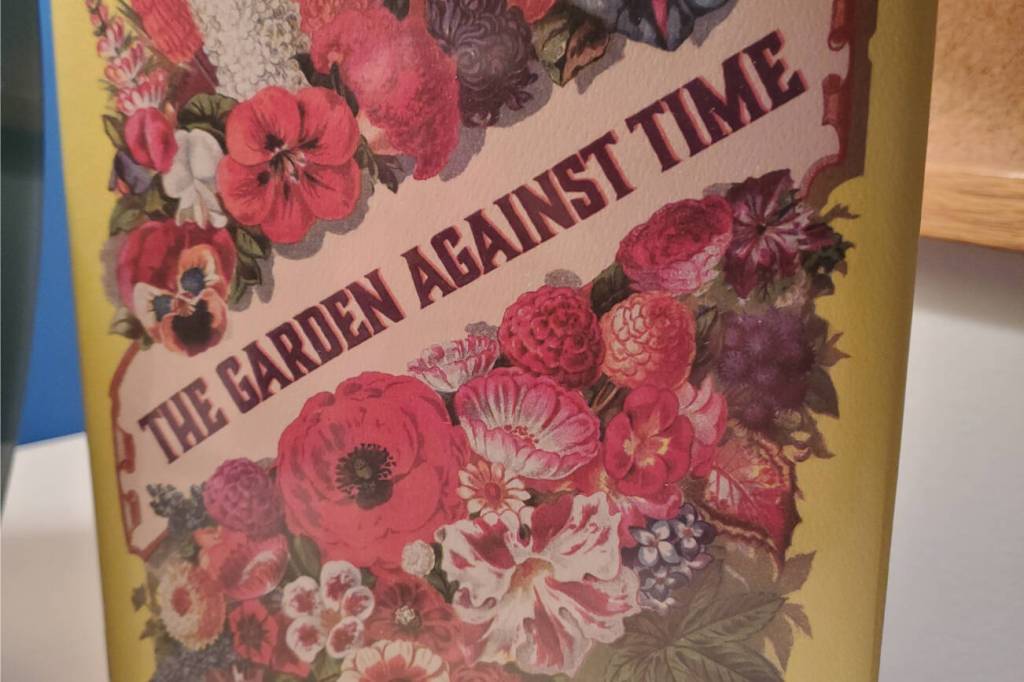


The Homer Public Library’s annual Lit Lineup provides excellent opportunities to explore new books outside one’s typical comfort zone. In that spirit, I recently picked up Olivia Laing’s “The Garden Against Time: In Search of a Common Paradise.”
A work of creative nonfiction under an intriguing title, Laing melds memoir with history and nature writing and literary analysis as she explores not only her own garden — which she is working to restore throughout the course of the text — but investigates the making and purposes of both real and literary gardens as well.
A widely acclaimed writer and critic living in Suffolk, England, Laing is also trained as an herbalist and, in 2020, purchased and began to restore an 18th century walled garden. Long fallen into disrepair, she specifically seeks to recreate the garden structure that was crafted by “distinguished gardener” Mark Rumary in the 1960s and maintained until his death in 2010.
Full of lush, vivid descriptions of the garden — both the already-existing landscape and plants and Laing’s continued and planned work — “The Garden Against Time” is a fascinating read even for someone not overly familiar with gardens and garden planning. What caught my interest most, however, is Laing’s consideration of the role of the garden in the larger scheme of human history.
As noted, Laing purchased her Suffolk house with its walled garden in 2020, the height of the COVID-19 pandemic. As even a landscaping novice like myself knows, working with the earth provides excellent opportunity for deep thought and conversation, and Laing is no different as she considers some of the interesting dichotomies that gardens may be positioned as.
Not only do gardens exist “on the threshold between artifice and nature, conscious decision and wild happenstance,” she writes, but they are also both a place of paradise and a place of privilege. Over the course of 2020, 3 million people in Britain — over half of them under the age of 45 — began to garden for the first time. This pattern, Laing notes, was repeated globally, from America to Italy to India, as people “poured their energy into transforming the spaces in which they were confined.” Gardens during the pandemic became a sort of forced retreat, a paradise, for many.
“It wasn’t hard to understand why,” Laing writes. “Growing food is an instinct in times of insecurity, peaking during pandemics and wars. Gardening was grounding, soothing, useful, beautifying.”
Yet this phenomenon highlights the opposite as well — what about those who don’t have access to a garden or other type of outdoor space? What kind of paradise are they supposed to create for themselves in the midst of such social and political upheaval?
In this light, Laing calls the garden “inescapably political … a time capsule, as well as a portal out of time.” She writes about how many gardens and parklands are also the longstanding results of colonialism and slavery, with many familiar plants being “imported exotics, a legacy of a colonial-era mania for plant-hunting” and slavery having provided capital for a “concerted beautification of the landscape” as profits from sugar plantations were funneled back to England to fund lavish houses and gardens. Several of England’s famous gardens today, such as those at Warwick Castle or Richmond Park, are also the result of class greed, mass displacement and even parliamentary enclosure, as they often required the removal of whole villages and their occupants to make way for the ruling elite.
“The story of the garden has from its Edenic beginning always also been a story about what or who is excluded or cast out, from types of plants to types of people,” Laing writes. “As Toni Morrison once observed, ‘All paradises, all utopias are designed by who is not there, by the people who are not allowed in.’”
At the same time, she also considers gardens — like filmmaker Derek Jarman’s Prospect Cottage and the famous garden that surrounds it which “deliberately obliterate(s) the border between cultivated and wild,” or the “common treasury” formed by the Diggers, a breakaway sect of the English Civil War, on St. George’s Hill in Surrey — as real attempts at inclusive utopias, as places of “rebel outposts and communal dreams.”
Laing has much more to say on the politicalness, pleasures and possibilities of gardens. I invite you to consider her thoughts; I for one will be looking at the multifaceted nature of gardens in a different light from now on.
“The Garden Against Time” was published in 2024 by W.W. Norton and Company. Check it out at the Homer Public Library, part of their 2025 Lit Lineup.