Crews ride the waves and battle the elements in epic Race to Alaska
Published 7:00 am Wednesday, June 24, 2026
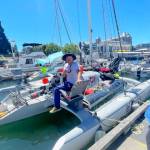
The path to Alaska took a different route for a group of seafarers from Washington state’s San Juan Island.
The Northbound Nutters arrived in Ketchikan, Alaska Tuesday night (June 23) to claim bragging rights in the 2026 Race to Alaska (R2AK).
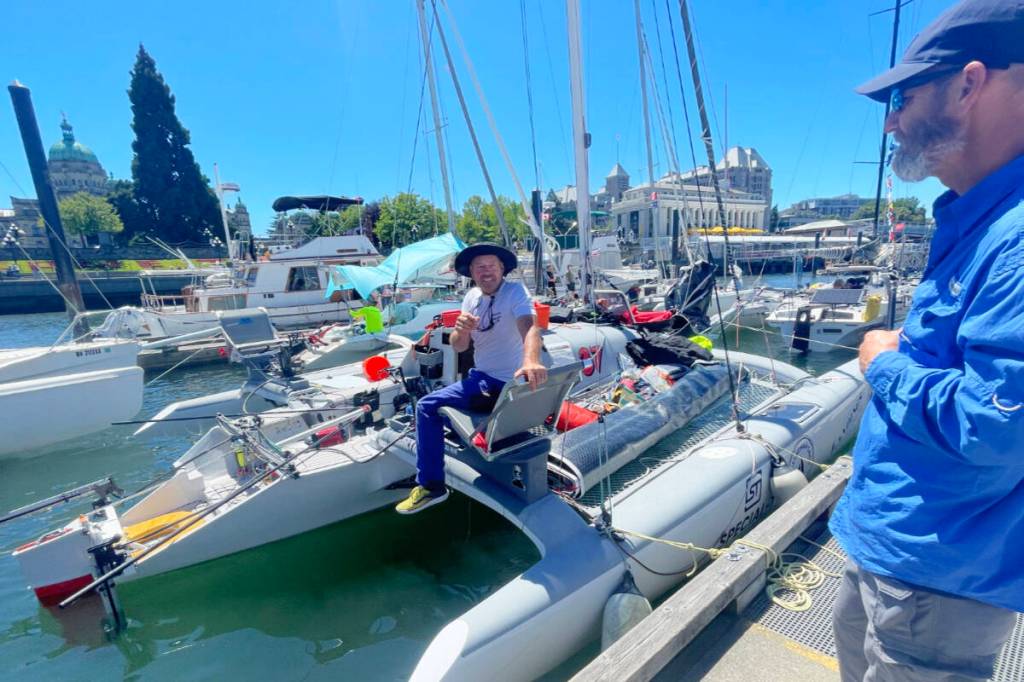
The team of Nigel Oswald, Gavin Brackett, Michael Holt, Rob Woelfel out of Friday Harbor, Wash. pedalling a big yellow trimaran from Victoria, B.C. to Ketchikan in five days, eight hours, and four minutes.
“750 miles of wind, water, and whatever goes through your head at 3 a.m. on the Inside Passage in a human/wind-powered boat. Northbound Nutters ate all of it and asked for more,” according to a post by R2AK, calling it either a triumph of seamanship or a cautionary tale about what happens when you don’t know when to quit.
The Nutters made two full stops along the way, one in Campbell River and another in Port Hardy. Later, they spent time drifting roughly 40 miles offshore while making repairs before getting underway again.
“In a race that often rewards relentless forward motion, they showed that sometimes it pays to stop, regroup, and wait for the right moment. Then, when the time came, they unleashed the trimaran equivalent of a cheetah being fired from a T-shirt cannon.”
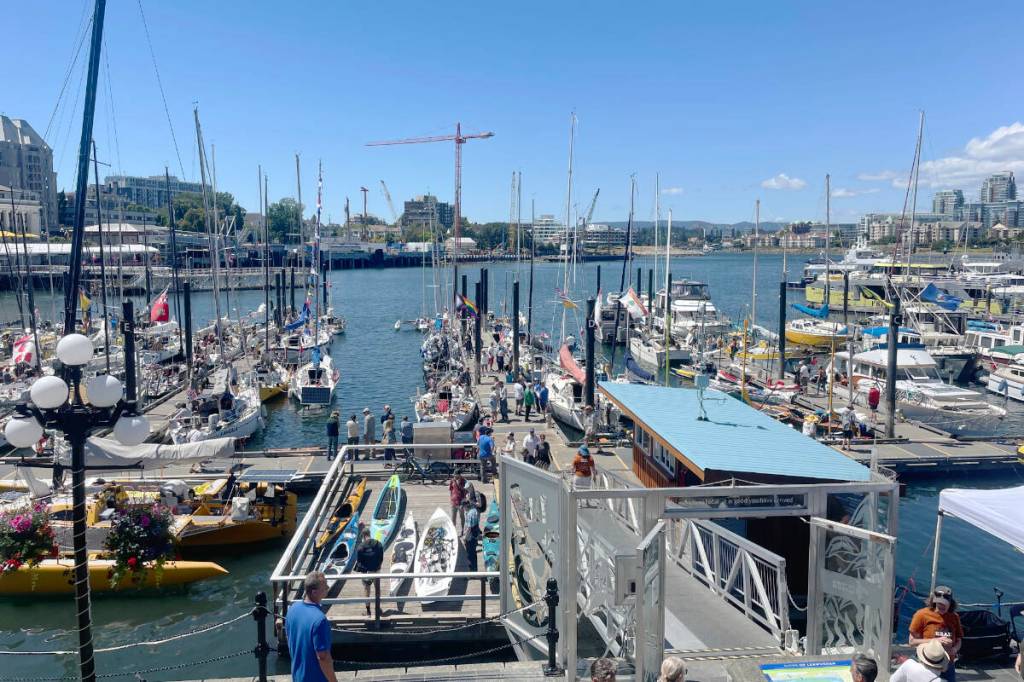
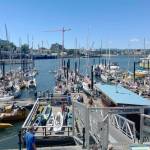
The Nutters were one of 66 teams to fill Victoria’s Inner Harbour June 17, going over weather predictions for Johnstone Strait after already losing three competitors during the “proving ground” trip from Port Townsend, Wash.
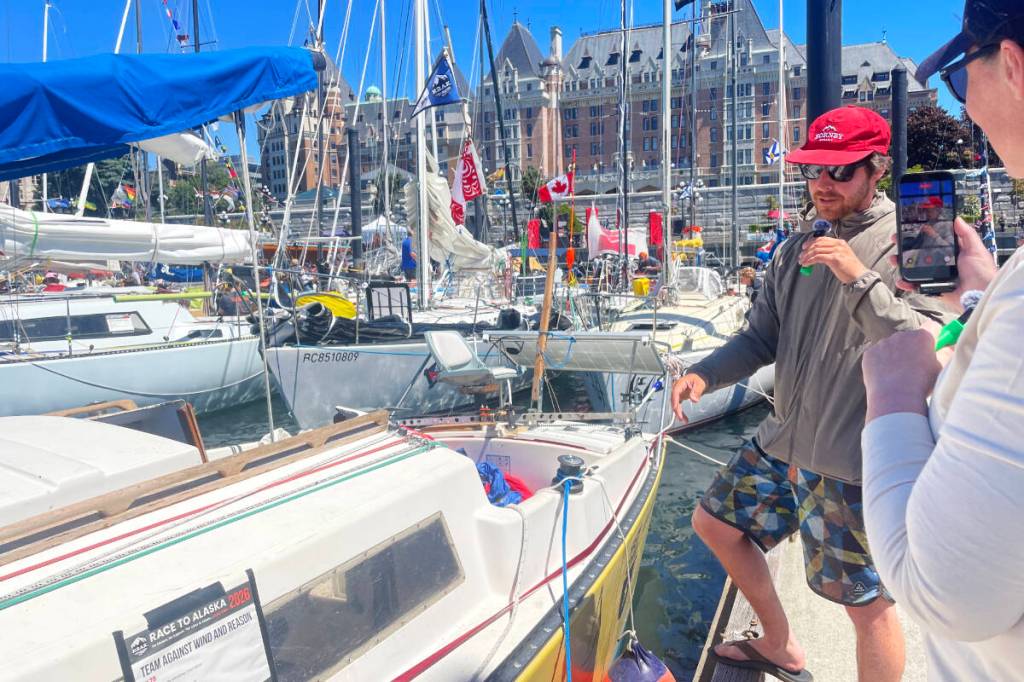
The wind came too late for Team Dreams and Kitemares, solo paddler Philip Montgomery in a custom touring foil he describes as four boats in one.
Despite the ability to hydrofoil, surface kit, paddle or pedal, he didn’t make it past the border.
“I’m lazy, and this is the laziest form of propulsion there is,” he said in a video explaining his vessel and plan to turn back to Port Townsend. “The weather has just not cooperated, and that’s fine… I just don’t have the wind.”
He was among the three teams that didn’t make the qualifying leg – or proving ground – of the unique, engine-free, unsupported adventure race.
Competitors travel by sail, oar, paddle, pedal or any combination of human and wind power, navigating strong currents, changing weather and remote coastlines.
For Erik Strickler of Bainbridge, Wash., taking a paddle board across the first stretch was “great” but also proof to pay attention.
“Even though it was good human-powered conditions, I still ended up fighting the contrary current for a few hours at the end,” said Strickler.
Like most in a smaller vessel, he anticipates a two- to three-week trip up the coast, and looks forward to amazing wildlife, fjords and other vistas along the 750-mile journey.
“I don’t see how it couldn’t be just fantastic,” Strickler said of his first R2AK.
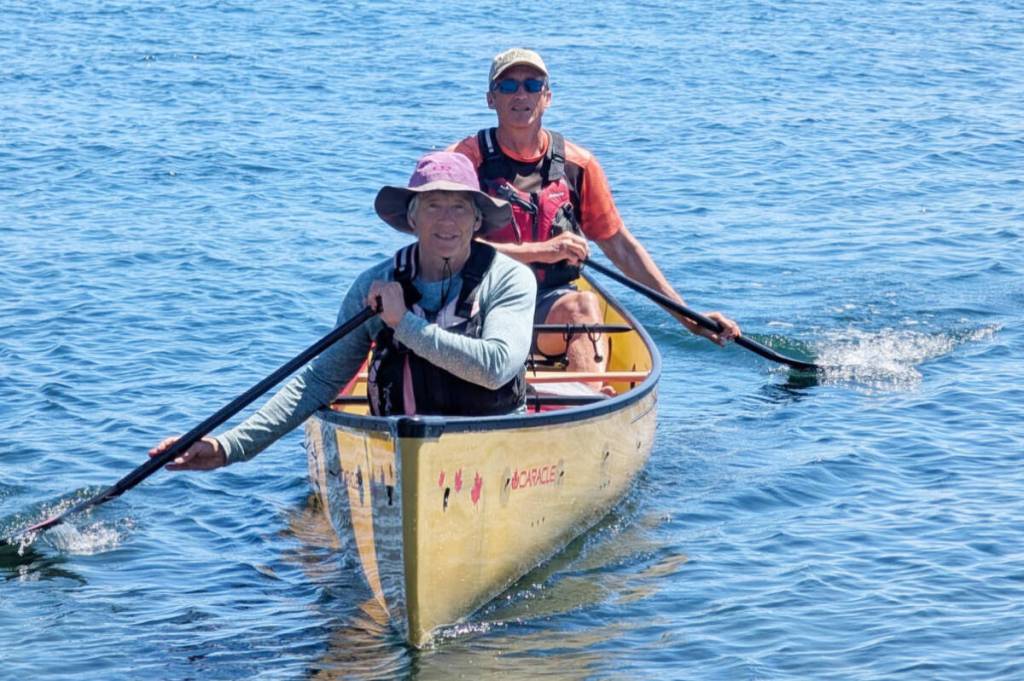
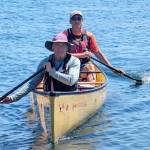
Saanich paddlers Janice Mason and Ian Graeme met at the event a decade ago and have completed three full R2AKs together racing by rowboat, tandem kayak and now canoe.
Competing as Team Oaracle, Mason, 66, and Graeme, 65, in their 18.5-foot Clipper tripping canoe successfully completed the 65-kilometre proving ground from Port Townsend.
For Team Oaracle, the race is both a challenge and a tradition.
Mason brings an exceptional paddling and rowing resume to the team. A retired physician and former kayak guide, she competed in the 1984 Olympic Games, won a World Championship Gold Medal in rowing, and twice won the Yukon River Quest.
Graeme is a retired forester experienced in wilderness travel and adventuring and has successfully completed five full R2AKs.
“Every Race to Alaska is different,” said Graeme. “It is a complicated undertaking. You plan and prepare, but ultimately the weather, tides, currents, team dynamics and many decisions you make on the water shape the outcome.”
While many teams focus on speed, Team Oaracle’s goal is simple: travel safely, enjoy the journey, and complete another memorable expedition through some of the most spectacular coastal waters in North America. Team Oaracle is expected to spend approximately three weeks on the race course, depending on weather and sea conditions.
Race fans can follow at www.r2ak.com or https://www.facebook.com/TeamOaracle.