Opinion: Is the threat to Alaska real?
Published 1:30 am Friday, May 22, 2026
Is the threat to Alaska real? I believe it is.
The continuing conflict involving Iran is already affecting global energy markets, with consequences that extend far beyond the Middle East. Alaska, despite being a major oil-producing state, is not insulated from those disruptions.
Today, Alaska produces roughly 500,000 barrels of crude oil per day from the North Slope. Much of that oil is shipped to refineries in Washington state and ultimately supplies markets in California. Yet Alaska remains vulnerable because we lack sufficient in-state refining capacity to meet many of our own needs.
Our refineries in Fairbanks, Kenai, and Cook Inlet provide only limited production of refined fuels such as diesel, aviation fuel, and heating oil. The closure of the Flint Hills refinery years ago further reduced Alaska’s refining capability. As a result, a significant share of the fuel Alaskans rely upon is imported, much of it from South Korea.
This creates an uncomfortable reality: Alaska exports crude oil while importing many of the refined products essential to daily life and commerce.
Under normal market conditions, global oil production and refining capacity are generally sufficient to meet demand while maintaining strategic reserves. But war, geopolitical instability, and years of constrained refining investment have weakened that balance. Production disruptions, refinery outages, and shipping uncertainties are placing increasing strain on fuel supplies worldwide.
At the same time, reserve inventories are being drawn down faster than they are being replenished. Bringing new oil production online — particularly on Alaska’s North Slope — requires years of exploration, permitting, infrastructure development, and investment. Additional production cannot be turned on overnight in response to a crisis.
As countries like South Korea see their crude supplies decline, they will likely contemplate rationing their refined products like aviation fuels. This is traditionally where Alaska gets its supplies and may no longer be available. Where will Alaska’s supply come from? Do we have the logistical infrastructure to access products from other markets? How will we afford it”
Alaska should recognize both its strengths and its vulnerabilities. One practical step may be to pursue stronger trade relationships that better align Alaska’s crude oil exports with secure supplies of refined fuel products critical to our state.
The larger concern is straightforward: if global reserves continue to decline while refining capacity remains constrained, shortages could eventually emerge that affect fuel availability and price stability here at home. In a state as dependent on affordable energy as Alaska, even moderate disruptions can have serious economic consequences.
The threat to Alaska is real. It is not cause for panic, but it is cause for awareness, preparation and serious discussion about long-term energy security.
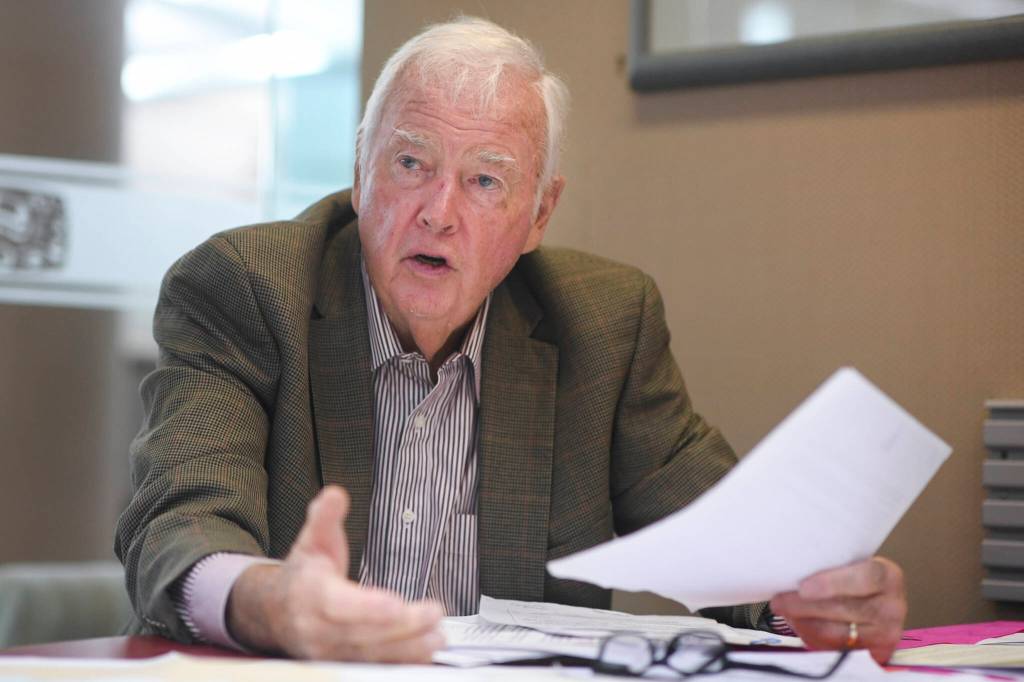
Frank H. Murkowski is a former U.S. senator and Alaska governor.