Teen charged for setting fire to youth counselor at Soldotna cabin
Published 4:30 am Friday, August 14, 2026
A teenager told police he set fire to a youth counselor in a remote cabin near Soldotna to convince his peers he was a gangster so they would stop bullying him.
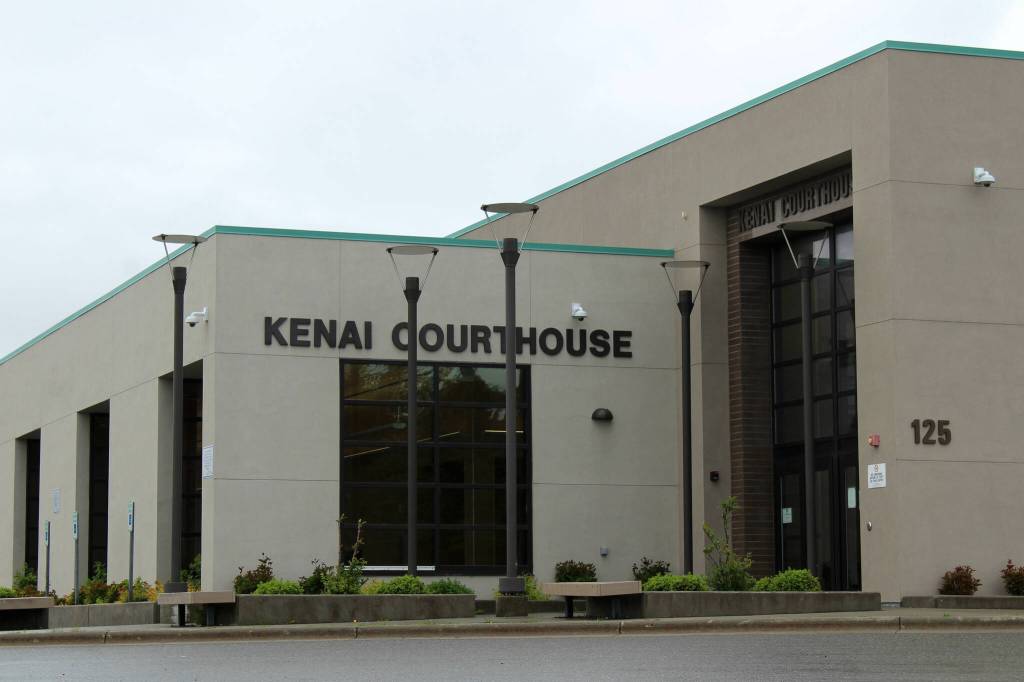
Isaac Caldera, 18, was charged with three counts of assault in the first degree and one count of arson in Kenai Superior Court.
Alaska State Troopers were called out to a cabin at 48495 Cardwell Rd. on June 23 for a report that a male had been badly burned. The head of a residential treatment program for troubled youth in Utah had taken three male youths, including Caldera who was 17 at the time, for a fishing trip in Alaska.
While Caldera initially blamed one of the other teens for the attack, in a later interview with police he admitted to setting the man on fire while he slept, according to a complaint filed July 31 by Sgt. A. Macdonald.
Caldera told police he didn’t want to deal with the bullying from other juveniles at the residential treatment facility.
“He determined he needed a change in his living environment and the only way to get that change was to do something so drastic that when he went back there, the other juveniles would know what he was capable of and wouldn’t mess with him anymore — they would fear him and leave him alone,” according to the statement.
He said in order for them to leave him alone, he would need to prove that he was a gang member and would “have the balls to take drugs, smoke weed or kill someone.” Caldera had earlier spoken with another youth about ways to get kicked out of treatment or get the others to respect him.
“Isaac determined to himself the way to achieve that status was kill T.F. who was the head of the residential treatment program.”
Caldera told police that sometime between 2 and 3 a.m., he quietly got out of bed, locked the bathroom door to prevent anyone from being able to access the nearest water source and lit some tightly rolled paper towels.
“Isaac held the flaming paper towels against the blankets and sheets draped over the side of T.F.’s bed,” according to the court document.
“Isaac watched the bedding catch fire and the flames grew and spread from the lowest point of the bedding upward until it reached T.F.’s back and then Isaac went back to his room and continued to watch from there.”
While Caldera knew the man had a wife, two children and grandchildren, he had no remorse as his main focus was to get kicked out of treatment, according to the statement.
“As Isaac watched T.F.’s back catch on fire, Isaac thought T.F. was going to burn to death and was scared for him but considered the sacrifice worth Isaac’s own freedom.”
When the fire alarm went off, the other two teens began filling pots of water and throwing them on the man, while Caldera “sat on a chair and watched the chaos.”
Evidence at the scene suggests all the smoke detectors but the one in T.F.’s bedroom were likely removed from the common areas of the cabin and placed outside prior to the fire. A partially burned plastic bowl that had a strong odor of gasoline was found in the bedroom, and evidence indicated an accelerant was poured over the man before he was set on fire.
Caldera also told police he had been investigated in the past by police in California for setting multiple cars and couches on fire, saying he “set fires to destroy the property of others he didn’t like for payback or revenge.”
Alaska State Troopers contacted T.F. on July 13 to get an update on his injuries. He is currently in the University of Utah Hospital Burn Center recovering from skin graft surgery on his back, and he previously underwent skin graft surgery on his leg due to 3rd degree burns.
“He advised he will be in recovery and physical therapy for the next year before he and his doctors really know what continuing effects these permanent injuries will have on him for the rest of his life.”