
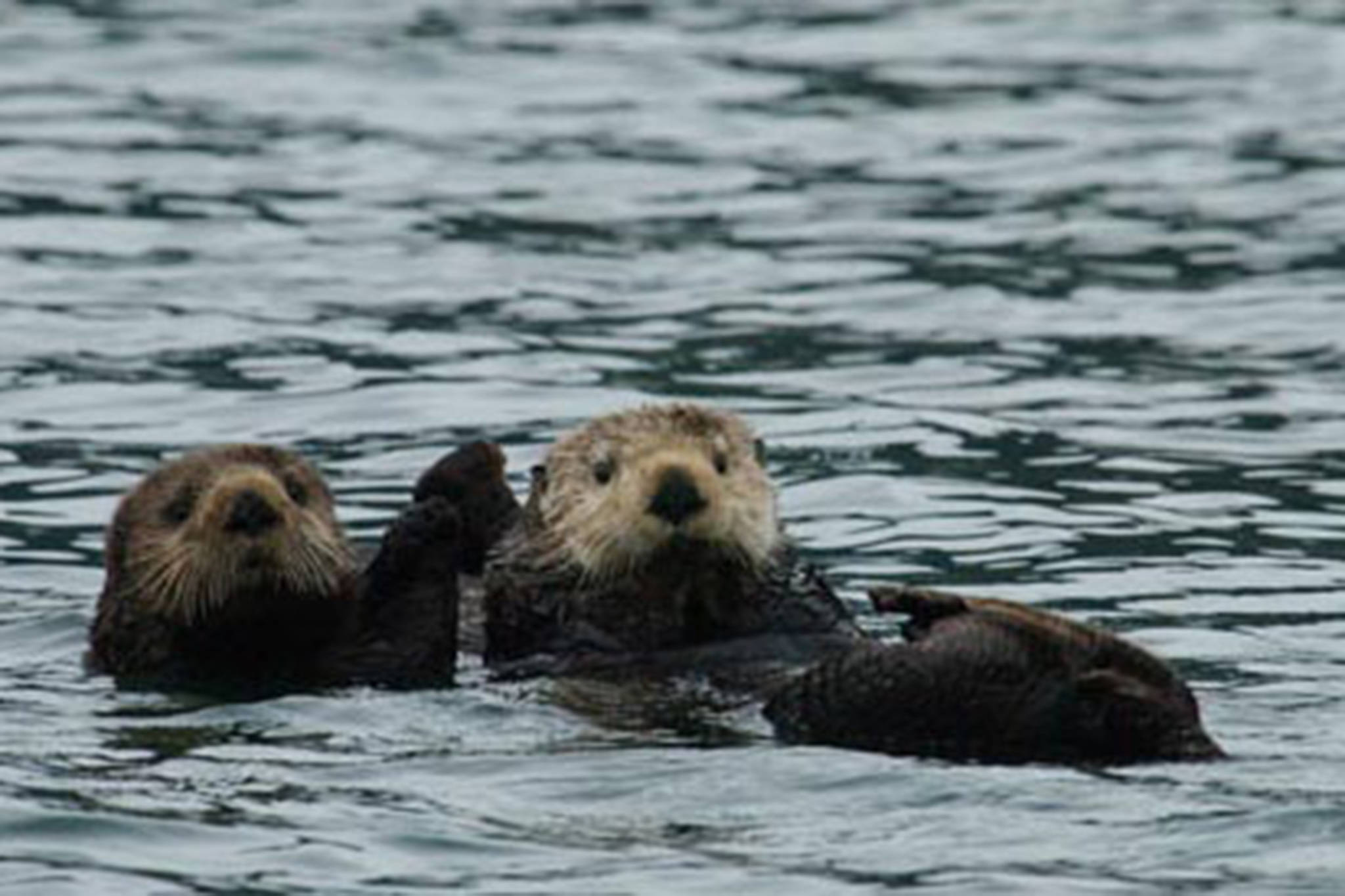
The sight of sea otters is often enjoyed by tourists, but the furry mammal has also caused conflicts in Southeast Alaska. What is the value and role of sea otters to the ecosystem and to the region?
A new study published in “Science” this year describes a predictive model that assesses the economic and ecological benefits of healthy sea otter populations. Using the model, researchers found that sea otter recovery provides significant economic benefits to coastal communities. The presence of sea otters generates millions of dollars for local economies by increasing ecotourism and helping maintain robust kelp forests, dense groupings like forests on land, that sequester carbon and increase fish populations.
Sea otters are a keystone species, which means that their role in the environment has a greater effect than other species. As keystone species, sea otters balance the ecosystems in which they live. Sea otters are voracious eaters — because they don’t have blubber, they eat a lot to maintain their body heat. Their primary food sources include shellfish such as sea urchin (their favorite), sea cucumbers, crab and clams, even the occasional octopus. They can eat up to 15 to 25 pounds of food daily, which is about 25% of their weight. By eating these grazing species, sea otters promote kelp forest growth. A new research paper documents this ecologically important cascade.
Sea otters were hunted to extinction in Southeast Alaska during the 1880s for commercial harvest for their fur. In the 1960s, they were re-introduced near Craig, Sitka and Glacier Bay — about 400 otters — and once again these marine mammals were seen busily restoring ecosystems in Southeast Alaska.
While sea otter numbers slowly increased from the time of reintroduction for almost 40 years, otters in Southeast Alaska were just getting by. But in the early 2000s, the population more than doubled from 2002 to 2011 from 11,000 to 25,500. The total number of sea otters in Southeast Alaska today is unknown, but biologists with the Alaska Department of Fish and Game estimate that it’s around 50,000.
[Sea otters are back in a big way]
In an interview with Anchorage Daily News in 2018, Jim Estes, an ecology professor and otter expert at the University of California, Santa Cruz said about the increasing population of sea otters in Southeast Alaska, “I think what we’re headed toward is a return to normality.” He was referring to returning to an ecosystem that includes sea otters. Estes continued, speaking about clam, urchin and crab fisheries, “None of this was there, almost certainly, for a long time — until the otters were hunted to extinction.”
Because of sea otters’ rapidly increasing population and that they are almost always eating, sea otters can be at odds with commercial fishermen. Without them, the ecosystem would change dramatically. Otters safeguard kelp forests and guard against urchin barrens — caused by unchecked urchin kelp grazing. Kelp forests provide habitat for many invertebrates that are food for over 20 species of fish. When otters are present, there is a higher commercial catch of cod, salmon and rockfish. These forests also provide spawning habitat for fish and resting and feeding areas for birds.
Kelp forests are decimated by too many urchins, and sea otters keep urchin populations in check. Without otters, urchin population growth kills off kelp forests — losing the habitat and food that numerous other species, like salmon, depend upon.
By helping to maintain healthy kelp forests, sea otters can play a role in helping to mitigate climate change. Otters indirectly help reduce carbon dioxide. Kelp forests absorb carbon dioxide — in fact, kelp forests can absorb 12 times more carbon dioxide when otters are eating urchins than when the urchin population destroys the kelp forest.
Throughout much of their historical range, sea otters have slowly recovered, but are still vulnerable to natural environmental changes and human factors. Sea otters are protected mammals. They gained protections with the signing of the International Fur Seal Treaty of 1911. And, in the 1970s, they received additional protections under the Marine Mammal Protection Act and the Endangered Species Act.
In September, the U.S. Fish and Wildlife Service released a report on the Southeast Sea Otter Stakeholder Meeting, a meeting held in October, 2019, and aimed at discussing the state of sea otters in Southeast Alaska. The report is available to anyone who is interested.
As our sea otters, our kelp defenders, return, we recognize the important ecological roles they play. We hope that any management decisions will weigh the ecosystem benefits and resiliency that sea otters provide.
Elin Antaya and Tias Carney are juniors at Juneau-Douglas High School and members of Juneau’s National Ocean Sciences Bowl team. For the 2020 regional competition, the team authored a first-place paper titled “Resilience of the Kelp Forest Ecosystems in Southeast Alaska.”
