
Last Monday, Israeli Prime Minister Benjamin Netanyahu nominated President Donald Trump for the Nobel Peace Prize. “It’s well deserved, and you should get it,” Netanyahu said as he handed Trump a copy of his nomination letter.
“Wow,” Trump responded. “Coming from you in particular, this is very meaningful.”
Flattery may impress Trump. But I seriously doubt the Nobel Committee will be impressed by the opinion of a man who has overseen the year-and-half-long war in Gaza that’s killed more than 50,000 Palestinians — most of them women and children.
Or by Trump’s inability to end Russia’s brutal war against Ukraine.
“President Trump’s goal in these negotiations is clear: stopping this war, ending the killing, and ensuring a sovereign and secure Ukraine,” Sen. Dan Sullivan said in April when he co-sponsored the Sanctioning Russia Act. It was supposed to give “the administration additional tools and leverage to end this war and find a workable peace.”
As I wrote a few weeks ago, the bill has 84 co-sponsors. But it slipped into a comatose state immediately after being referred to committee.
A companion bill in the House has 81 co-sponsors. Rep. Nick Begich III isn’t one of them. Maybe that’s because he recognizes it’s not very flattering to imply Trump’s supposedly legendary negotiating skills aren’t enough to get Putin to the table.
Flattery played a role in Trump’s One Big Beautiful Bill. It created tax deferred investment accounts that parents can open for their children under the age of 18. Republicans, who opposed a similar proposal by Democrats in 2021, changed the name from American Opportunity Accounts to Trump Accounts.
World leaders understand that flattering Trump is an essential tactic of their foreign policy. They might have learned it after watching his first full cabinet meeting eight years ago. Before they got down to business, members of his administration took turns showering him with glowing platitudes. It’s a ritual that his new cabinet resumed this year.
During a White House meeting with British Prime Minister Keir Starmer in February, flattery was delivered via a letter from King Charles. It offered Trump an unprecedented opportunity to be the first president ever invited to a second state visit at Buckingham Palace. Like the cabinet meetings, the moment was televised live to the world.
Among Starmer’s objectives were convincing Trump that defending Ukraine was vital to U.S. interests. And that Russian President Vladimir Putin cannot be trusted.
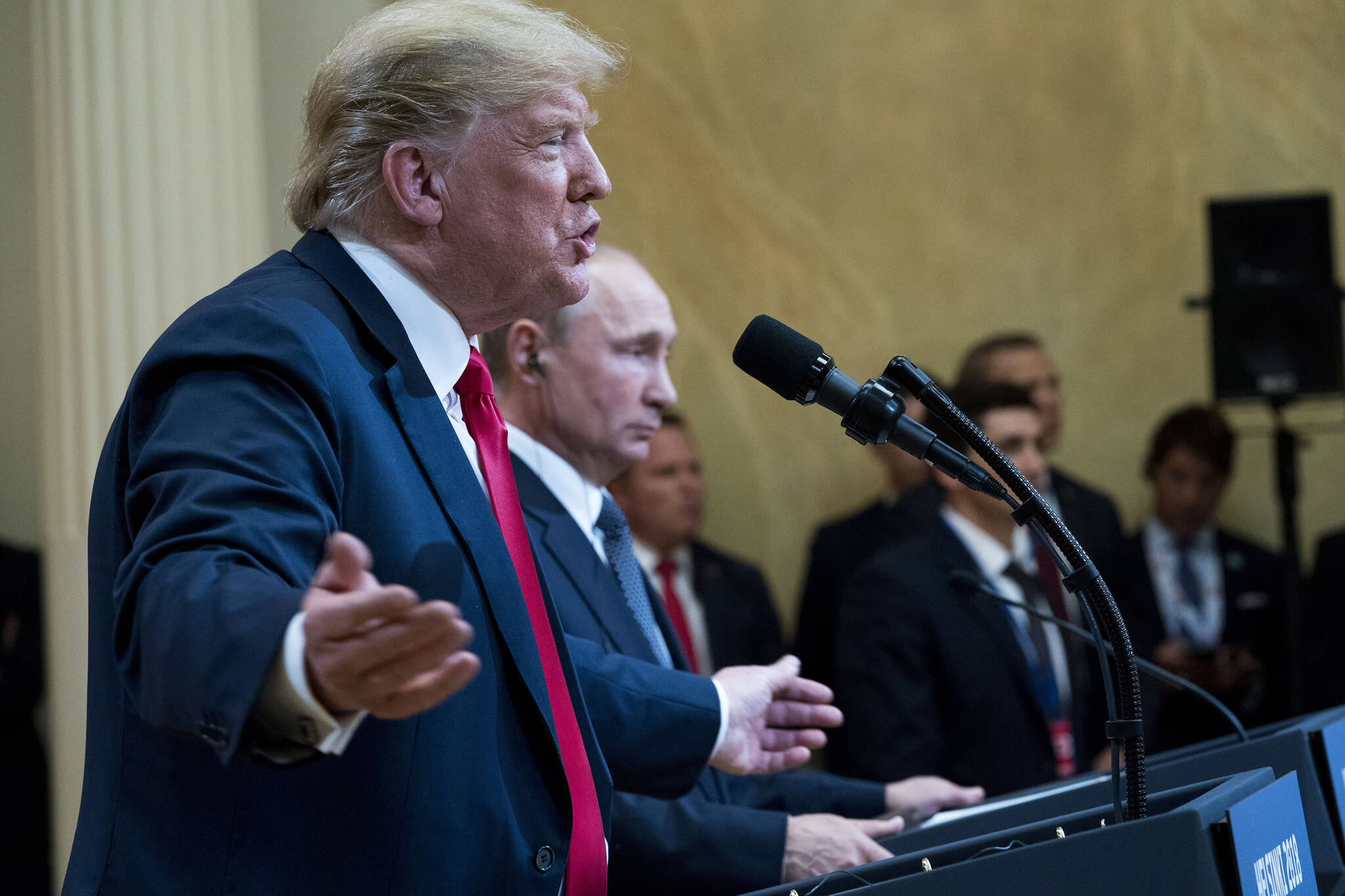
But Putin had so effectively deployed flattery eight years ago that Trump believed they had a relationship based on mutual trust and respect.
“I think he’ll keep his word,” Trump said to Starmer about any agreement he and Putin would reach to end the war.
But now their bromance is collapsing.
“I’m not happy with Putin,” Trump said on Tuesday. “He’s very nice all the time, but it turns out to be meaningless.”
Almost every U.S. senator knew long ago he couldn’t be trusted.
Last year, 70 of them supported a supplemental defense bill that included $60 billion in aid to Ukraine. Some of those weapons were in Poland when the administration decided last week to halt their final shipment.
On Monday, Trump reversed course. “They have to be able to defend themselves,” he said. “They’re getting hit very hard now.”
That wasn’t news. In fact, during an early June conversation, Trump said Putin told him he planned to respond to Ukraine’s recent drone attacks on Russian airfields. On June 28, Russia commenced its largest attacks since the war began.
The real news was Trump seemed blind-sided by the Pentagon’s decision. When CNN’s Kaitlan Collins asked him who approved it, Trump turned to Defense Secretary Pete Hegseth and said “I don’t know. Why don’t you tell me.”
Of course, he could have been covering up for yet another flip-flop of his position regarding the war. Or maybe up till now he really believed was Putin was ready to end the war.
Back when Congress passed the supplemental bill, Sullivan justified it as necessary to counter former President Joe Biden’s “lack of seriousness on national security issues.”
But he’ll never criticize Trump for his erratic defense of Ukraine and the damage that’s done to American’s relationships with its NATO allies.
Or for how easily the commander-in-chief was fooled by Putin‘s flattery.
• Rich Moniak is a Juneau resident and retired civil engineer with more than 25 years of experience working in the public sector. Columns, My Turns and Letters to the Editor represent the view of the author, not the view of the Juneau Empire. Have something to say? Here’s how to submit a My Turn or letter.
