
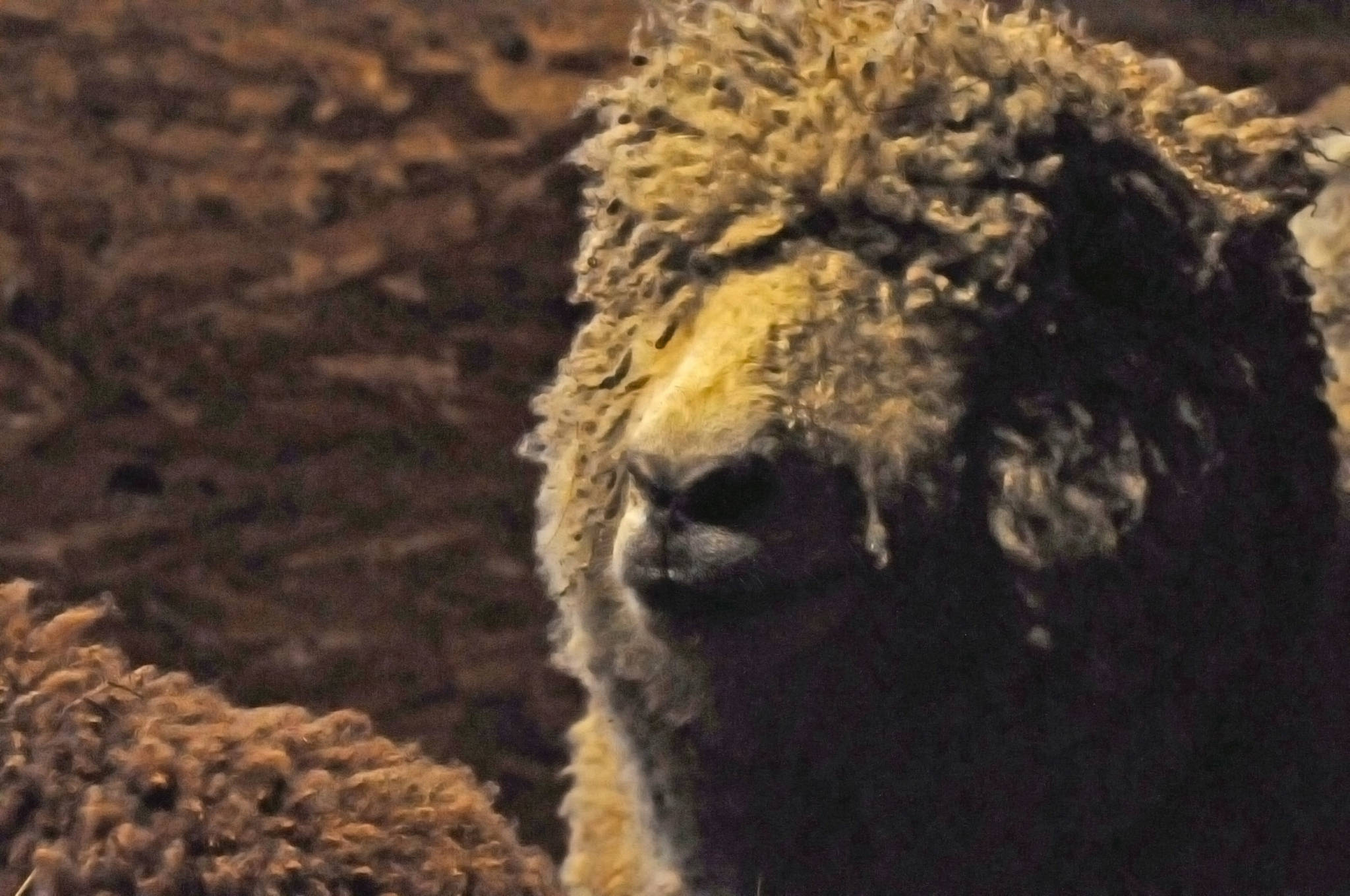
A sheep waits in the barn at Lancashire Farm on Thursday, May 3, 2018 in Soldotna, Alaska. The farm, established in 1948, raises sheep both for wool and for meat. (Photo by Elizabeth Earl/Peninsula Clarion)

A sheep waits in the barn at Lancashire Farm on Thursday, May 3, 2018 in Soldotna, Alaska. The farm, established in 1948, raises sheep both for wool and for meat. (Photo by Elizabeth Earl/Peninsula Clarion)

Interest in farm-raised meat grows

For those who want farm-raised meat, it can be a challenge to get unless they happen to own enough property for a pasture or barn. However, some local farmers offer a middle ground between raising animals in the back yard and buying meat off the shelf.

Every spring for the past three years, Sam Jones with the Soldotna Equestrian Association has ridden the ferry with a number of Highlander-cross steers from Kodiak back to the Kenai Peninsula. All summer, the cattle live in a paddock near the rodeo grounds in Soldotna, participating in five rodeos.

In the fall, they go to the person who prepaid for the animal in the spring. This year, they’re $950 per head, with the option of splitting them between multiple people. That’s at-cost, Jones said, with the funds going to support SEA.

“When I started it three years ago, people were like, ‘We have a rodeo ground?’” she said. “Nobody really knew about it.”

A type of herdsharing, the operation allows people who don’t have the space to raise animals themselves to reserve locally sourced meat and know they’ll have it in the fall. Jones said the cows will likely be 400–500 pounds.

A number of farms offer similar reservation programs. Kenai Feed owner Sarah Donchi, who has been raising livestock on the peninsula for two decades, said the business sells about two dozen pigs, a dozen cows and 800 chickens each year as well as 300 wiener pigs for people to raise on their own.

“We have new people show up every year,” he said. “A lot of people will hear about it in the store, and a lot of it’s word of mouth, too.”

They either deliver the animal to a processor like Tustumena Smokehouse in Kasilof or allow customers to process the animal themselves, she said. They start taking reservations for animals in January and usually sell out, so they plan for a few extra, she said.

It’s the same for Lancashire Farms’ sheep. Every year, the farm’s pregnant ewes have lambs in the spring, and some go to buyers in the fall. This year, the farm has nine lambs, seven of which are males. The males may go to buyers for meat in the fall unless the farm decides to hang onto them for their wool, said farm co-owner Amy Seitz.

The farm has a limited number of sheep, so she has a waiting list for people to reserve animals, she said. They don’t provide to restaurants at present, in part because the restaurants need a steady supply.

“We have a lot of 4-H kids coming,” she said.

Tuesday marked Alaska Agriculture Day, as declared by Gov. Bill Walker, with farms and schools around the state discussing and visiting farms. Interest in locally grown meat and produce in Alaska has grown rapidly in the last few years. A U.S. Department of Agriculture overview for the state from 2017 documented 760 farms in the state with a total of 830,000 acres in operation. That’s slightly down from 2012, when there were 762 farms operating, but up from 2007, when there were 686, according to the USDA.

Alaska is still dead last in the country for agriculture by value of sales by commodity, according to the USDA. The number of farms on the Kenai Peninsula is on the rise, too, after a dip in the 1990s and is current above where it was in the 1980s, according to the USDA.

Reach Elizabeth Earl at eearl@peninsulaclarion.com.
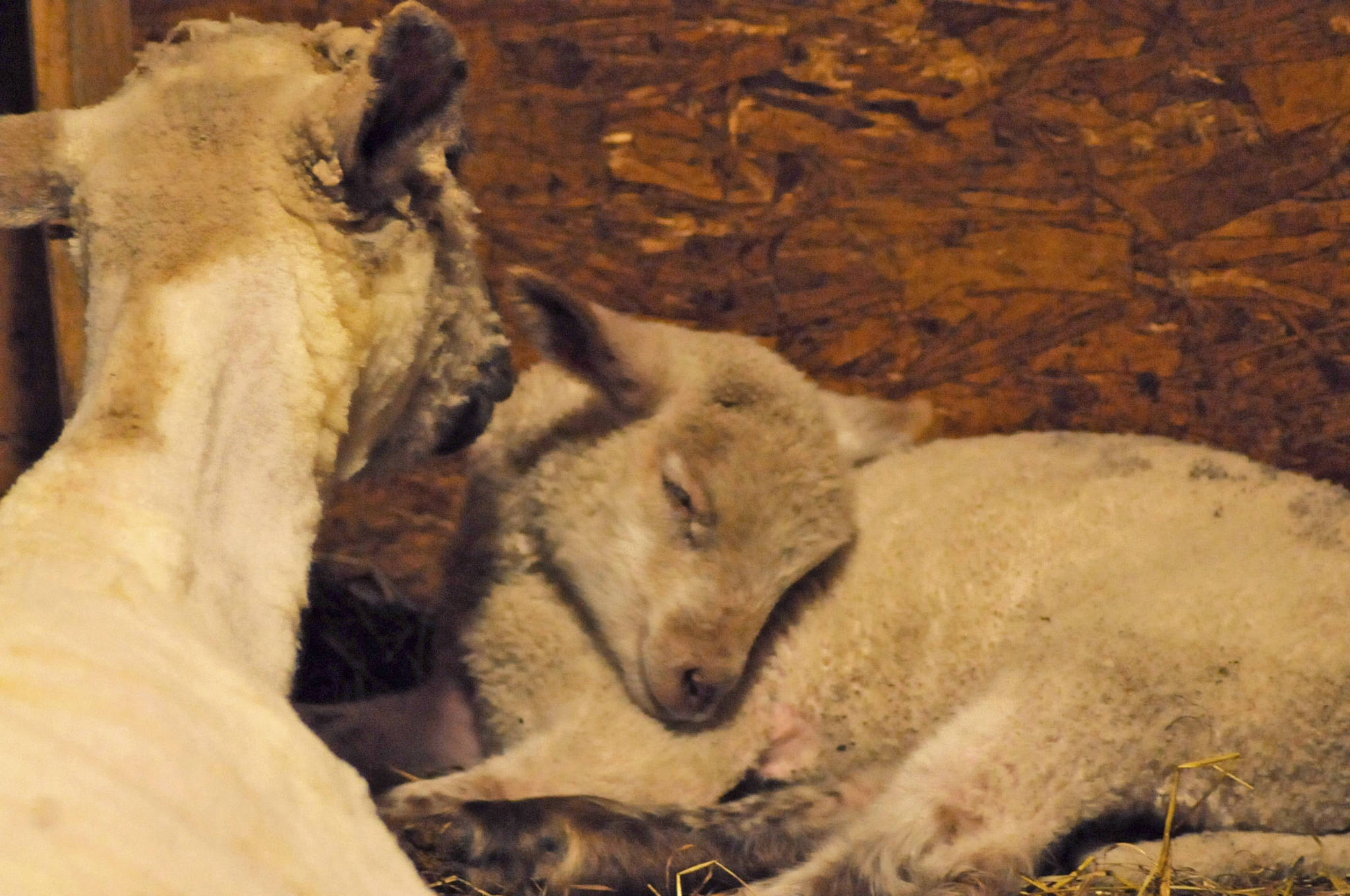
A lamb dozes in the barn at Lancashire Farm on Thursday, May 3, 2018 in Soldotna, Alaska. The farm, established in 1948, raises sheep both for wool and for meat. (Photo by Elizabeth Earl/Peninsula Clarion)
A lamb dozes in the barn at Lancashire Farm on Thursday, May 3, 2018 in Soldotna, Alaska. The farm, established in 1948, raises sheep both for wool and for meat. (Photo by Elizabeth Earl/Peninsula Clarion)

A curious lamb waits in the barn at Lancashire Farm on Thursday, May 3, 2018 in Soldotna, Alaska. The farm, established in 1948, raises sheep both for wool and for meat. (Photo by Elizabeth Earl/Peninsula Clarion)

A curious lamb waits in the barn at Lancashire Farm on Thursday, May 3, 2018 in Soldotna, Alaska. The farm, established in 1948, raises sheep both for wool and for meat. (Photo by Elizabeth Earl/Peninsula Clarion)

More in News

Kenai Peninsula Borough Mayor Peter Micciche speaks during a meeting of the Borough Assembly in Soldotna, Alaska, on Tuesday, May 21, 2024. (Jake Dye/Peninsula Clarion)
Borough updates public noticing requirements

The Kenai Peninsula Borough Assembly approved an ordinance last week effectively ending requirements to publish notices in a newspaper of general circulation.

A map presented by the Alaska Department of Natural Resources during a virtual meeting on Dec. 11, 2025, shows the location of a potential Kenai Peninsula State Forest. Screenshot.
Community discusses state forest proposal at Homer meeting

The public comment period on the proposed Kenai Peninsula State Forest closes Jan. 16 at 5 p.m.

The Alaska Department of Environmental Conservation helped a Nikiski resident dispose of over 43 tons of contaminated soil after a home heating oil spill in November<ins> 2025</ins>. DEC on Friday launched a program to help eligible homeowners cover cleanup costs relating to home heating oil spills. Photo courtesy of the Department of Environmental Conservation
State launches home heating oil spill cleanup program

The Department of Environmental Conservation formally announced the program statewide on Friday.

Sterling resident Jonny Reidy walks 11 miles from his dry cabin to his part-time job at Fred Meyer on Dec. 15, 2025. Reidy aims to walk 1,000 miles by midsummer, and he’s asking people to pledge donations to food banks for every mile he travels. Photo courtesy of Jonny Reidy
Sterling man is walking 1,000 miles for hunger awareness

Jonathan Reidy asks people to pledge donations to local food banks for every mile he walks.

Soldotna High School students learn how to prepare moose meat through the school’s annual Moose Permit Project, an educational partnership between SoHi and the Alaska Department of Fish and Game. Photo courtesy of Tabitha Blades/Soldotna High School
Soldotna students get hands-on moose harvest experience

SoHi’s annual Moose Permit Project is an educational collaboration between the school and the Alaska Department of Fish and Game.

A snowmachine rider takes advantage of 2 feet of fresh snow on a field down Murwood Avenue in Soldotna, Alaska, on Monday, Dec. 12, 2022. (Jake Dye/Peninsula Clarion)
Kenai refuge announces snowmachine opening

All areas traditionally allowing snowmachine use in the Kenai National Wildlife Refuge are now open.

Kate Rich’s play, “The Most Comfortable Couch in Town,” is performed during “Stranded: A Ten-Minute Play Festival” in August 2025 in Homer, Alaska. Photo provided by Jennifer Norton
Homer playwright receives fellowship award

Kate Rich is revising a new play, which she hopes to take to the Valdez Theatre Conference Play Lab.

A BUMPS bus waits for passengers in the Walmart parking lot in Kenai, Alaska, on Oct. 15, 2018. (File photo)
Ninilchik Traditional Council expands public bus service

The Homer-Kenai BUMPS bus will now run five days a week.

Balloons fall on dozens of children armed with confetti poppers during the Ninth Annual Noon-Year’s Eve Party at the Soldotna Public Library in Soldotna, Alaska, on New Year’s Eve, Tuesday, Dec. 31, 2024. (Jake Dye/Peninsula Clarion)
Out with the old, in with the new

The Peninsula Clarion looks back on 2025 in this “year in review.”

Most Read