
Sign you up.
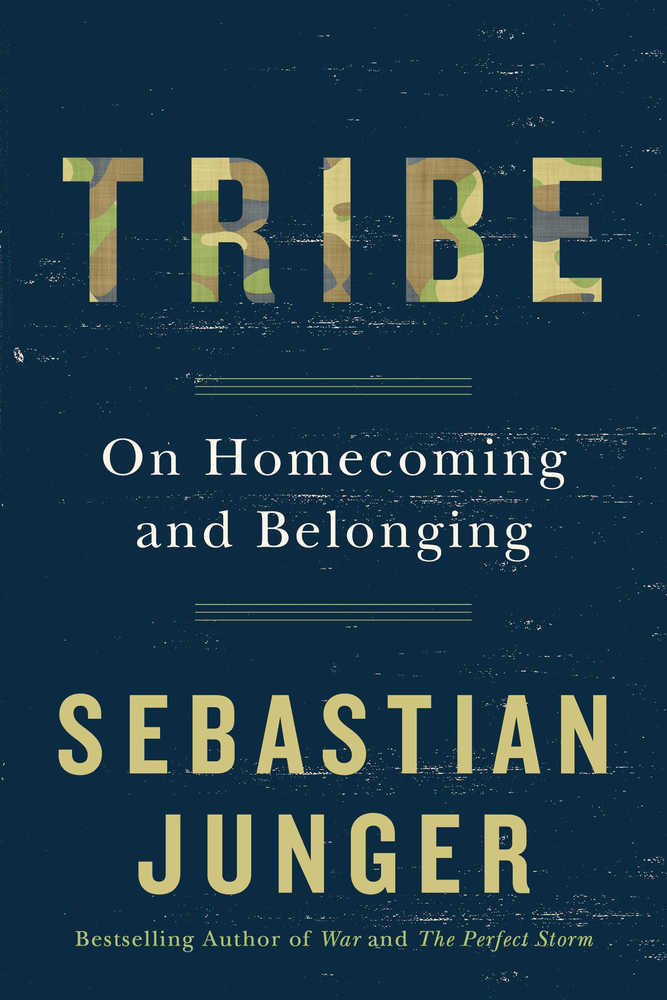
That’s one of the things of which you’re most proud: you freely give of your time. Rotary, Jaycees, Lions, your local hospital, if they need help, your name is on the list. Sign you up and they benefit but, if you’re honest with yourself, so do you. In the new book “Tribe” by Sebastian Junger, you’ll see why it comes naturally.
In examining American history, one “startling fact” is that a good number of early settlers voluntarily went to live with American Indians. They eschewed the familiar “European” community they’d always known, and chose a different, sometimes harder, way of life that offered the personal values they’d come to want. Even former captives, once rescued from warring tribes, often escaped back to their captors.
Within that difficult (but arguably simpler) life those settlers sought were “three basic things” humans require for contentment: feelings of competency, connection, and authenticity. The settlers got what they needed from Indian society but, says Junger, modern humans aren’t always so lucky.
From birth, we are isolated from others. Hunter-gatherer mothers, conversely, carry their infants nearly constantly, and would be horrified at the idea of separate bedrooms. Their children grow up with a different sense of community than do North American children, but a craving for closeness is universal and timeless; Junger says he felt it when he spent time overseas with military troops. Personnel slept tightly packed in canvas tents, and he felt safer because of it.
We are, he says, hard-wired to live communally, just as we’re hard-wired to shun those who exhibit needlessly-selfish behavior. Ancient societies had to share to survive, and personal items were few; today, we rush to help those who endure disaster – indeed, we may act heroically – and we scorn wealthy CEOs who we think are greedy. And what we need to do to preserve our humanity, Junger says, is to embrace a mind-set of community, understand the need for sacrifice, and find a “sense of solidarity.”
“It may… be the only thing that allows us to survive…”
At well under 200 pages in length, “Tribe” seems like it would be a quick, light read.
It’s not. No, you’ll be hanging onto every word of this book.
From post-collegiate hitchhiking and sharing resources, to ancient civilizations, the One Percent, PTSD, and a surprising discovery from wartime survivors, author Sebastian Junger offers readers a look at humanity that’s graceful, and laced with a plea.
That plea is quiet, but it comes through in every anecdote, personal story, and historical fact set forth here: to wit, we must return to the Old Ways of belonging. That’s the message Junger gently pokes us with, but he does it with a sense of urgency that’s compelling. You truly won’t be able to forget it.
Without a doubt, therefore, this is a make-you-think kind of book. It’s filled with interesting ideas and points, but it’s ocean-deep in meaning and introspection. You can’t ignore what you’ll learn inside “Tribe,” and if that sounds good, then sign you up.
The Bookworm is Terri Schlichenmeyer. Email her at bookwormsez@gmail.com.
