
The Bookworm Sez: A spirited history of America

The Bookworm Sez: A spirited history of America

At least once in recent memory, the spirit moved you.

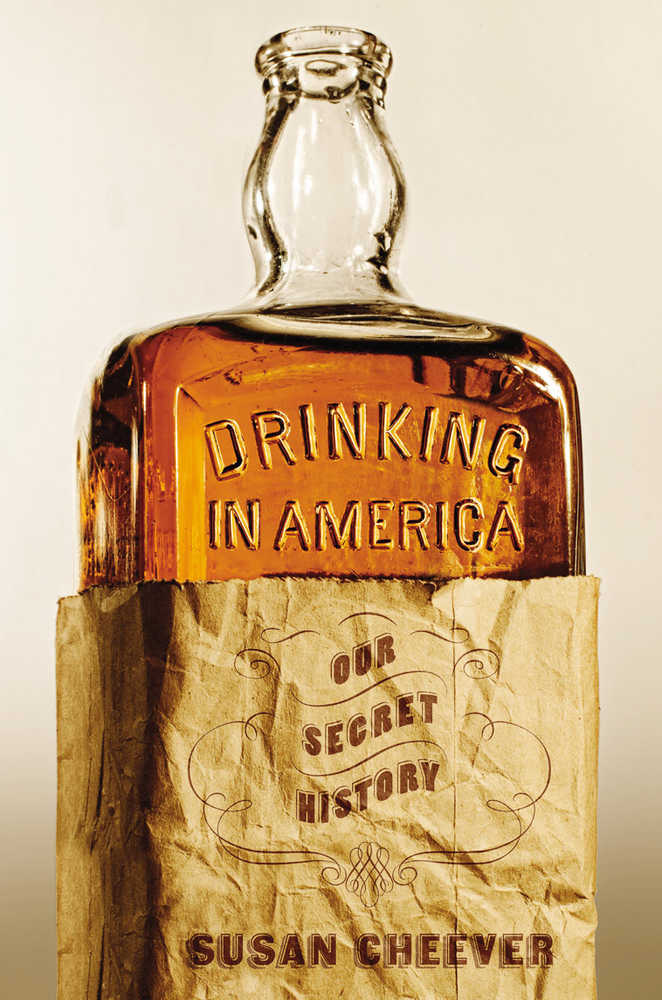
It moved you to babble more than normal, glad-hand a little too much, and generally become much more gregarious. The spirit moved you, and you paid dearly for it the next morning with cottonmouth and a good strong headache. So read the new book “Drinking in America” by Susan Cheever (c.2015, Twelve, $28, 259 pages), and you’ll see that you’re in good historical company.

It all started, says Cheever, with the Pilgrims. They set off from England to America in 1620 and arrived late in the fall, cold, hungry, and “running out of beer.” That wouldn’t have been a problem, except that beer for the Pilgrims was rather important. One of the first things they constructed was a brew house.

Within a decade after their first (very rough) winter, the Pilgrims were joined by the Puritans, a group that was more aristocratic than Pilgrim “riff-raff.” They helped ensure that the New World had taverns; everybody drank then, including infants and small children.

“By the time of the Revolution,” says Cheever, “the colonists’ drinking habits had escalated until each colonist was drinking almost twice as much as the average person drinks today.”

George Washington was happy to profit from alcohol, but John Adams’ family suffered from inherited alcoholism and by the early 1800s, drinking to excess was beginning to be seen as a bad thing. In 1805, the doctor to the Founding Fathers encouraged temperance. Then again, he also believed that alcoholism caused spontaneous combustion…

Americans rebelled over whiskey taxation before they ran to rum “with a side of cider,” thanks to Johnny Appleseed. Alcohol affected how Native Americans perceived white newcomers, who gave them stronger liquor than they could make themselves. Booze was a means for slaveholders to control their slaves, a way for doctors to perform surgery during the Civil War, and a method for settlers to bond. It was famously prohibited (although “few people took the … ban seriously”), and it affected the health of countless men and women. Alcohol might have caused the death of a President. And it almost “brought this country to the brink of World War III …”

We are, by and large, a nation that likes its tipple whether for church, relaxation, or for fun. In “Drinking in America,” you’ll see how that’s nothing new: we’ve come from a long line of party animals.

And yet, some of us aren’t necessarily proud of that: author Susan Cheever adds a personal spin here through anecdotes about her father, who was an alcoholic, and the struggles he had. Those observations act as a buffer between tales of booze, bars, and bottles of all the things we drank (or not), people who encouraged drinking (or not), and how alcohol changed America, which makes for a book that goes down like a smooth glass of wine after a long day.

Whether you’re a drinker or a teetotaler, if you like a wee nip of history, then here’s the book you want. Read “Drinking in America”… if the spirit moves you.


The Bookworm is Terri Schlichenmeyer. Email her at bookwormsez@yahoo.com.

More in Life

Historic Elwell Lodge Guest Cabin is seen at its new spot near the Kenai National Wildlife Refuge’s Visitor Center. (USWS)
Around the peninsula

Local events and happenings coming soon.

Nián gāo is a traditional Lunar New Year treat enjoyed in China for over two thousand years. Photo by Tressa Dale/Peninsula Clarion
A Lunar New Year’s treat

This sweet, steamed rice cake is chewy, gooey and full of positivity.

This excerpt from a U.S. Geological Survey map shows the approximate location of Snug Harbor on lower Kenai Lake. It was in this area that William Weaver nearly drowned in 1910.
Ben Swesey: More to the story — Part 2

AUTHOR’S NOTE: Michigan’s hard-luck Swesey clan sprang into existence because of the… Continue reading

File
Minister’s Message: Rhythms and routines

Your habits are already forming you.

This dish is creamy, rich and comforting, and gets dinner time done fast. Photo by Tressa Dale/Peninsula Clarion
Full of mother’s love

This one-pot dish is creamy, rich and comforting, and can be ready in 30 minutes.

This screenshot from David Paulides’s “Missing 411” YouTube podcast shows the host beginning his talk about the disappearance of Ben Swesey and William Weaver.
Ben Swesey: More to the story — Part 1

More than a hundred years after Ben Swesey and Bill Weaver steered… Continue reading

Photo by Clark Fair
This 2025 image of the former grounds of the agricultural experiment station in Kenai contains no buildings left over from the Kenai Station days. The oldest building now, completed in the late 1930s, is the tallest structure in this photograph.
The experiment: Kenai becomes an agricultural test site — Part 8

Over the past 50 years or more, the City of Kenai has… Continue reading

File
Minister’s Message: So your life story can be better

Last month the Christmas story was displayed in nativity scenes, read about… Continue reading

These gyros make a super delicious and satisfying tofu dish. Photo by Tressa Dale/Peninsula Clarion
A new addition to the menu

Tofu gyros with homemade lentil wraps are so surprisingly satisfying and add extra fiber and protein to a meal.

Death notice: Marvin “Ted” Dale Smith

Marvin “Ted” Dale Smith passed on Dec. 27, 2025 in his home.… Continue reading

Photo courtesy of the 
Arness Family Collection
L. Keith McCullagh, pictured here aboard a ship in about 1915, was a U.S. Forest Service ranger charged with establishing a ranger station in Kenai, a task that led him to the agricultural experiment station there and into conflict with “Frenchy” Vian and his friends.
The experiment: Kenai becomes an agricultural test site — Part 7

AUTHOR’S NOTE: After the agricultural experiment station in Kenai closed May 1,… Continue reading

These treats are full of fiber and protein and contain less sugar than a Nutri-grain bar, so you can feel good about spoiling yourself a little. Photo by Tressa Dale/Peninsula Clarion
A treat for a new start

These cosmic brownies are a healthier, homemade version of the usual cafeteria currency.